How 33 backers (and a run club) funded the first study
We’re 100% funded. A huge thank you to everyone who supported this effort, and to everyone who shared it.
In April 2025 we launched our first crowdfunding campaign on Experiment.com with two questions: Can a $2.50 microscope help diagnose a dangerous infection? Can drones help prevent cancer by mapping snail-infested water? By July 1, 33 backers had pledged $10,622 (106% of our goal), and ethics approval had cleared in Ogun State. Here’s how the three months in between unfolded.
The pitch, in two hypotheses
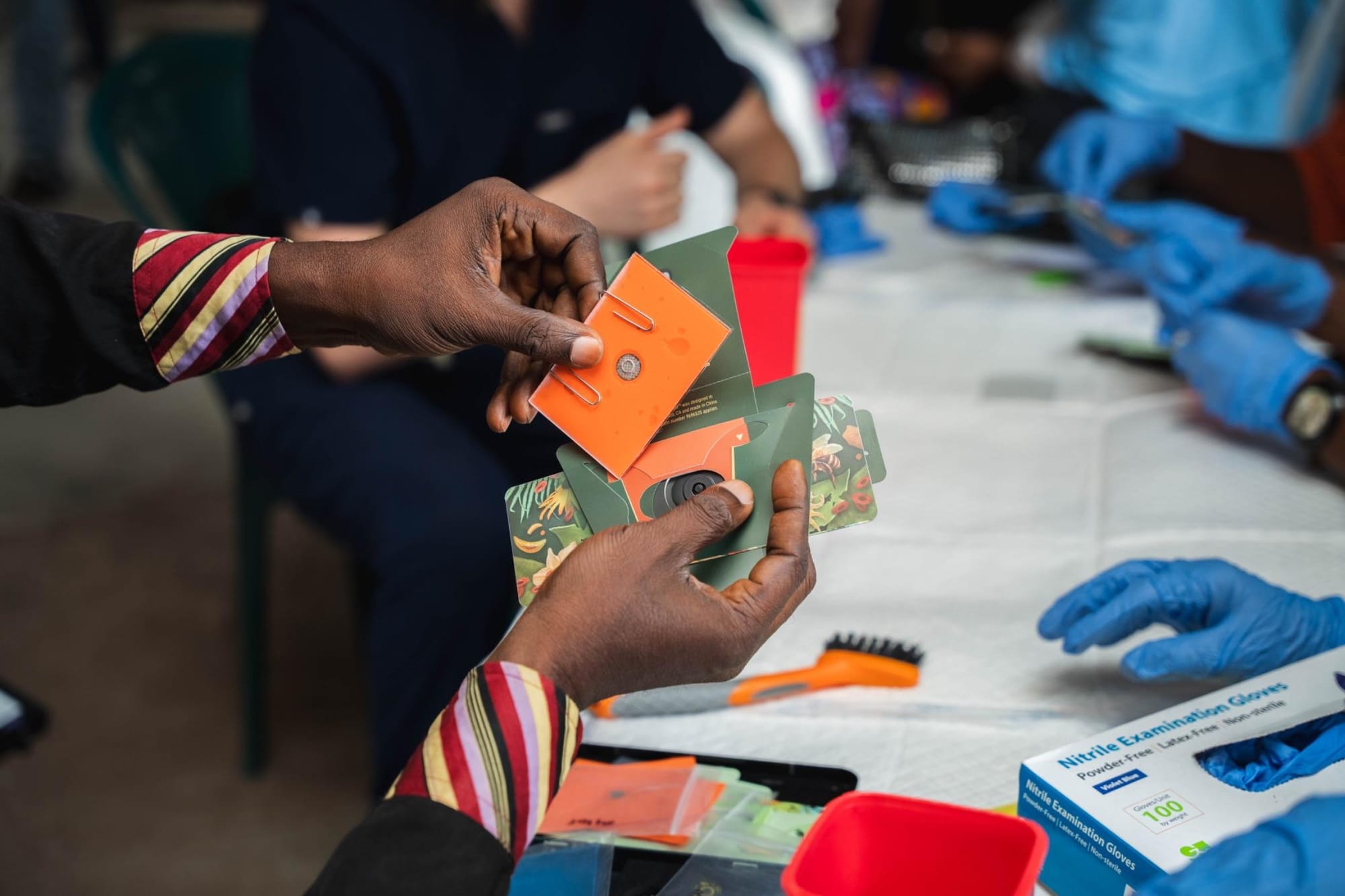
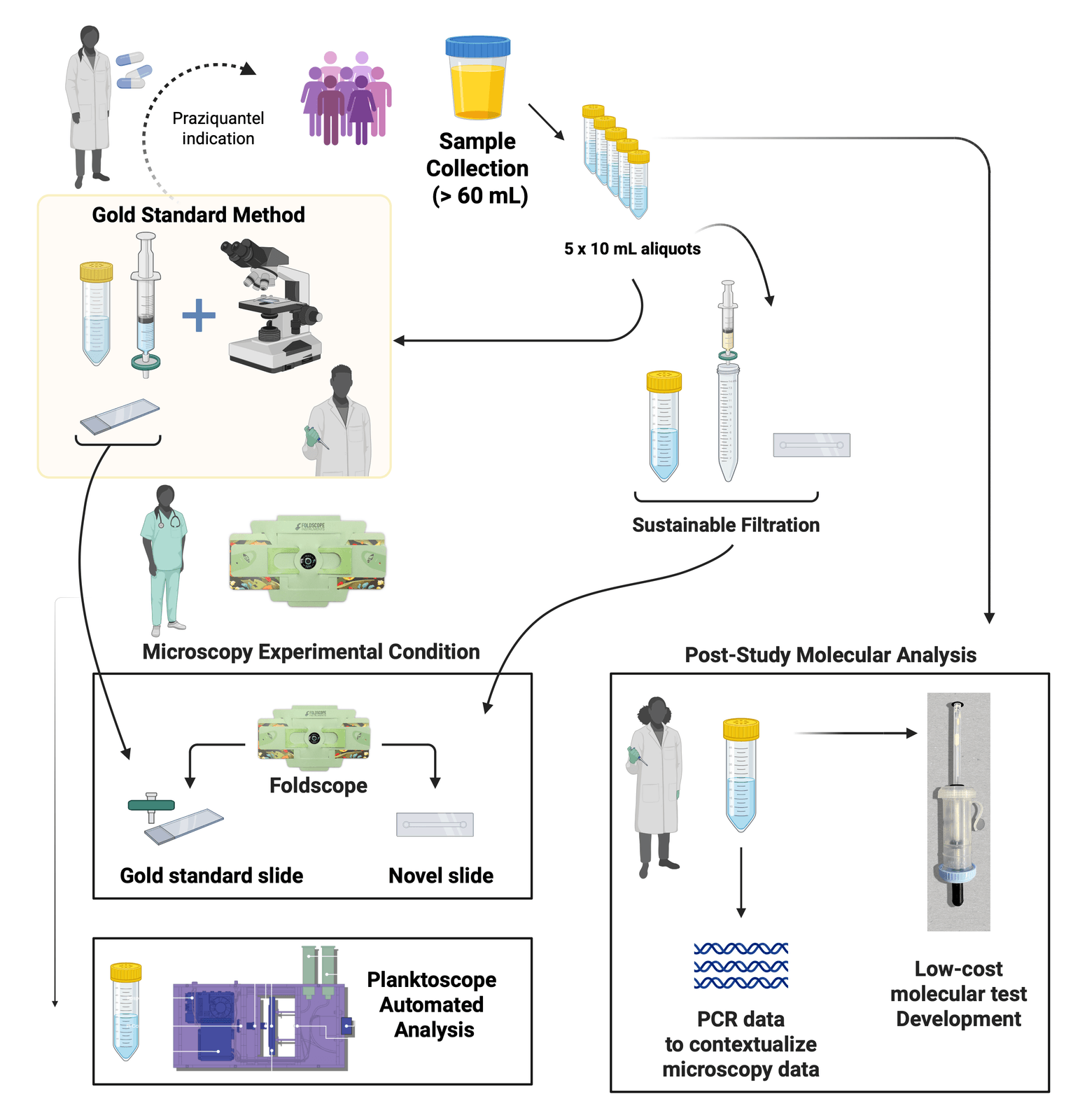
Reusable filtration + phone imaging = easy disease monitoring
With accuracy good enough for community-led diagnosis.
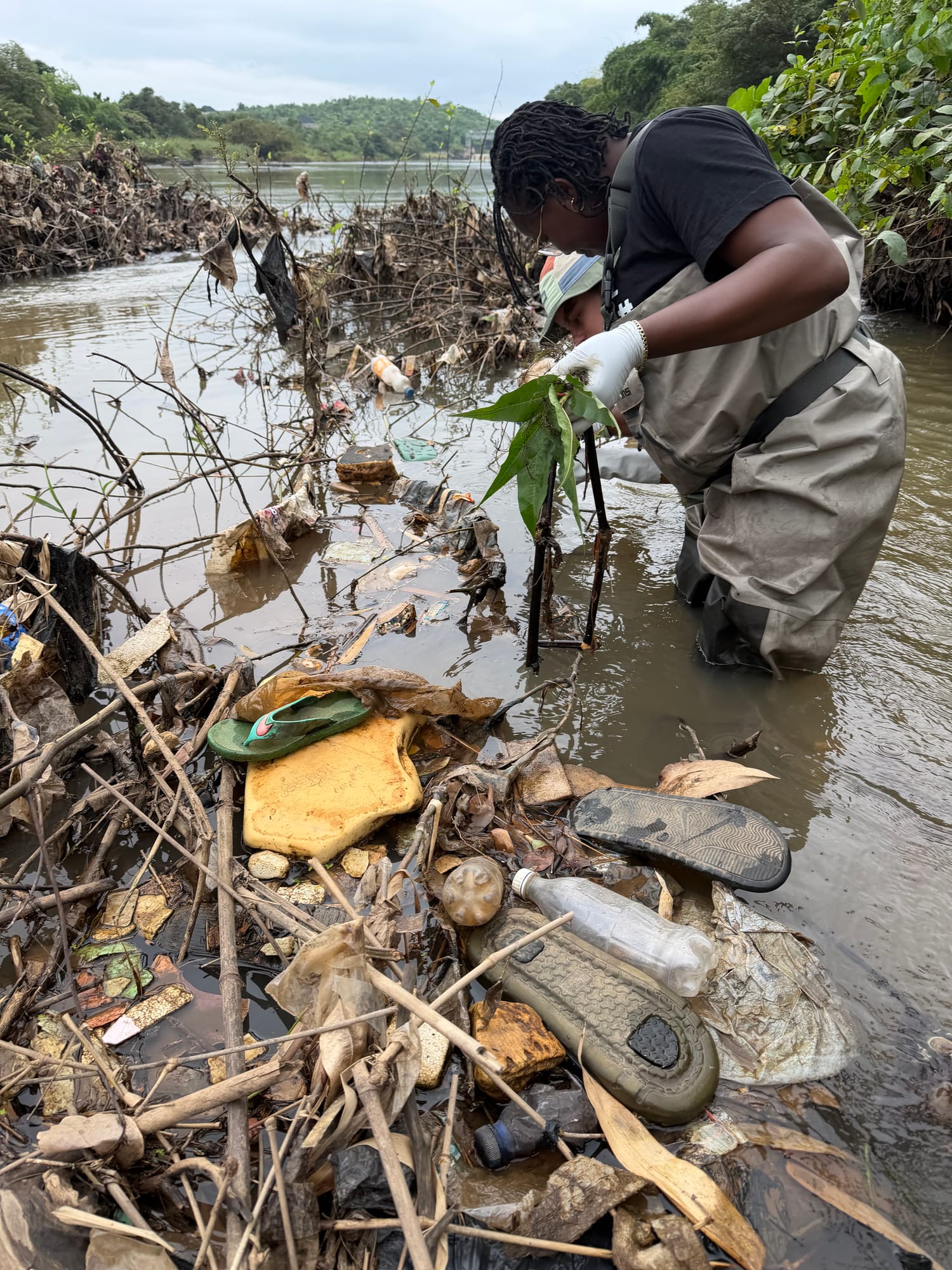
Plant density = snail density = risk
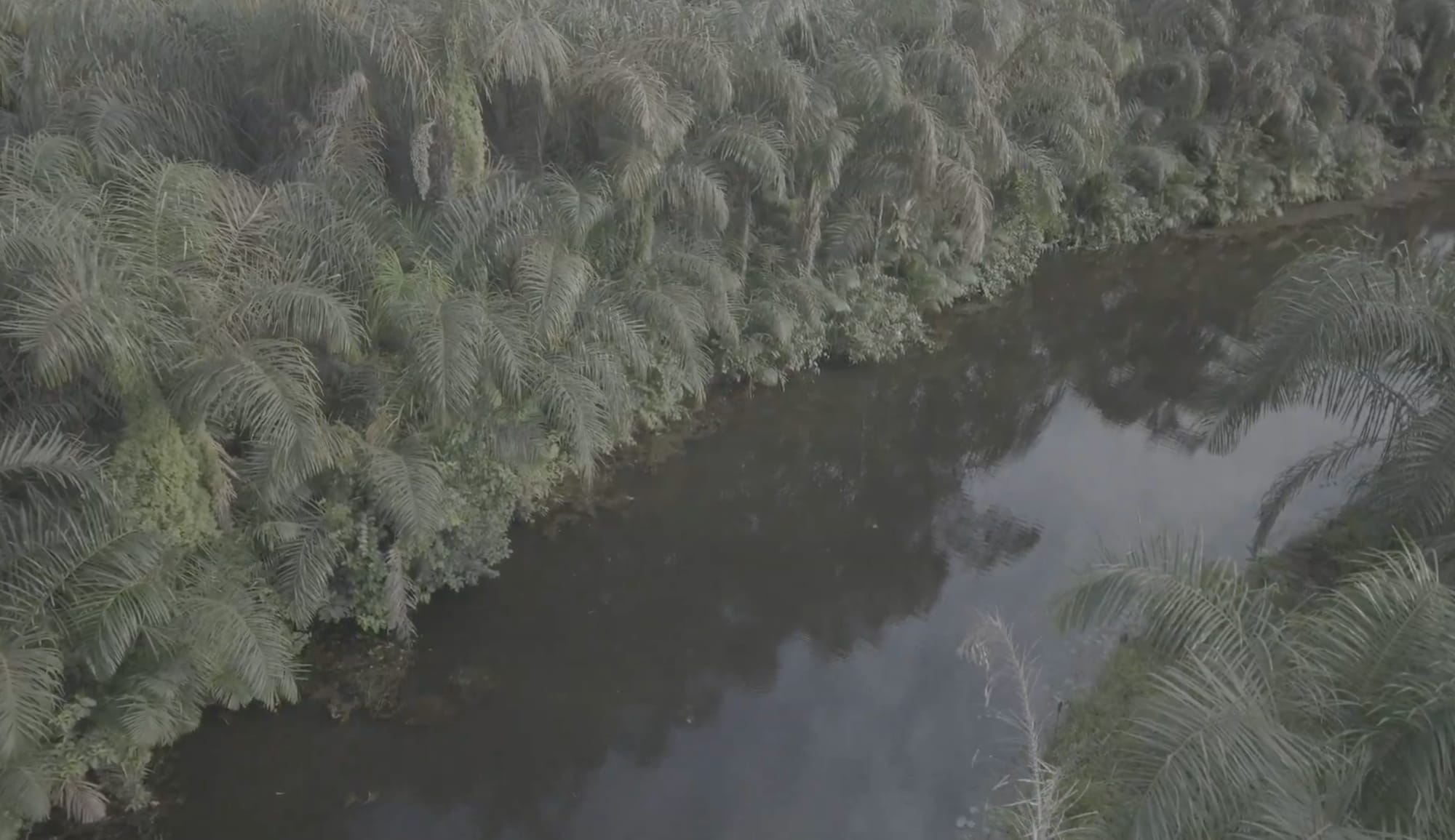
Building on Dr. Chelsea Wood’s work in Senegal: map the submerged plants from above, and you map the hotspots.
Spring 2025, week by week
- Mar 24
Experiment 1
Novices find parasite eggs through a Foldscope with 79% accuracy. Read it →
- Apr 10
Protocol, shared openly
We posted our submission to the Ogun State Health Research Ethics Committee publicly, with a letter of support from Imaobong Umah, National Program Manager of the Schistosomiasis and Soil-Transmitted Helminthiasis Eradication Program at Nigeria’s Federal Ministry of Health.
- Apr 11
Five days at Stanford
Microfluidic traps and fish-eye lenses in the Prakash Lab. Read it →
- Apr 17
Campaign launch
The project goes live on Experiment.com.
- Apr 23
7% funded
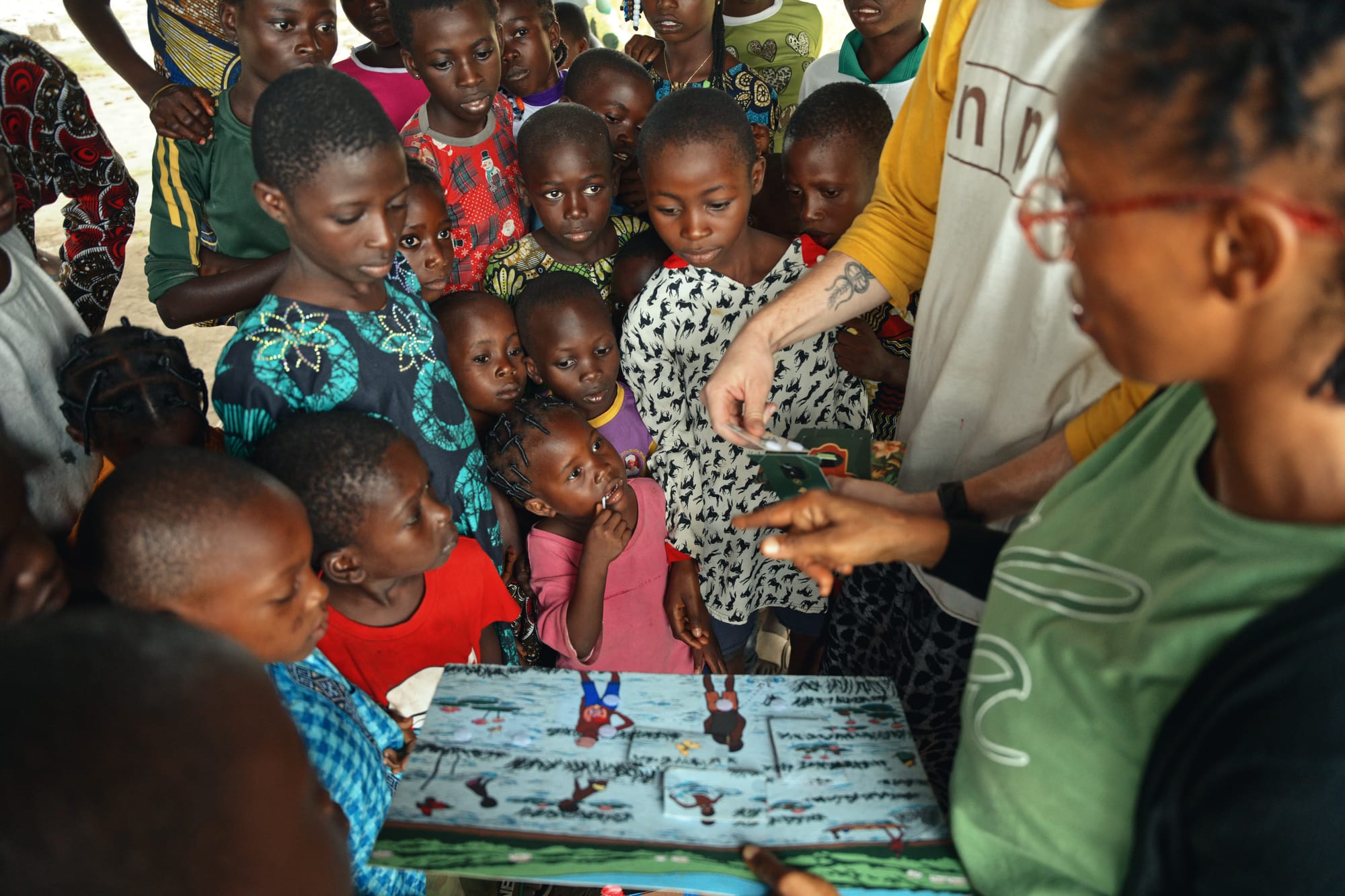
And ideas are flowing: a storybook for kids.
- May 14
15% funded
A prototype filters eggs for the first time. Read it →
- May 30
A $1,800 grant
The Houston Global Health Collaborative’s Student Research and Service Grant: $800 for diagnostics materials and $1,000 for environmental mapping and education.
- Jun 8
40% funded
Thanks to a big push from Phil, including two run-club events with WeRunHTown.
- Jun 29
70% funded
And a commitment: the final results will be published open access.
- Jul 1
100% funded
$10,622 from 33 backers — 106% of the goal. Ethics approval cleared in Ogun State.
Four continents on one call
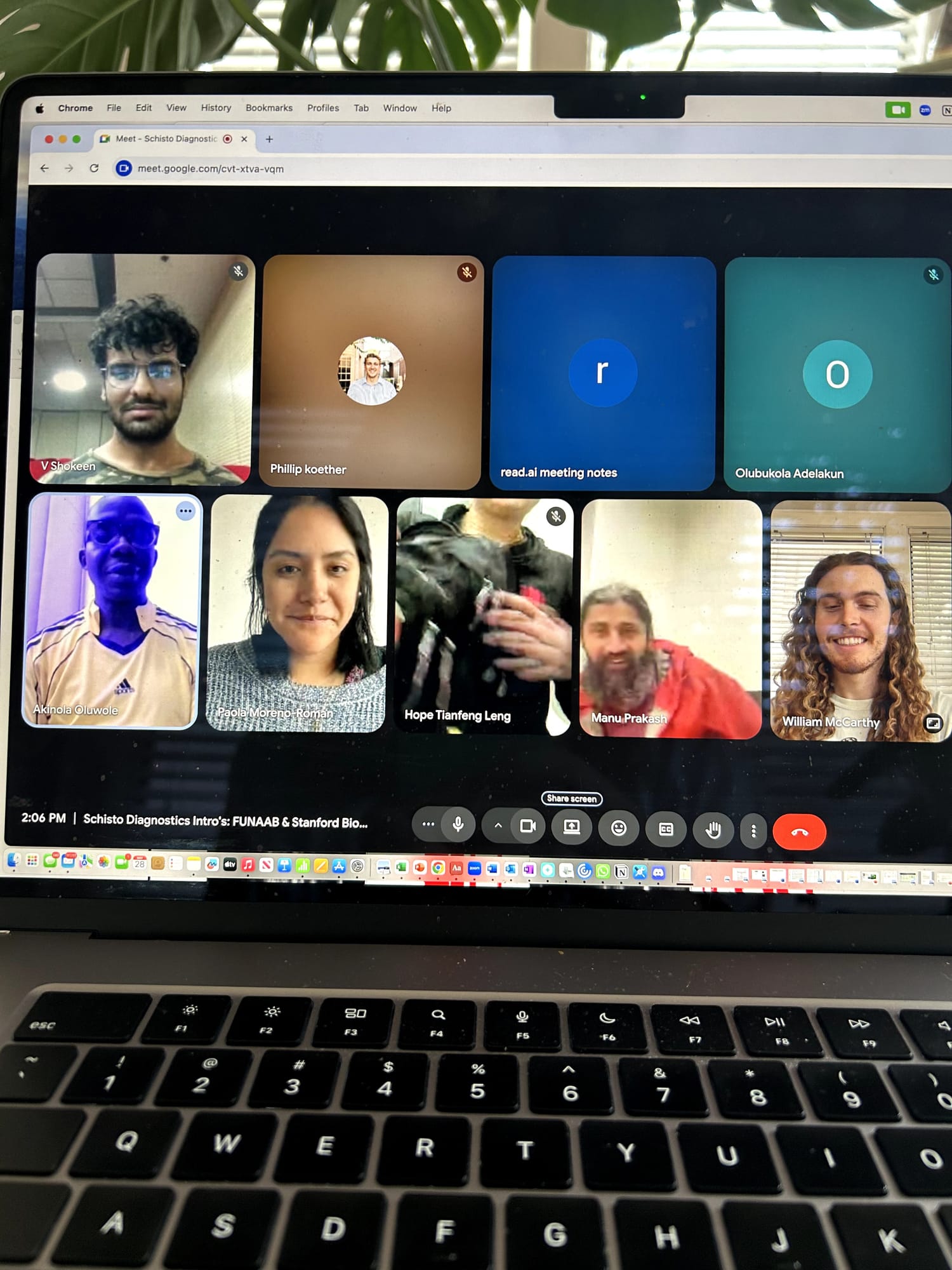
The Houston Global Health Collaborative award covered materials for the diagnostics work, plus environmental mapping and the education side of the project. Thank you to Caroline Crain for submitting the application, and to Phillip Koether, Dr. Olubukola Adelakun, Dr. Morgan Jibowu, and Dr. Jayhun Lee, who all helped make it happen. Around the same time, we held a planning meeting with mentors and teammates and realized we had people joining live from four different continents. Global health in action — through conversation, and iterating on ideas.
Makerspaces, run clubs, and friends
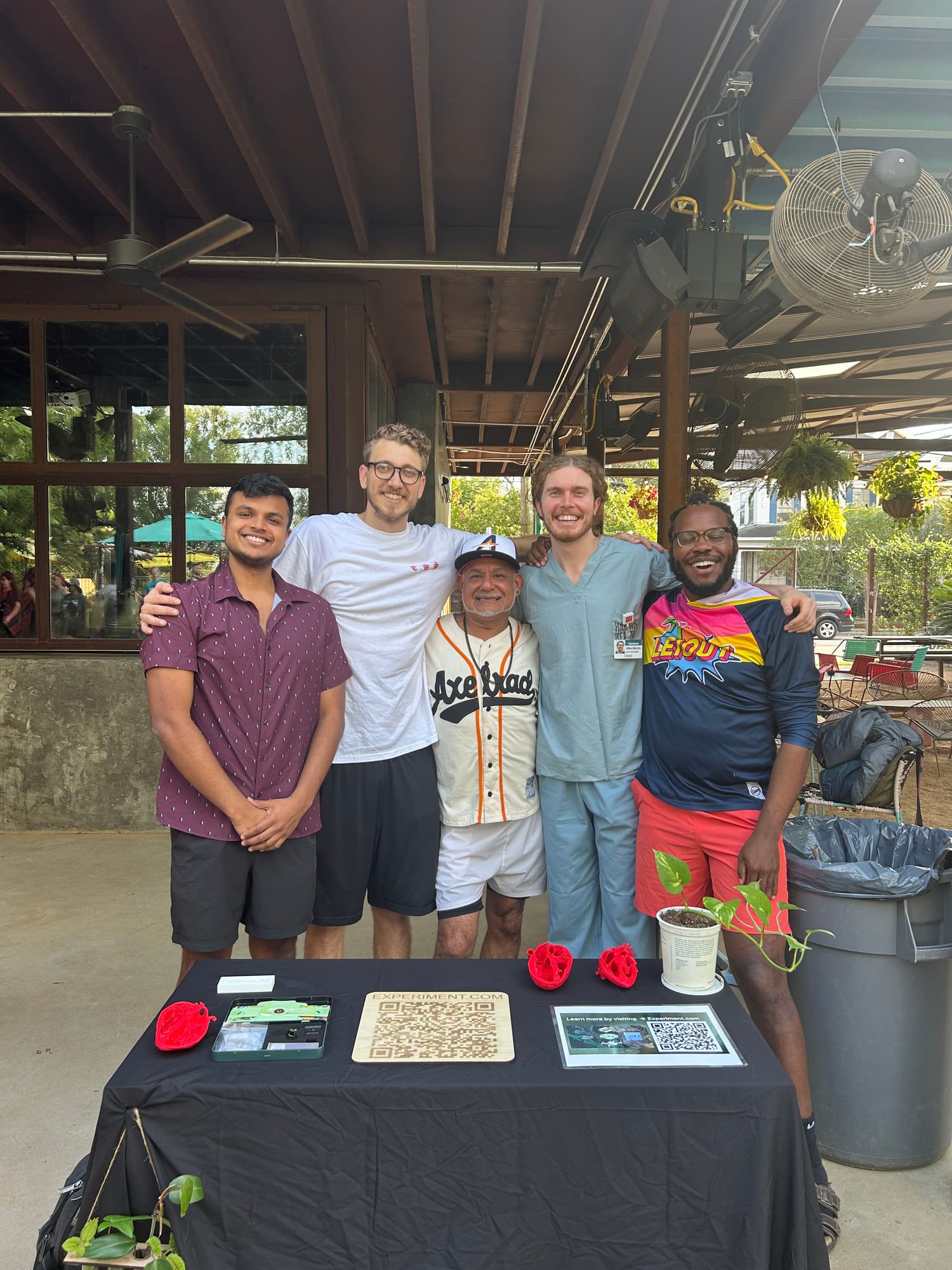
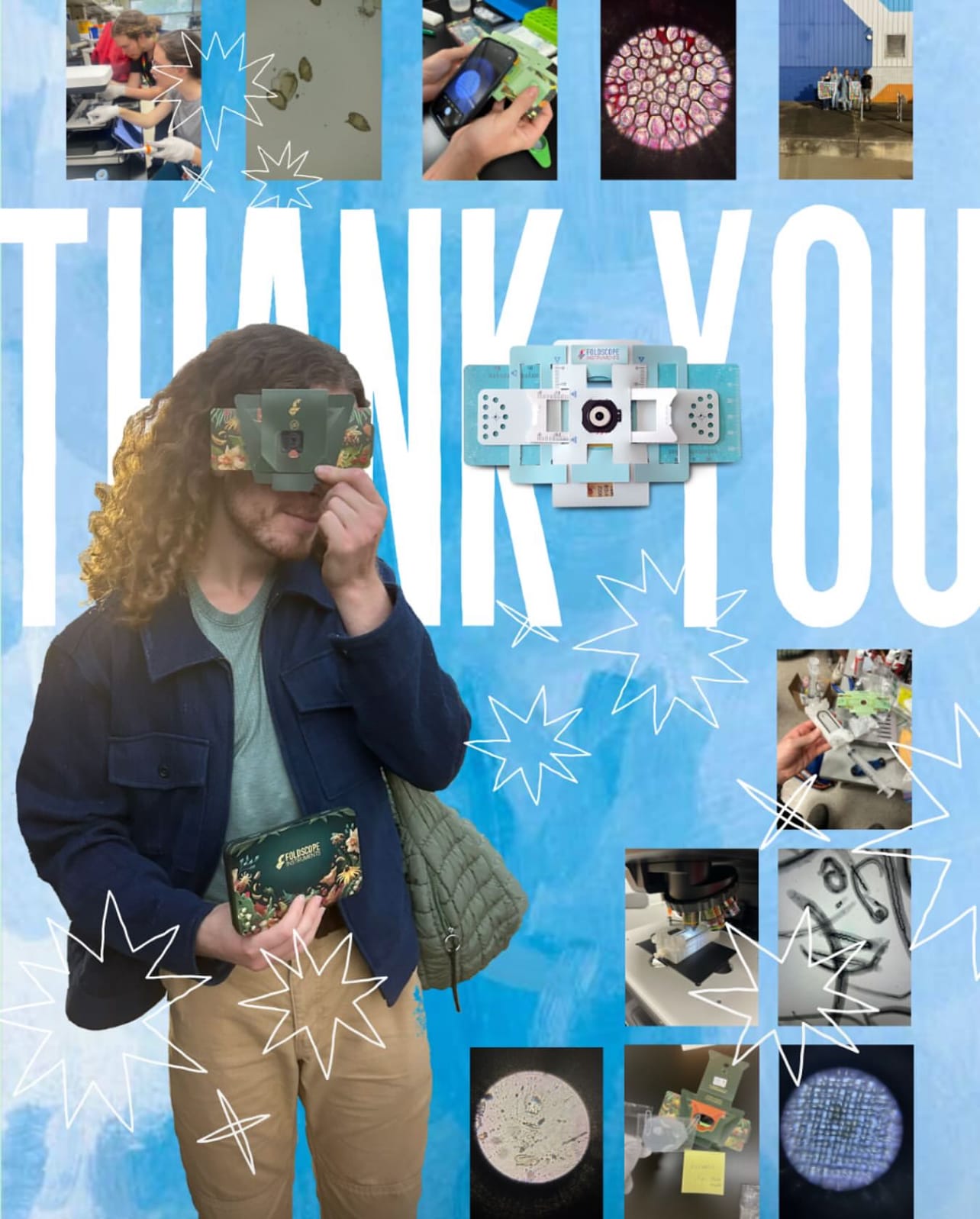
This was a team effort, and that isn’t lost on us — from friends at Houston’s makerspaces (Ion and TXRX) to friends across the country and around the world. The Houston team tabled at WeRunHTown run-club events, showing Foldscope demos to anyone who’d stop.
“I am excited about this project, primarily because it aims to address some critical operational gaps in the global fight towards eliminating schistosomiasis.” — Hammed Mogaji, Marian University
What the money bought
The 2025 budget
A reference microscope
A light microscope for gold-standard comparison in the field.
Testing supplies
PPE, testing consumables, and 500-count sample-prep kits.
Community health workers
Compensation for the Community Health Extension Workers who ran the diagnostics.
Phones
For digital image capture and evaluation with the Foldscope.
Everything else ran on generosity: donated Foldscope kits from Foldscope Instruments, egg samples and materials from Dr. Jayhun Lee and Dr. Brian Graham, and a lot of volunteered time.
We made a commitment from the beginning to open-source access and to sharing results with the world. Here’s the paper this campaign made possible.
You funded the first study
Every result that followed — the field study, the preprint, the six-community trial now under way — traces back to these 33 backers. Thank you.