Our first paper: community-led diagnosis, now a preprint
The study you funded in 2025 is written up, and it’s public. Our first manuscript is now available as a preprint on medRxiv.
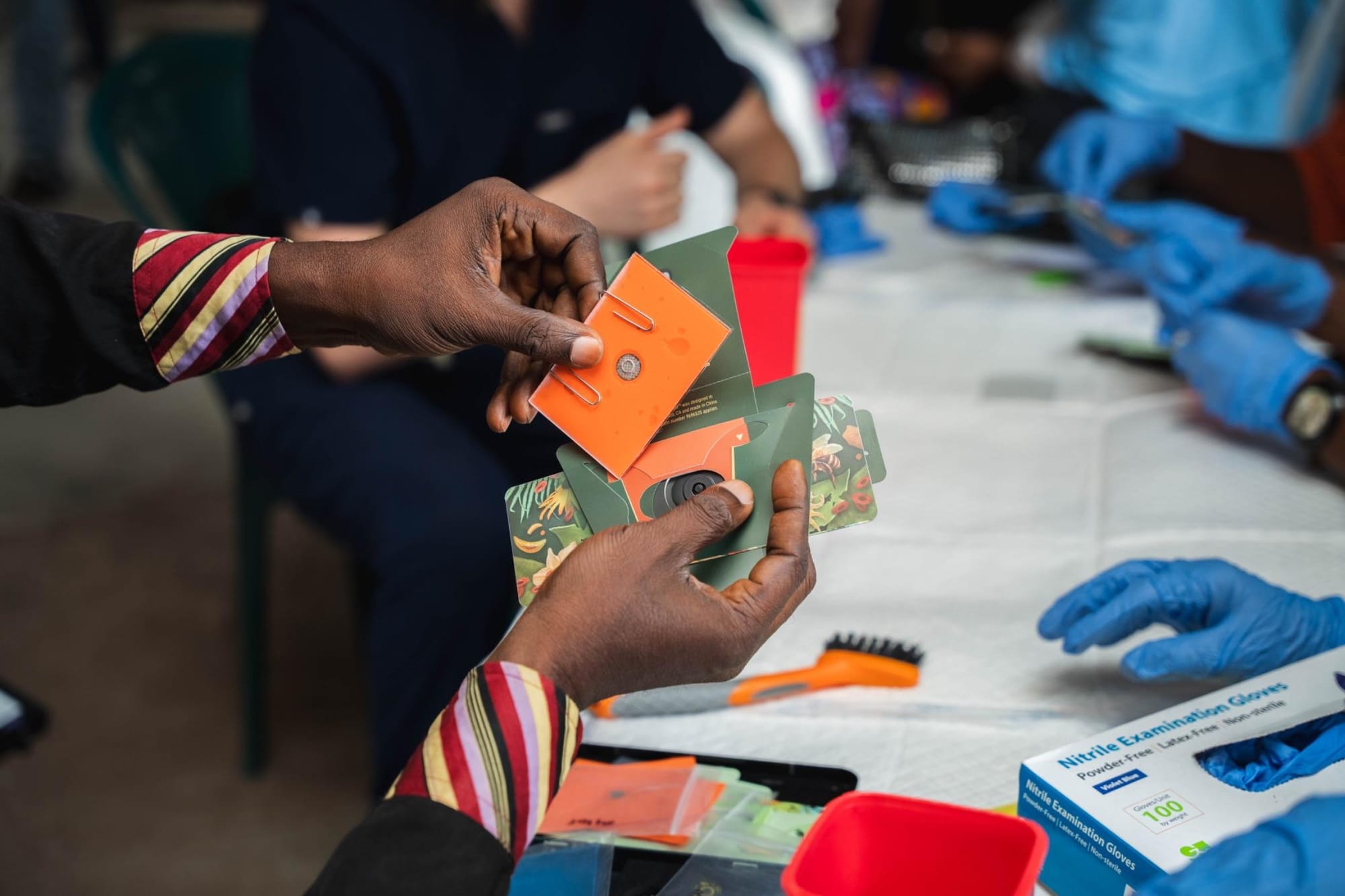
Community-Led Diagnosis of Urogenital Schistosomiasis Using a Low-Cost, Point-of-Care Microscopy Toolkit in Rural Nigeria: A mixed-methods study describes what happened when community health extension workers (CHEWs) took a $2 paper microscope and a reusable urine filter into five communities near the Oyan River Dam. A preprint is a paper shared before peer review; this one is now working its way through that process at a journal. Read the full preprint here.
The case for testing close to home
Urogenital schistosomiasis is a major cause of preventable illness, mostly in rural, resource-limited places. After decades of mass drug administration, and with the disease’s epidemiology shifting and resources still thin, “test-and-treat” models may be necessary to reach elimination goals. But diagnosis is still centralized and laboratory-dependent — and community-led, locally adapted ways of doing it have barely been defined. This study set out to measure both halves: is a low-cost toolkit accurate, and can communities actually run it?
Two readers, one sample
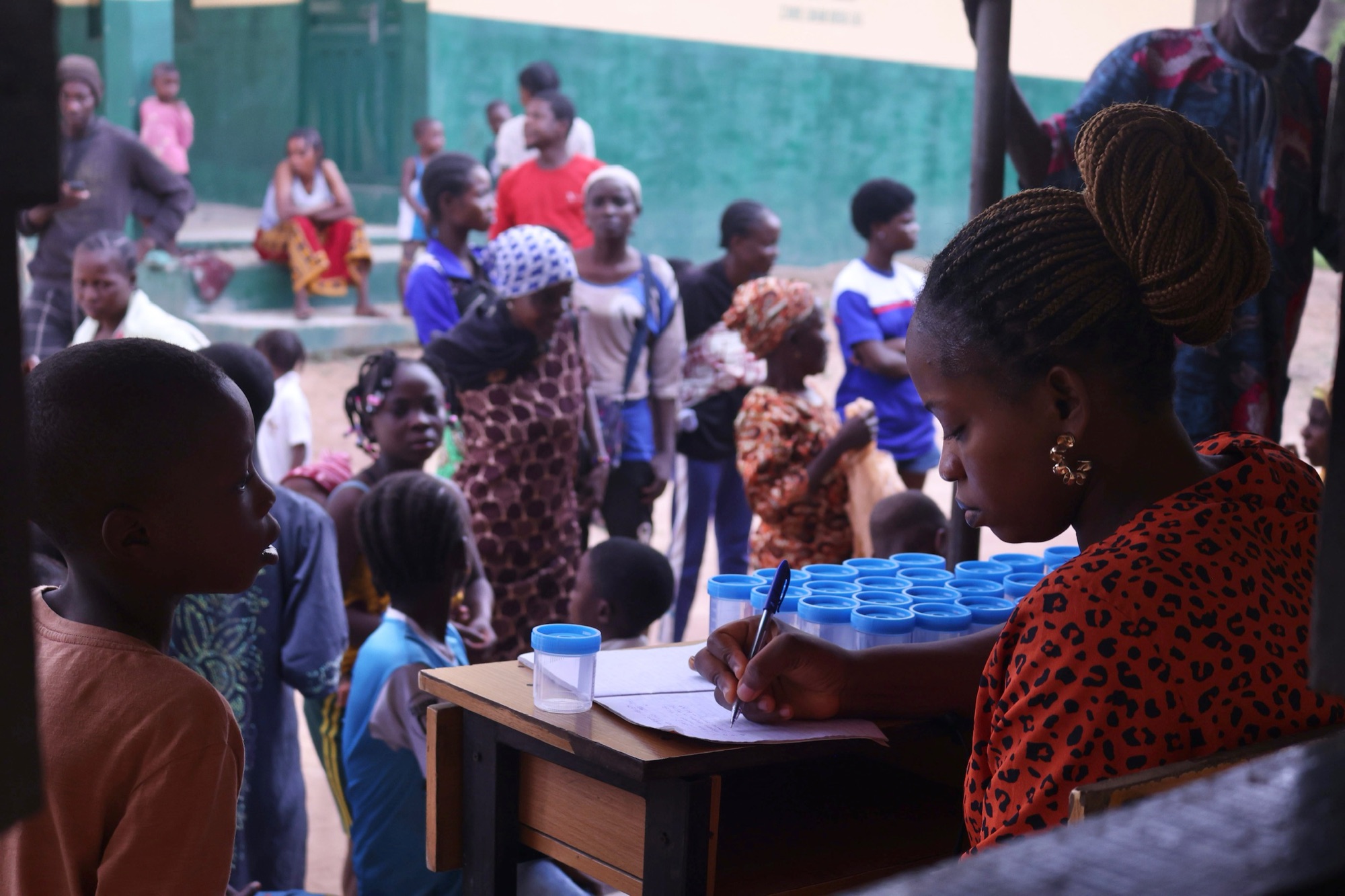
In July 2025, we enrolled 418 participants across five endemic sites. Every urine sample was analyzed twice, in parallel: once by CHEWs using the toolkit (a reusable urine-filtration device paired with an under-$2 paper microscope) and once by laboratory technicians using standard microscopy. We also ran semi-structured interviews with CHEWs and key informants, analyzed with the Consolidated Framework for Implementation Research (CFIR).
What we found
The heart of the paper is a learning curve. Across five sequential communities (237 samples in the CHEW accuracy analysis), CHEWs’ accuracy rose from 52.5% to 92.1% over eight study days. Specificity climbed from 53.6% to 96.3%, final sensitivity reached 81.8%, and agreement with the lab reference reached a Cohen’s kappa of 0.803. In the hands of laboratory scientists, Foldscope microscopy matched conventional microscopy: 91.0% sensitivity and 99.3% specificity.
The numbers, with their uncertainty
| Measure | Result |
|---|---|
| CHEW accuracy, first community | 52.5% (95% CI 37.5–67.1) |
| CHEW accuracy, final community | 92.1% (95% CI 79.2–97.3); trend Z = 3.08, p = 0.002 |
| CHEW specificity, first → final | 53.6% → 96.3%; trend Z = 3.00, p = 0.003 |
| CHEW sensitivity, final | 81.8% (95% CI 52.3–94.9) |
| Agreement with lab reference, final | Cohen’s κ = 0.803 |
| Foldscope, laboratory scientists | 91.0% sensitivity · 99.3% specificity |
Trend tests are Cochran–Armitage. Full methods and confidence intervals are in the preprint.
A few terms, in plain language
Task-shifting
Moving a job (here, reading a diagnostic test) from specialists to trained community health workers, so it can happen where people live.
Sensitivity & specificity
Sensitivity is how many true infections a test catches; specificity is how many uninfected people it correctly clears.
Cohen’s kappa
Agreement between two readers beyond what chance would produce. Around 0.8 counts as strong agreement.
CFIR
A standard framework for studying what helps or blocks a health intervention from taking root in a real setting.
Accurate, feasible, implementation-ready
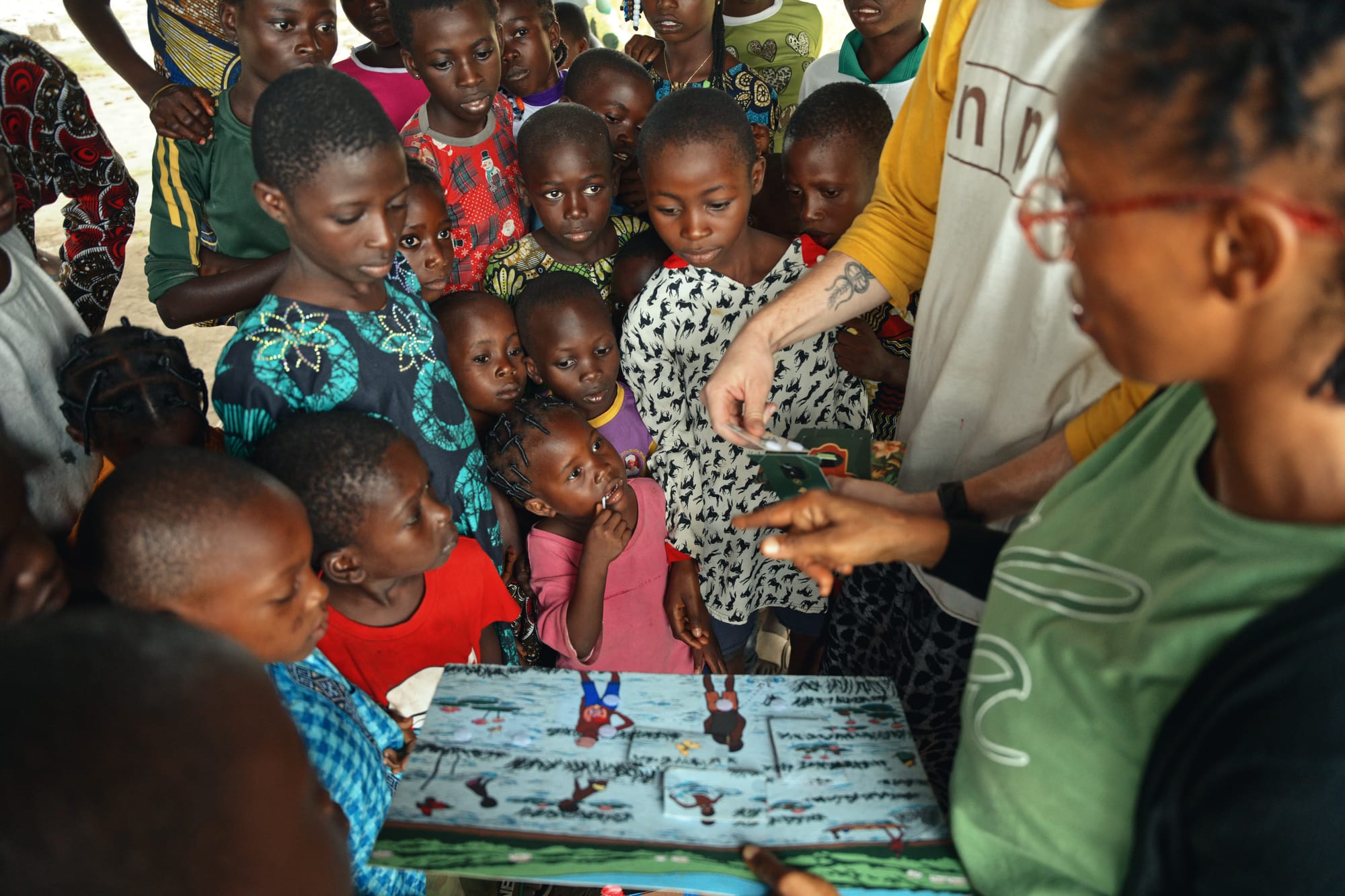
Our conclusion: community-led diagnostic task-shifting for urogenital schistosomiasis control is accurate, feasible, and ready to implement. The CFIR analysis showed strong acceptability among the people who’d actually use the toolkit, and pointed to local ownership, collaboration, and trust-building as the key ingredients. We think that’s relevant well beyond this one disease — to any strategy that puts community health workers at the center.
Community-led diagnosis isn’t a compromise. With a few days of practice, it’s accurate.
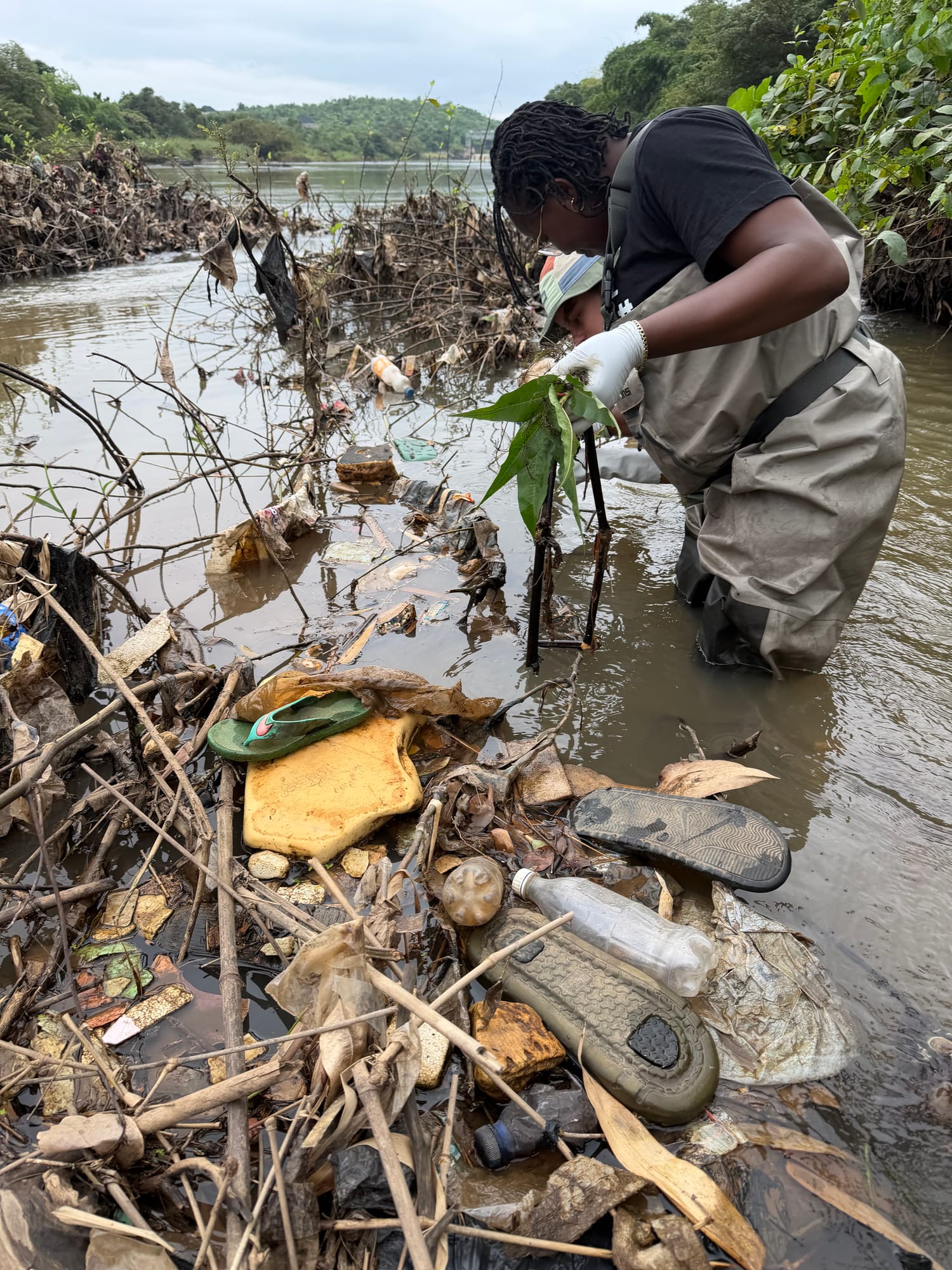
That finding is the foundation for what we’re doing now: scaling a test-and-treat model, with education and snail-habitat work alongside it, across six more communities. See where SCOPE goes next →
Read the paper
- Community-Led Diagnosis of Urogenital Schistosomiasis Using a Low-Cost, Point-of-Care Microscopy Toolkit in Rural Nigeria: A mixed-methods study. medRxiv preprint, March 2026. doi:10.64898/2026.03.19.26348783 medrxiv.org ↗
- The first look at these results, written for our backers in December 2025. Field results from Nigeria ↗
You’re part of this paper
Every backer of the 2025 campaign helped produce this evidence. Thank you, and please share it with anyone who works on community health.