Hunting for eggs: the SchistoFilter’s first lab validation

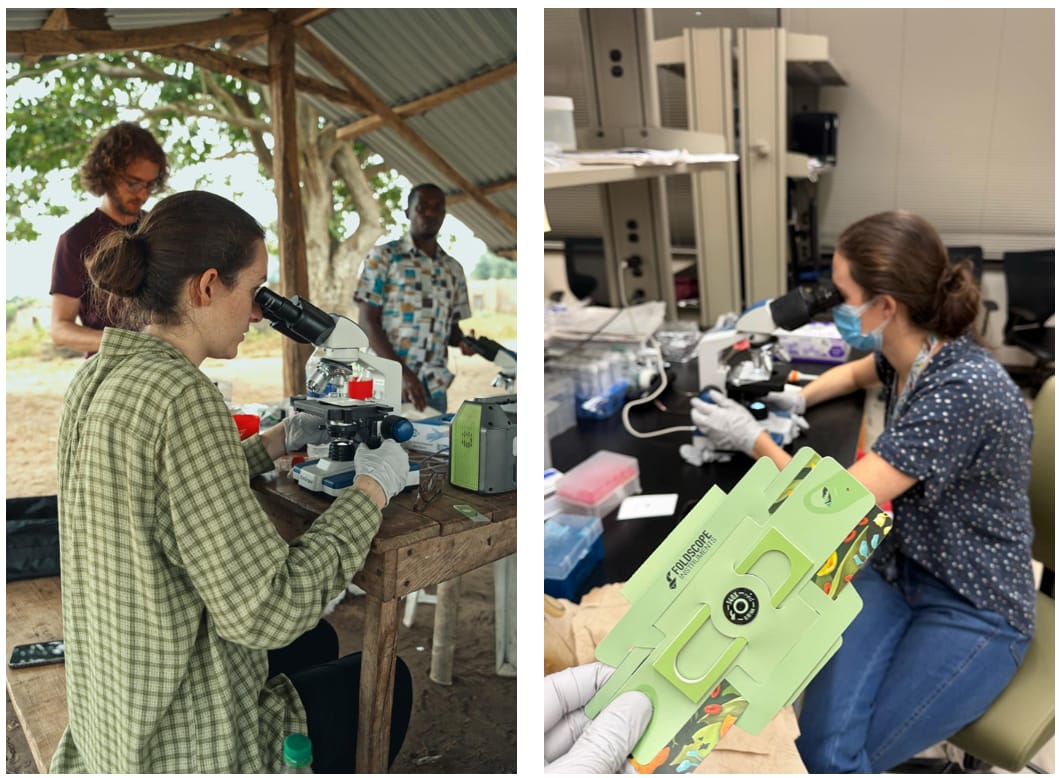
In Nigeria, I spent many hours a day at the microscope hunting for schistosome eggs.
Often working late into the night, I’d emerge from our hotel-room-turned-laboratory almost cross-eyed, only to close my eyes and see the polka-dot pores of the filter in my dreams. The process was time-consuming and tedious, which is why I was surprised that, when I got back to the U.S., the thing I missed most was my microscope. So I was excited that this week we got to reunite in the lab, as I worked to formally validate the SchistoFilter.
A filter the size of a playing card
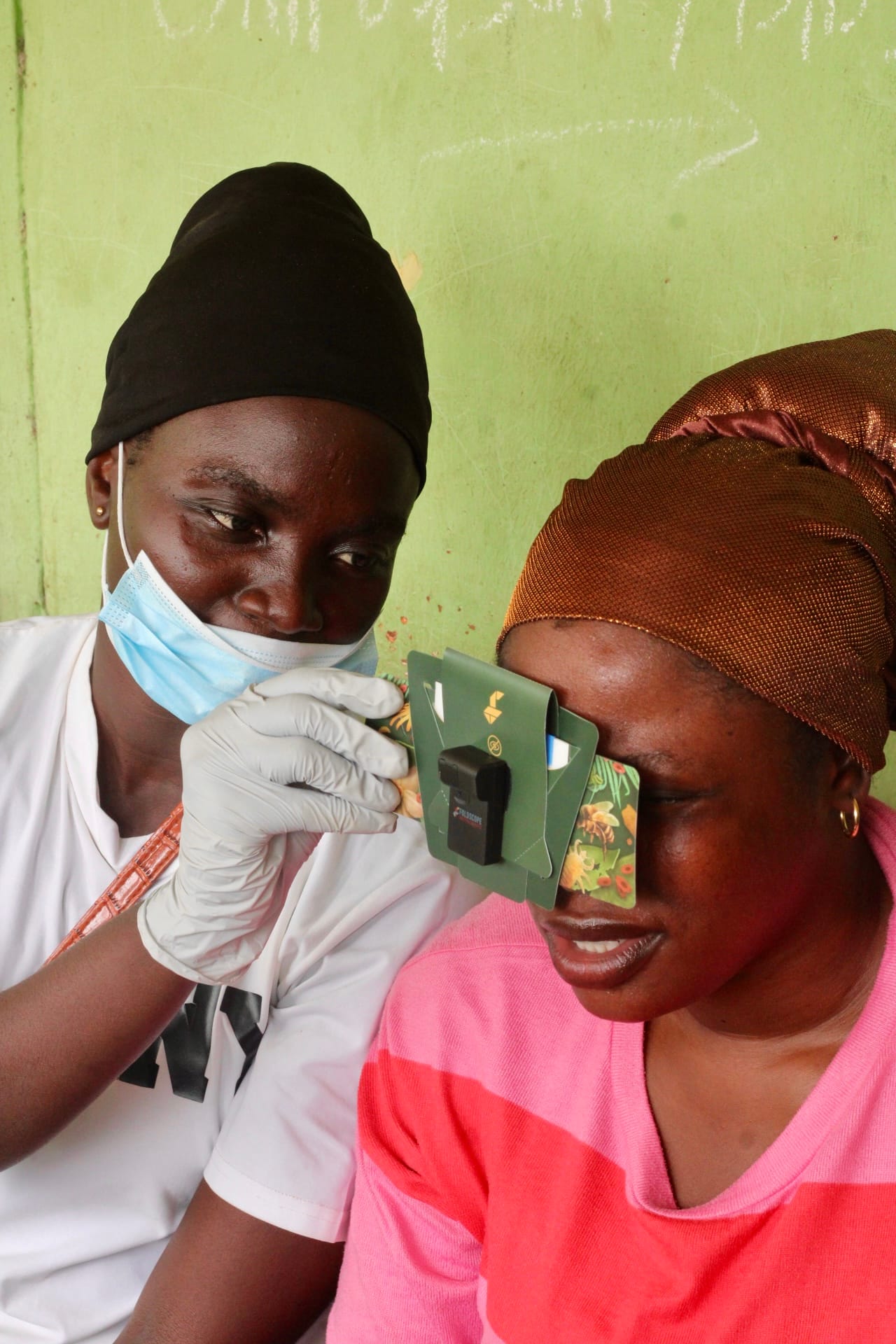
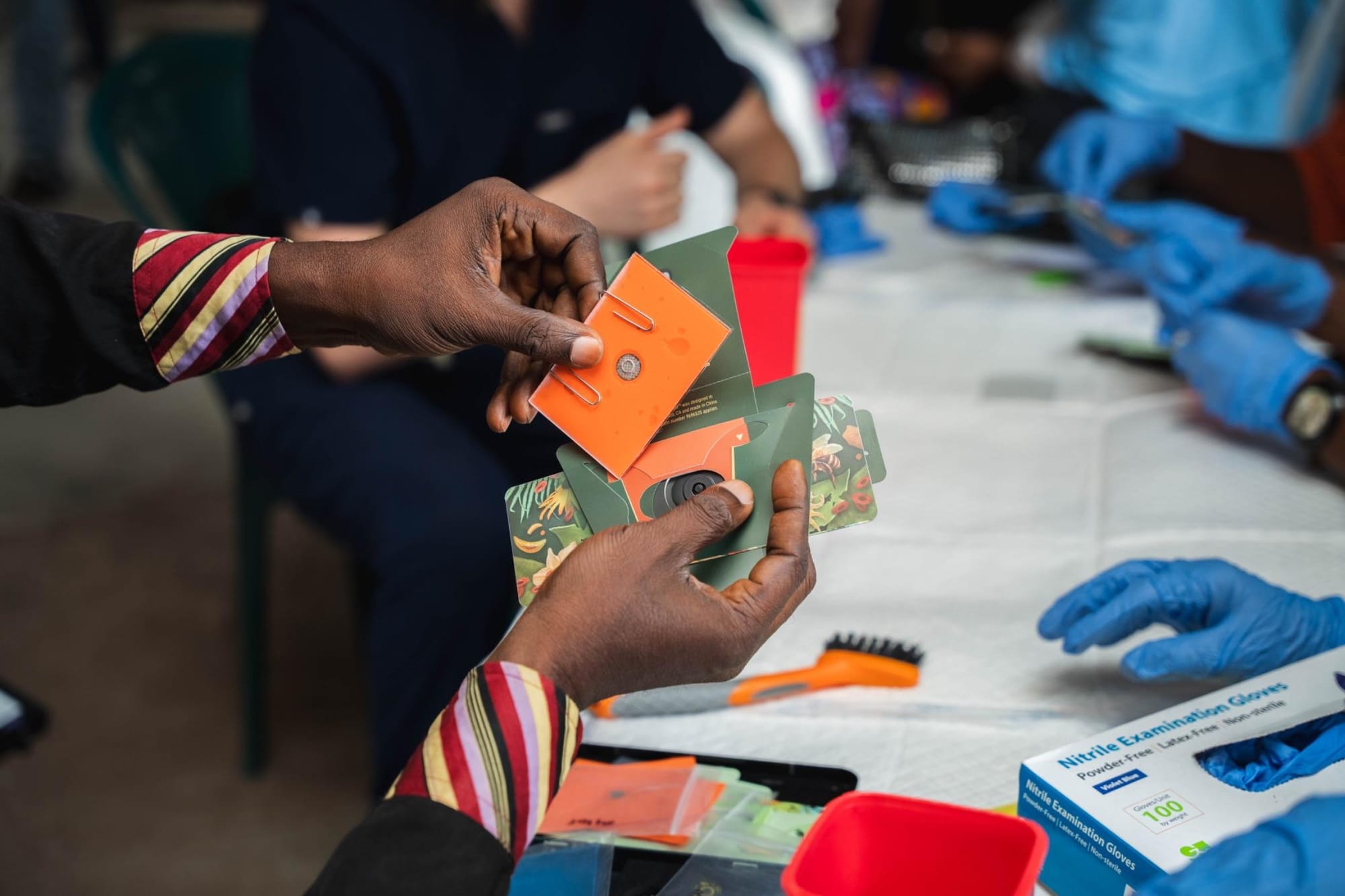
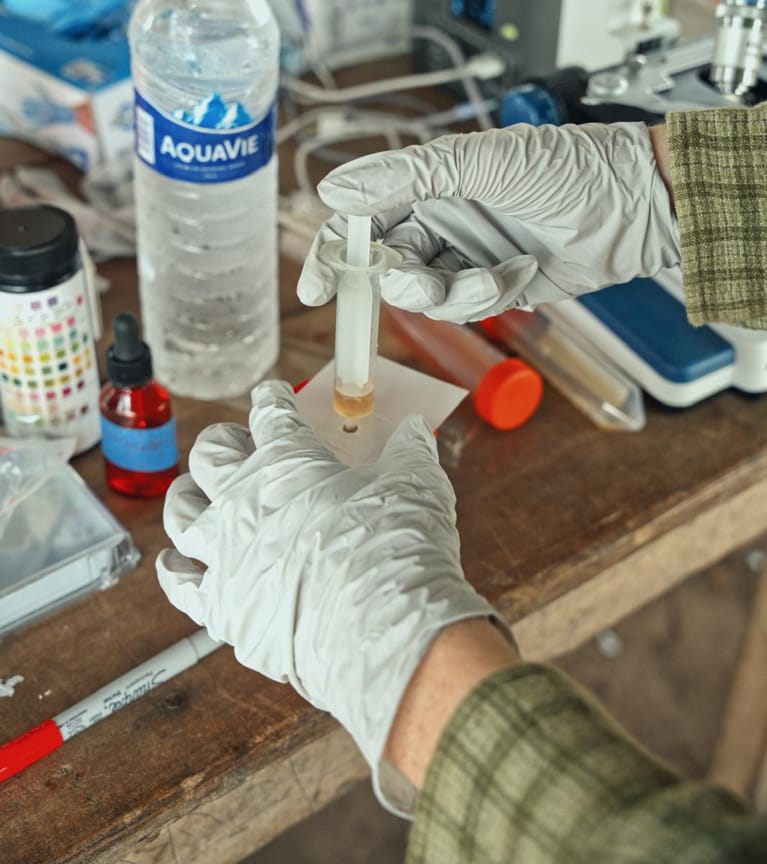
The SchistoFilter is an ultra-low-cost, reusable filtration card that traps schistosome eggs for viewing under a microscope. It’s built from a ¼-inch central filtration pore holding a stainless-steel mesh, sandwiched between two playing-card-sized pieces of thick plastic: acrylic, polycarbonate, or even a thermal lamination pouch. It works with a conventional light microscope, but it was designed to accompany the Foldscope, a commercially available, electricity-free paper microscope. Together they make a fully reusable, field-compatible diagnostic toolkit.
What the toolkit costs
The design is open source: it can be made anywhere with locally sourced materials, glue, and a razor blade.
Three hundred contrived samples
As we embark on the long process of medical-device authorization, our first step was to get formal validation data for the SchistoFilter when used with a standard light microscope. Armed with S. haematobium eggs courtesy of our friends at UCSF (here’s how we got them) and a milk jug full of urine, we hit the lab with a plan to process 300 contrived control samples.
We’re still very early in the process, but we were excited that our formal data reflect what we’ve seen in the field: so far, the SchistoFilter has 100% sensitivity for catching eggs, with a limit of detection down to just one egg per 10 mL of urine. We had a couple of false positives, so we’ve temporarily paused while we look for the source of the aberrant eggs. Schisto eggs are notoriously sticky, so we’re exploring different cleaning protocols to make sure the workflow can be both fully reusable and minimize false positives.
Early validation results
Preliminary. Testing is paused while we track down the source of a couple of false positives.
Versus the standard filter
Sterlitech polycarbonate
- Cost
- $1.25 per test, single-use
- Time
- 10–15 minutes to an answer
- Foldscope
- Needs extra glass slides and coverslips
SchistoFilter v2.0
- Cost
- $0.50, reused 100+ times
- Time
- 2–3 minutes to an answer
- Foldscope
- Loads directly, no extra glass
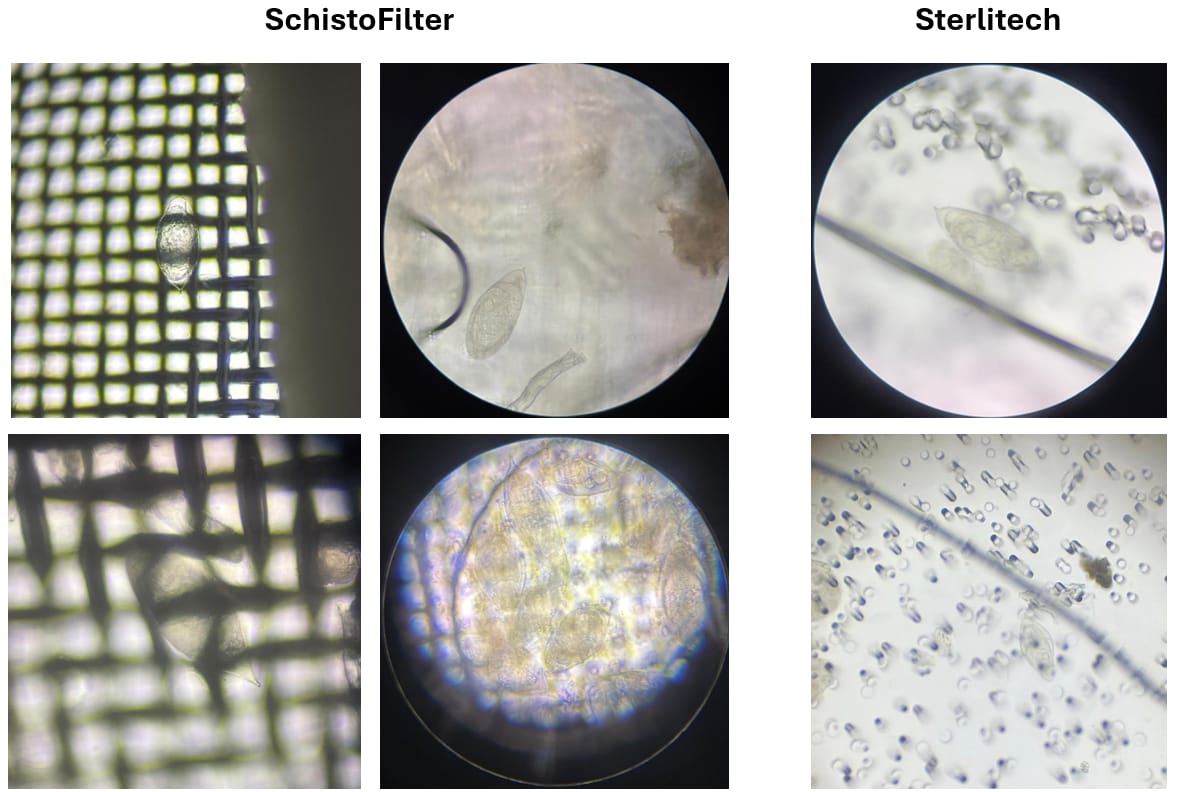
Compared with the standard Sterlitech filter, the SchistoFilter is not only cheaper — so far it has been just as effective, gives a quicker answer, and is Foldscope-compatible without additional glass slides or coverslips. We’ve also been very happy with the material changes in version 2.0, which have made it quicker and easier to see eggs on the filter.
Designed around the constraints
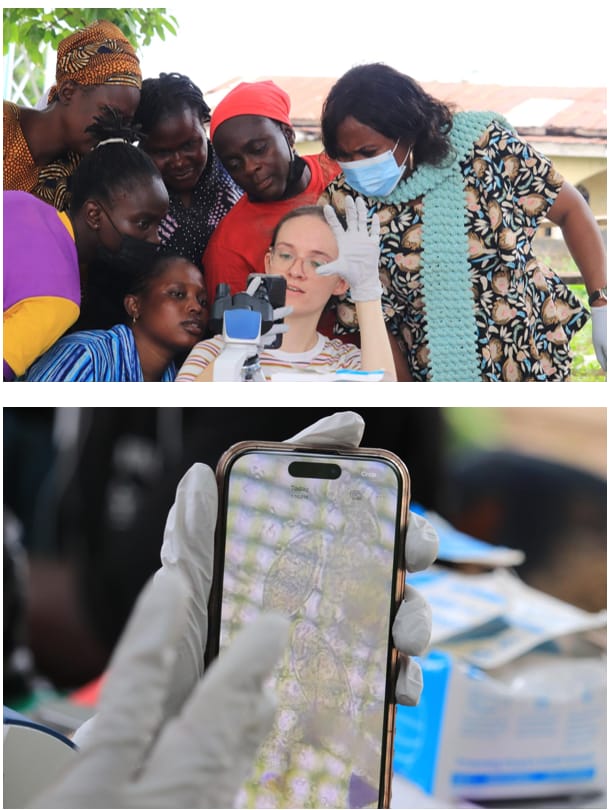
Technical performance is only one part of a diagnostic’s impact. For a technology to have meaningful, sustainable impact, it has to fit the infrastructure, resources, and practical realities of the communities it’s meant to serve. That’s why we designed the SchistoFilter specifically around the constraints of the rural communities where schistosomiasis is most burdensome. We’re excited to keep validating and iterating on the design alongside the community health extension workers and implementation partners who make this project run. Thank you, team!
A four-cent test, validated one egg at a time
Validation is the slow, careful road to getting a diagnostic approved and into more hands. Thank you for helping us walk it.