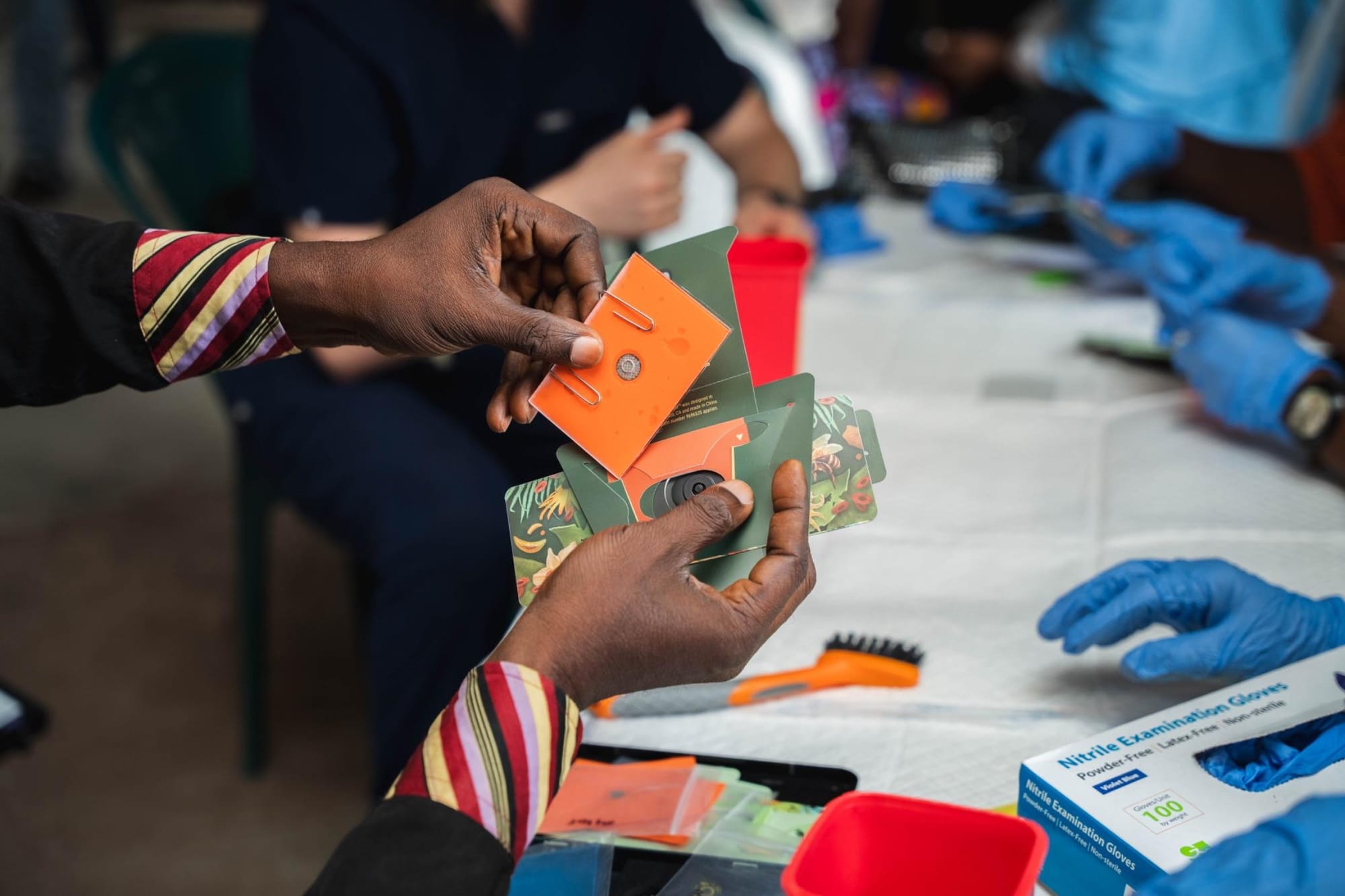
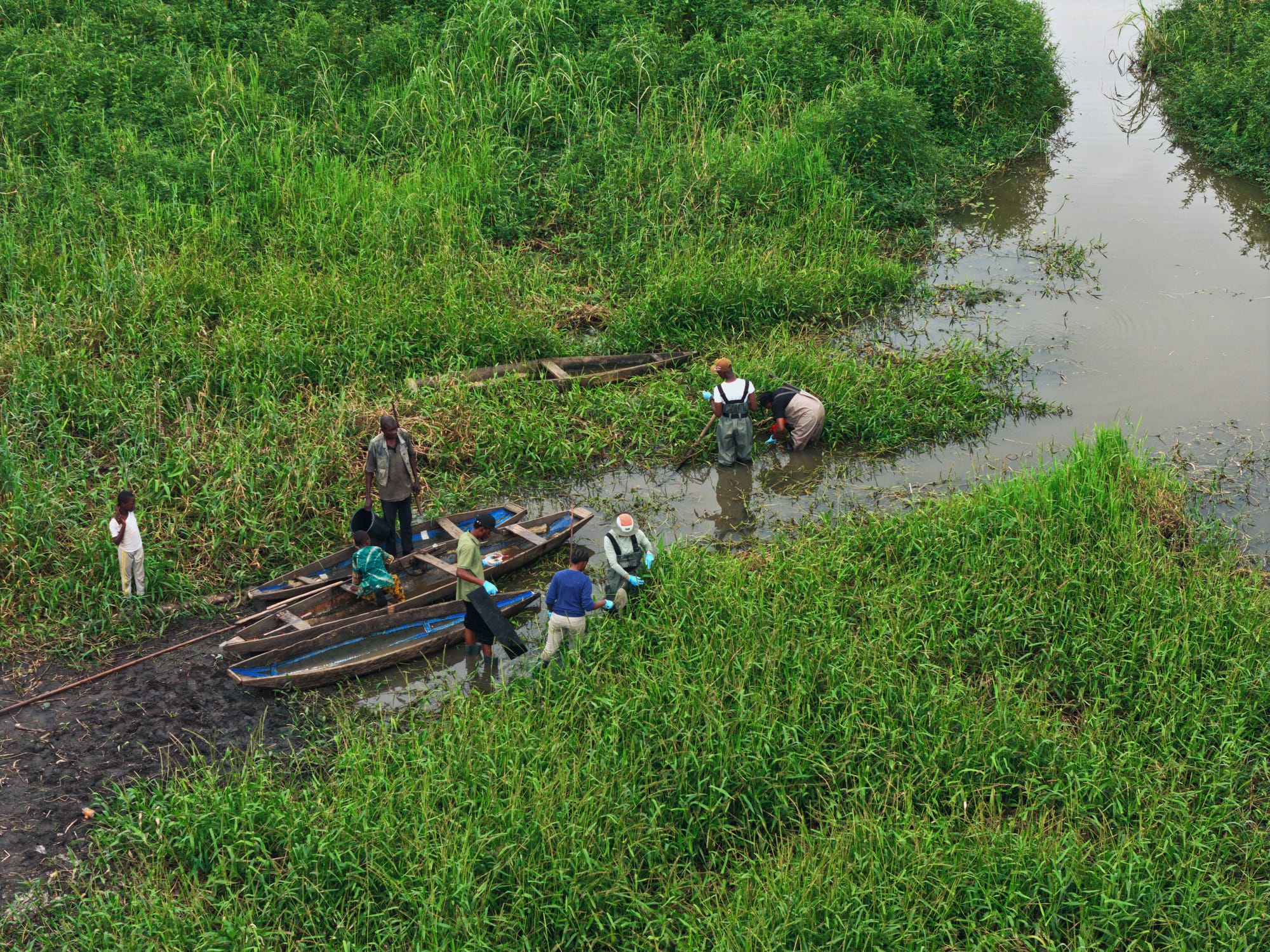
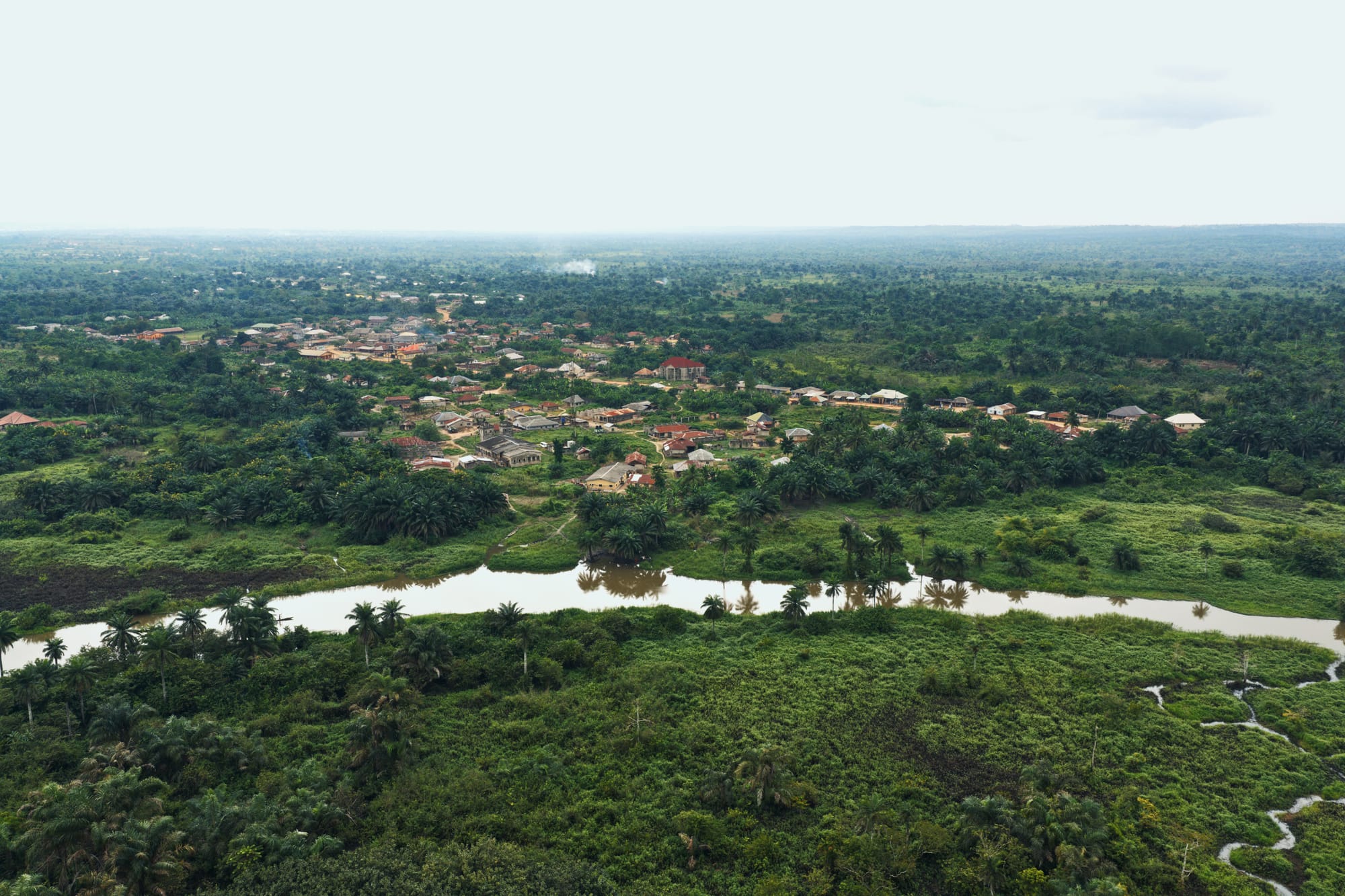
 Yewa River · Photo: Daniel Amao
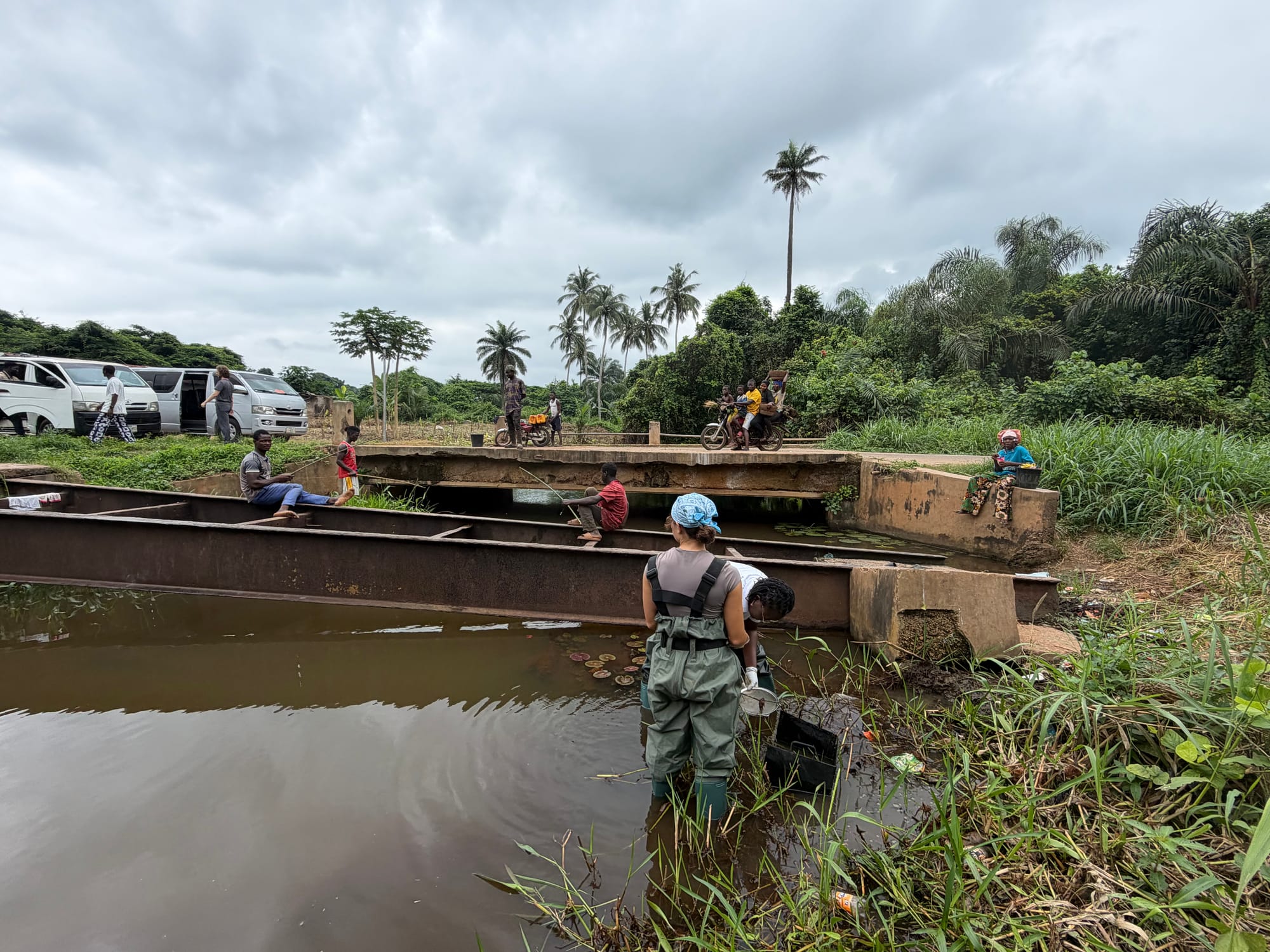
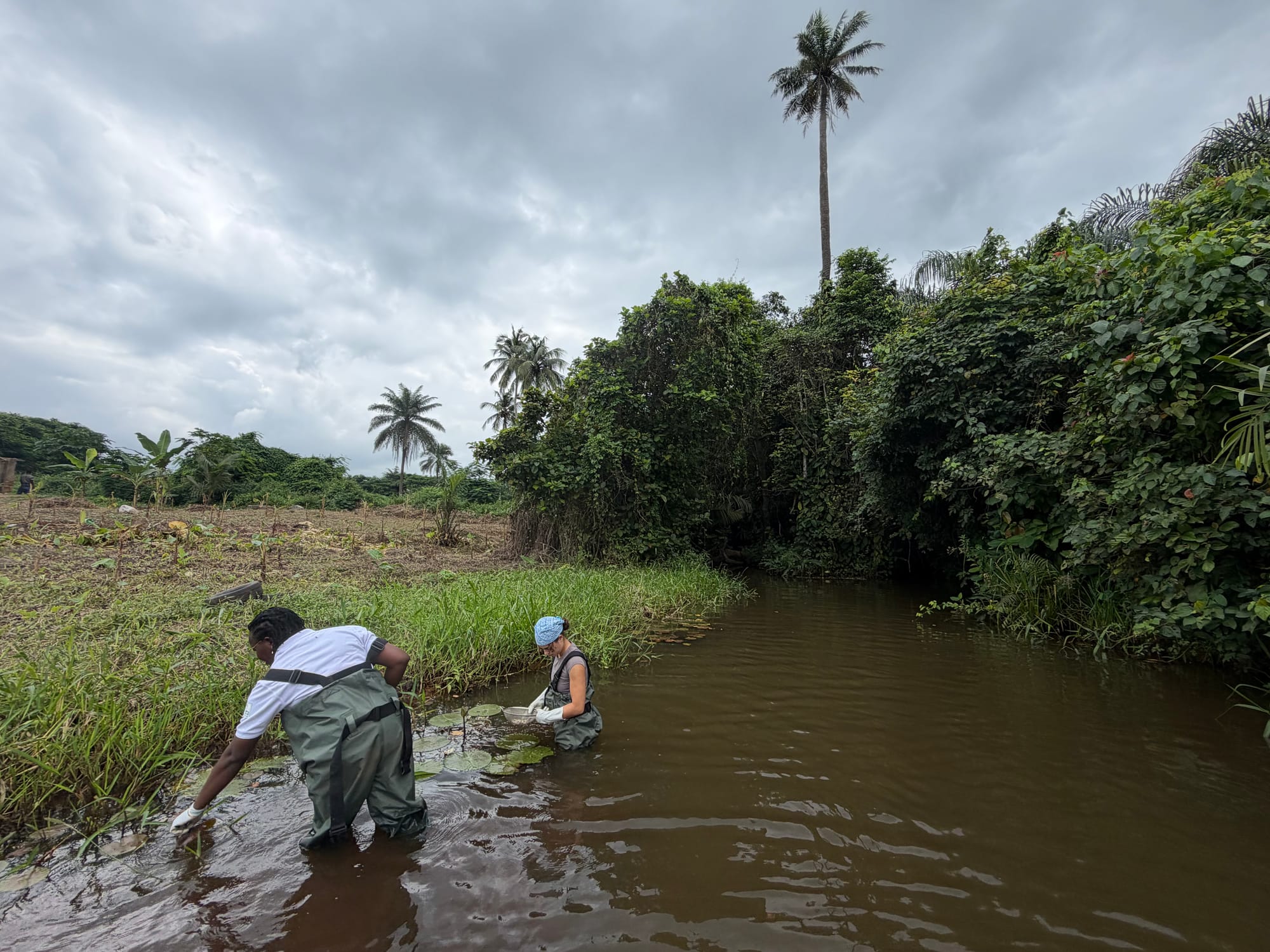
Do these pesky snails like plastic? This August, wading the small branches of the Yewa River, we kept finding the snails that carry schistosomiasis clinging to bottles, nylon sacks, and snagged clothing. So we started counting. This is a work-in-progress note on what we found.
Why look for snails at all?
The snails we’re after are Bulinus and Biomphalaria species, the intermediate hosts of the schistosome parasite. The worm spends most of its life inside a human host, but the other part of its life cycle happens in the water, inside snails. Infected snails release larvae that can burrow through the skin of anyone wading, washing, fishing, or playing in the river. So if we can find the snails’ favorite habitat — so far it looks like certain invasive plants, and maybe even trash — we can ask communities whether they’d like to remove it, and control the parasite at its source.
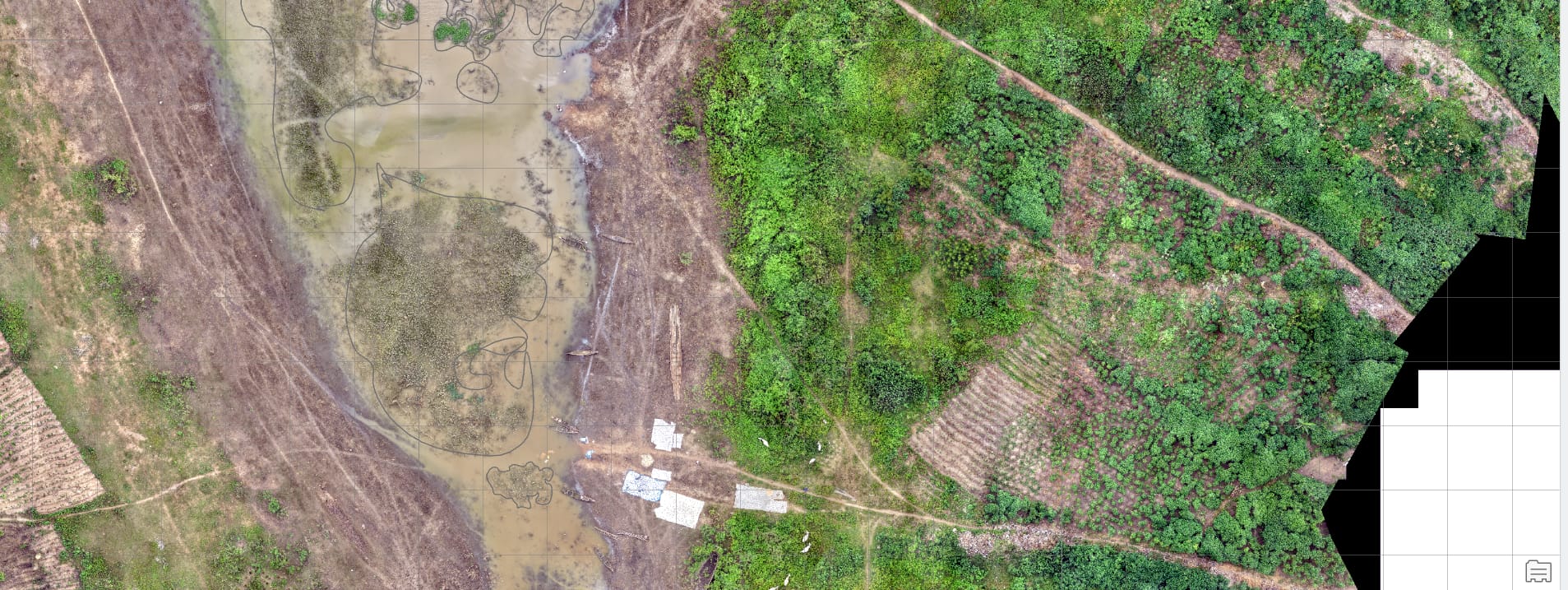
Last July, sitting in a fishing boat on the Oyan River, Dr. Olubukola Adelakun pulled up what looked like a sea monster from a children’s book: a long, continuous mat of Ceratophyllum trailing up out of the water, dotted with snails the size of pencil erasers. They were the snails that carry the worm behind schistosomiasis, hiding in the exact plant we’d read about from researchers in other parts of West Africa. It was a bit horrifying, but also hopeful: the snails were hiding in plain sight, and we could map their habitat from the air. (We wrote about that for Think Global Health.)
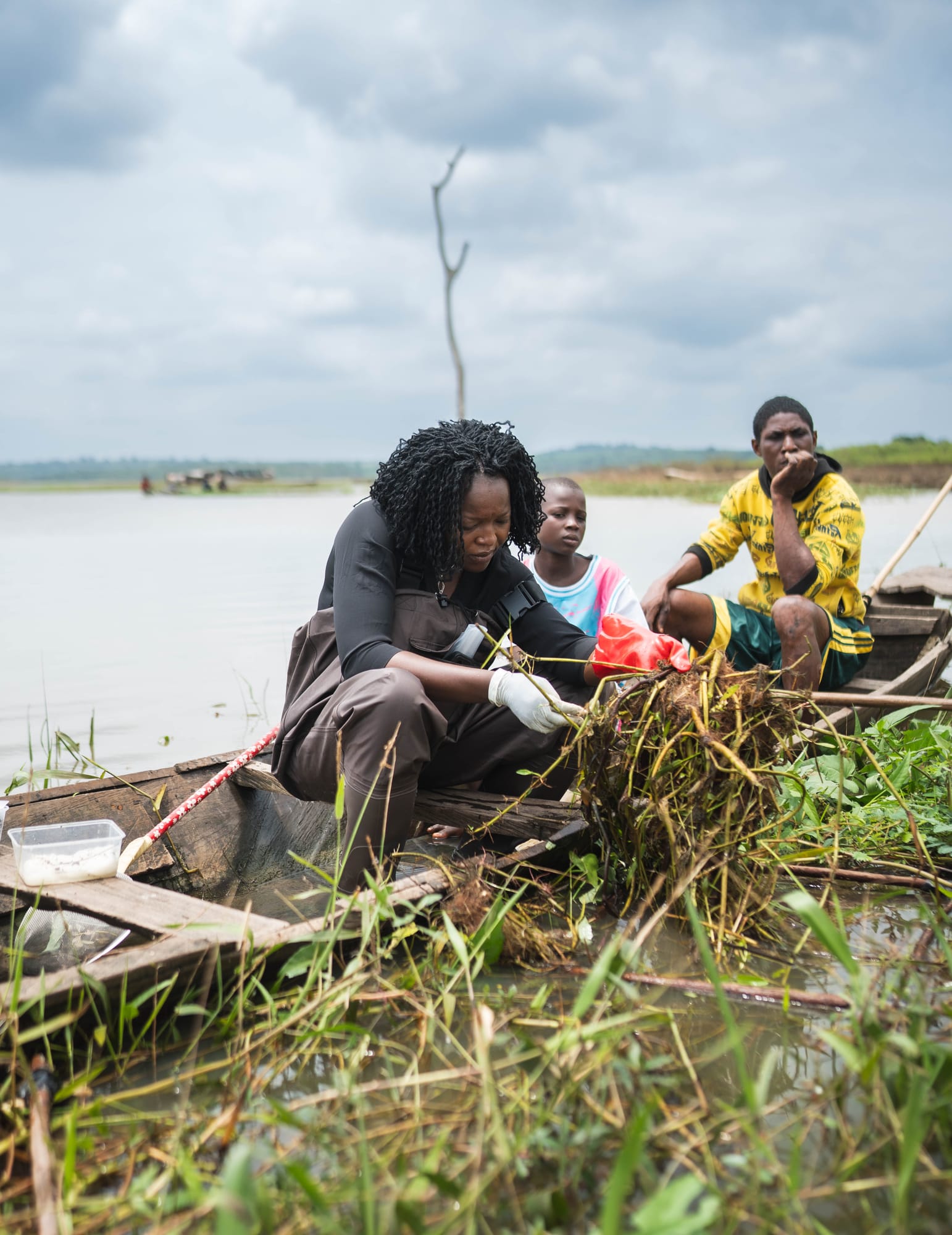
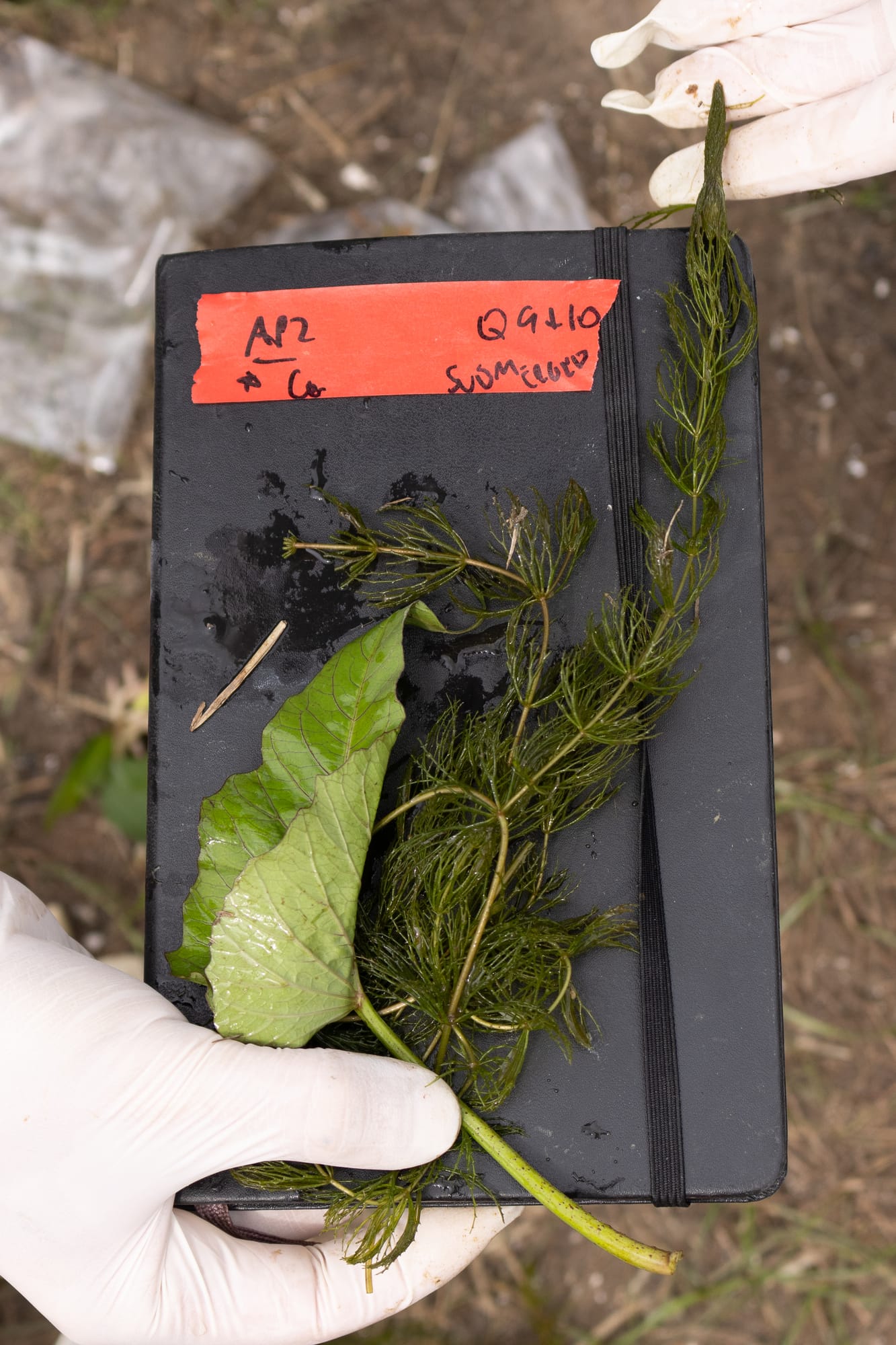
More recently, some of our mentors ran a series of studies in Senegal and found that aquatic plants and snail predators influence both how many snails live at a site and how many parasites they produce. The authors, including Dr. Giulio De Leo at Stanford, point to a simple reason: submerged plants provide lots of surface area for periphyton, the film of algae and microbes these snails graze on. Olubukola also thinks the snails like how still and sheltered it feels inside a textured plant, compared with flowing water over simpler surfaces. We’re grateful to have shared discussions with Dr. De Leo about this work, and for his feedback on how to improve our fieldwork in Nigeria.
A new kind of hiding spot
This August, wading along branches of the Yewa River, Cristina Salas, Olubukola, and I noticed something else in the water. Yes, there were plenty of plants along these smaller waterways — but that’s not all. Plastic bottles. Nylon sacks. Old clothing snagged on roots. And sometimes, clinging to that trash: the snails.
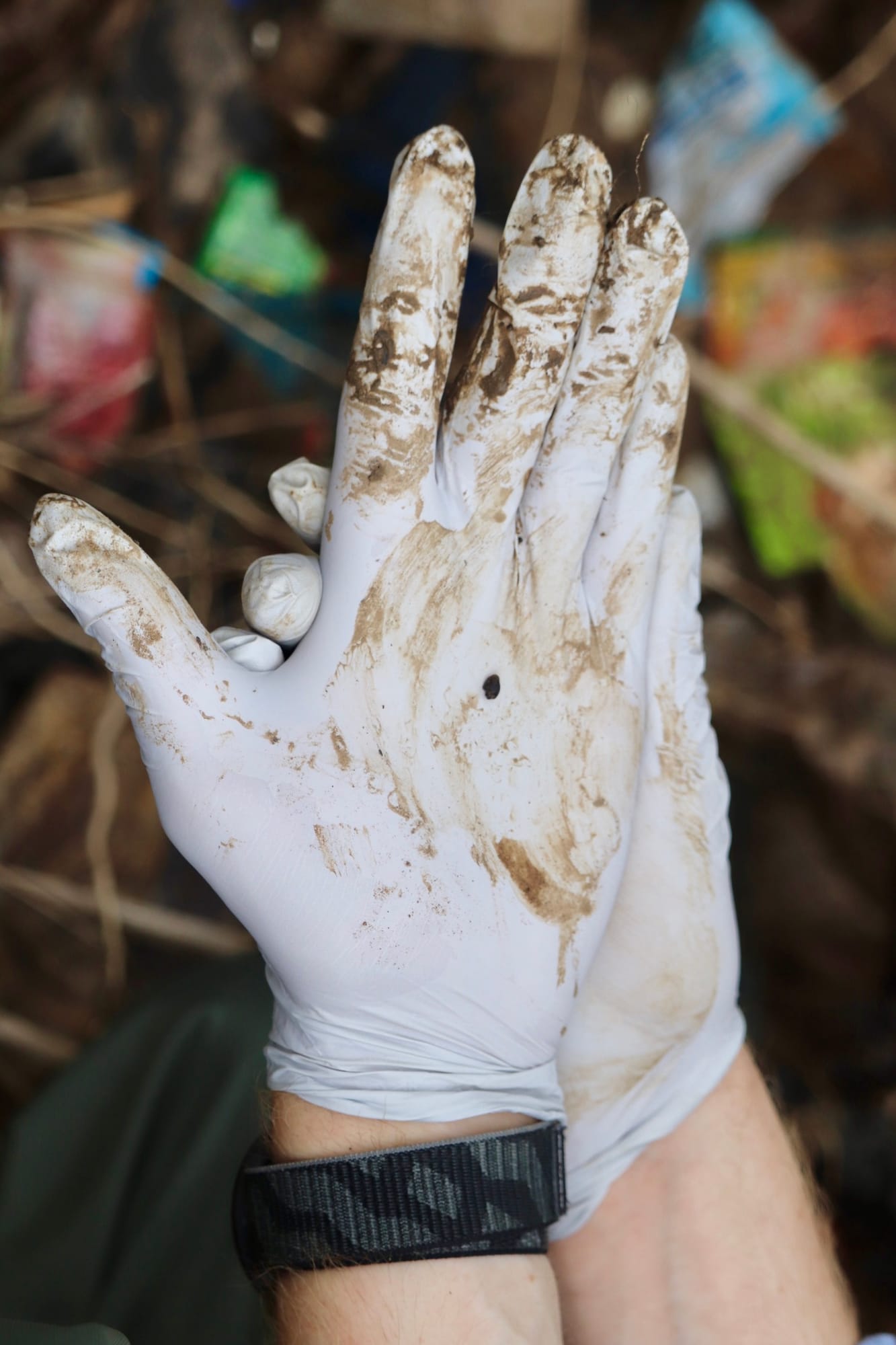
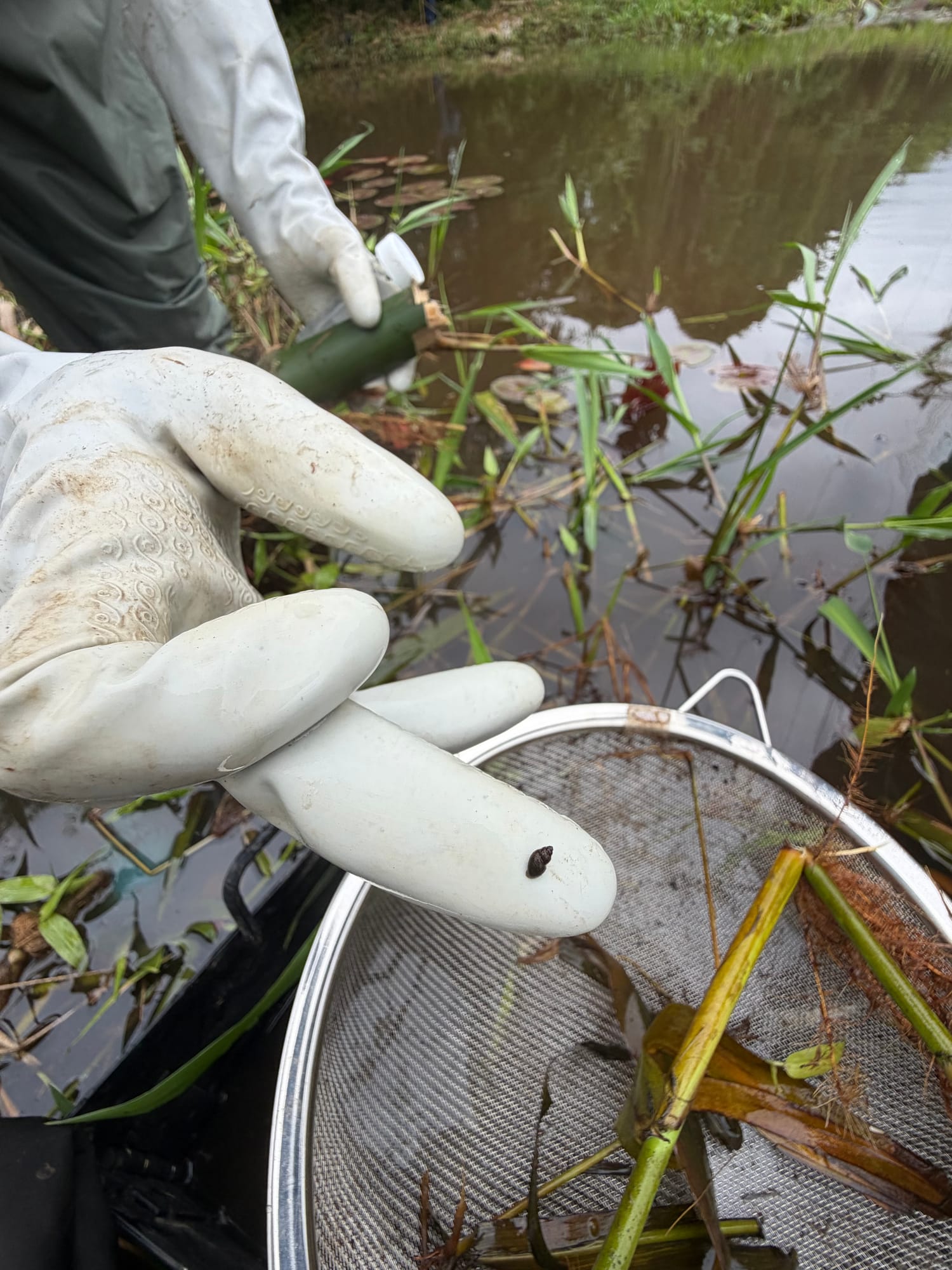
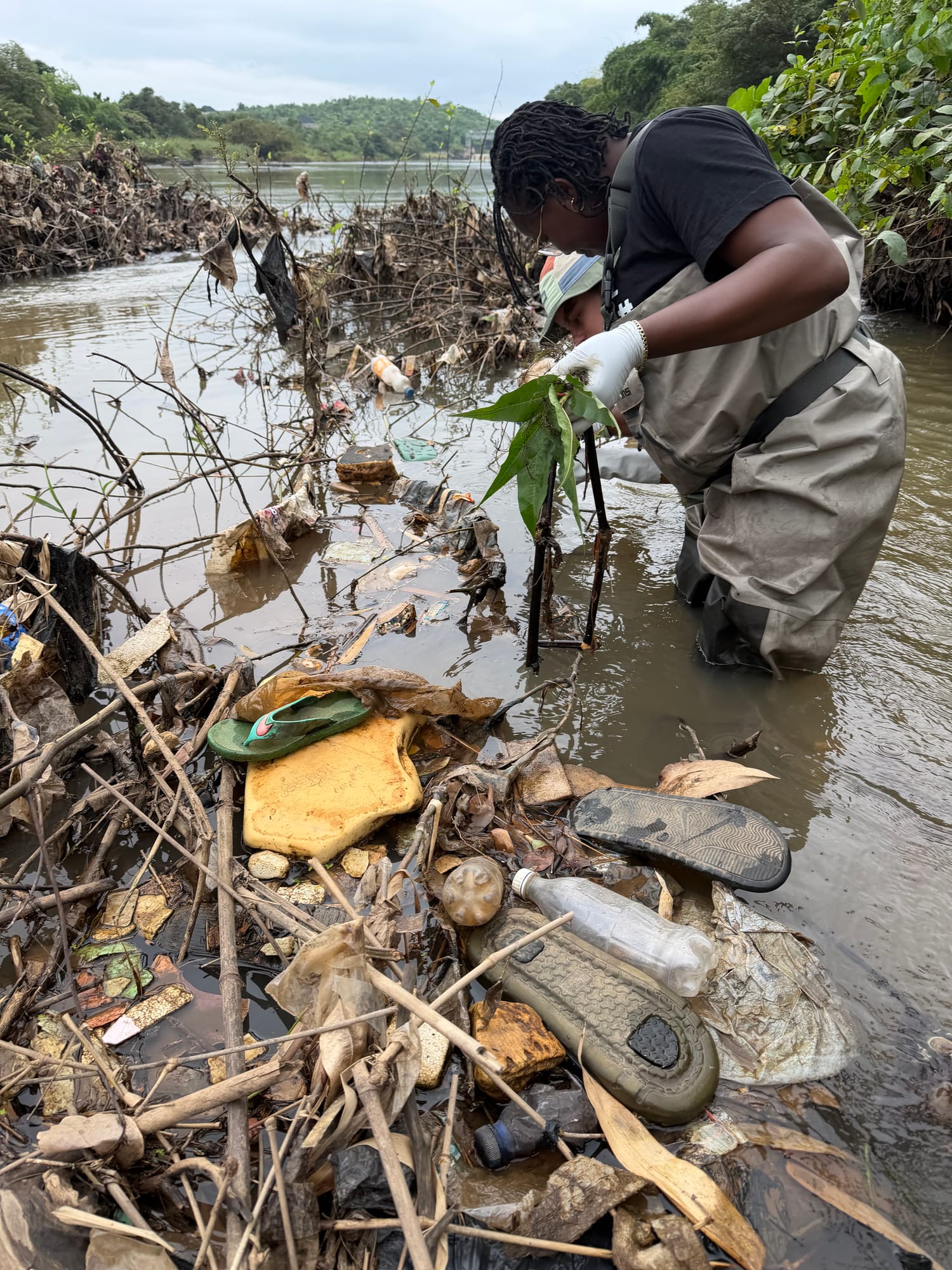
Was the trash giving these snails a home?
Plastic is an infectious-disease problem
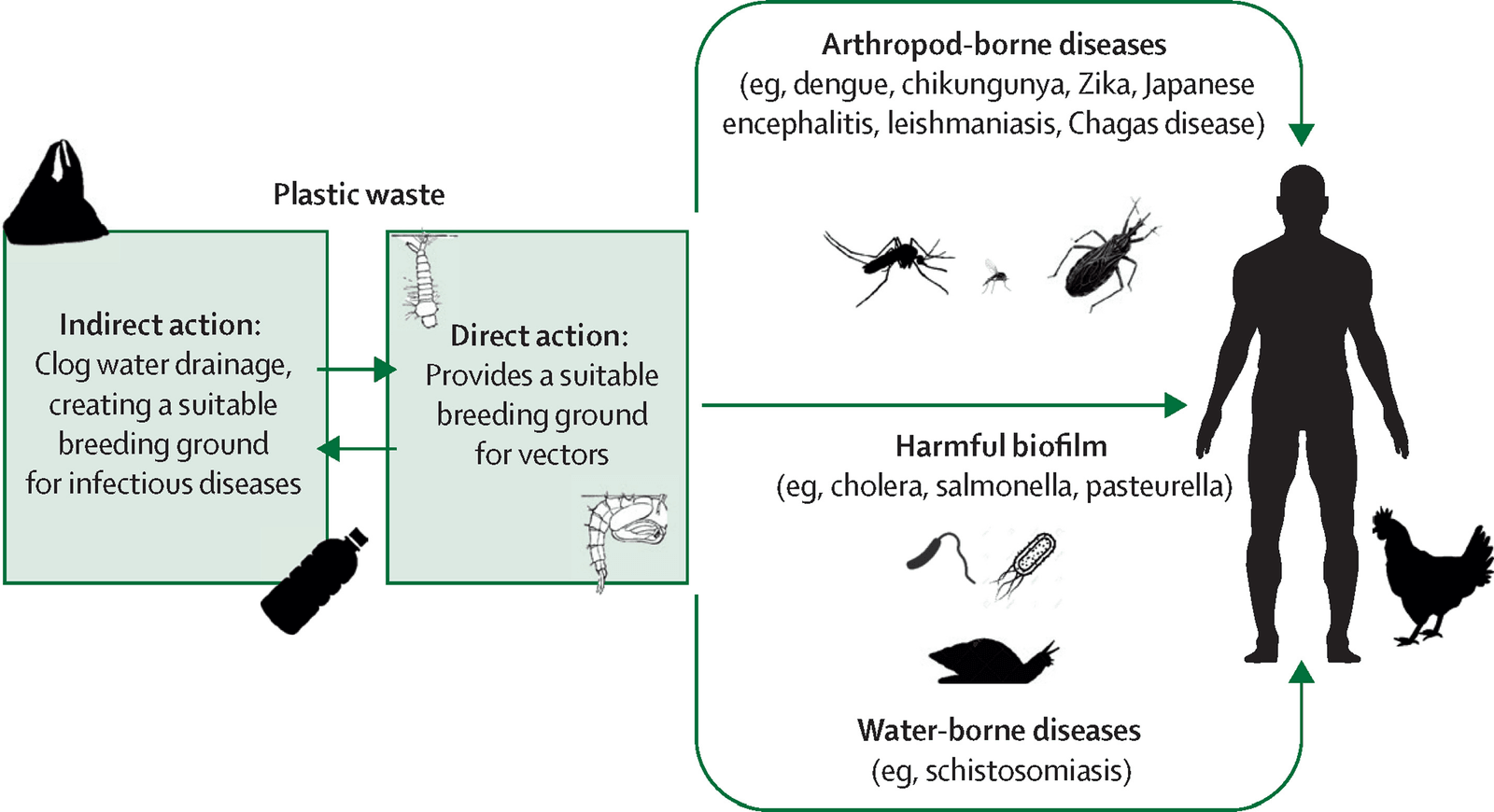
Before we get to snails specifically, it helps to zoom out. Around the world, trash and plastic have long been recognized as a public-health problem, and not only because they’re unsightly. A 2019 review noted that plastic pollution and solid waste are frequently cited as risk factors for vector-borne diseases and for diseases that spread from animals in cities. The clearest example is mosquitoes: Aedes aegypti, which spreads dengue, Zika, chikungunya, and yellow fever, prefers to breed in human-made containers like plastic tubs, tires, and trash. The same review proposed that discarded bottles, containers, and tires also promote malaria, other disease-carrying insects, and animal reservoirs like rodents.
Water-borne parasites may be next on that list. A 2022 Lancet Planetary Health commentary raised schistosomiasis specifically, proposing that plastic debris could create new habitat for host snails, and arguing that plastic pollution can reshape the ecology of infectious disease.
There’s also an important precedent from other kinds of pollution. In a field experiment, environmentally realistic levels of fertilizer, a herbicide, and an insecticide increased densities of schistosome-infected snails by boosting the algae snails eat and reducing the predators that eat snails, and models showed this could increase transmission. So pollution doesn’t always harm disease hosts. Sometimes it feeds them. Fertilizer runoff does it by growing more algae. Could plastic do it by giving that algae more surfaces to grow on?
Why plastic, you silly snails?
Bulinus snails, which carry Schistosoma haematobium, are grazers. They cling to submerged surfaces, feed on periphyton, and lay their jelly-like egg masses on hard surfaces. In a river, that usually means plants, rocks, sticks, leaves, or other organic debris. But a plastic bag works too — and unlike a plant, it doesn’t die back with the seasons. A bottle could work just fine. Safe and secure, too? Yes, please.
We’re definitely not the first to notice. WHO snail-survey guidance already tells field teams to check discarded plastics, alongside vegetation, decaying leaves, and sticks. And laboratories that maintain schistosome host snails routinely use plastic or Styrofoam surfaces to collect their egg masses.
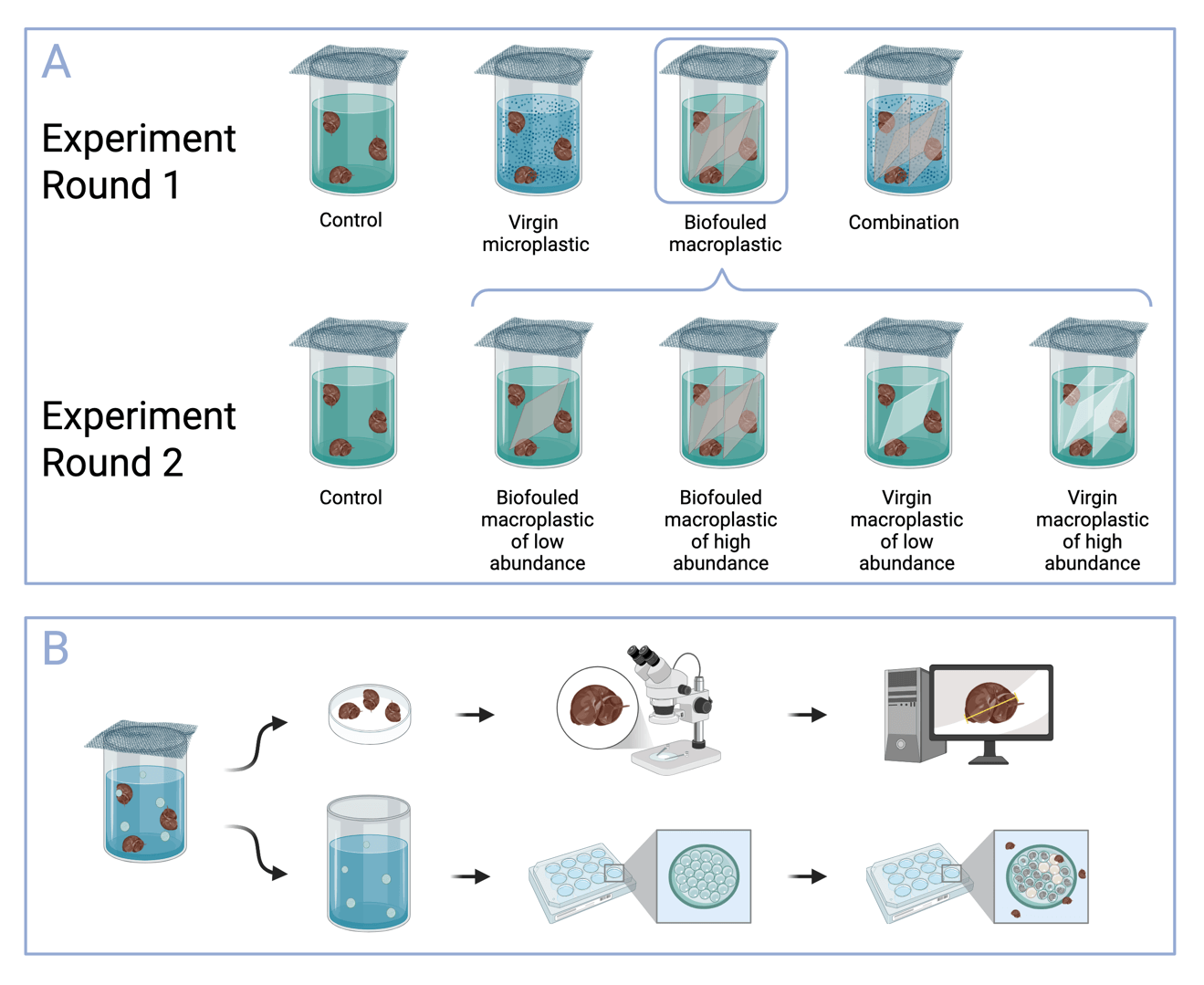
This spring, we met virtually with Dr. Kaitlyn Mitchell and Ao Yu from Dr. De Leo’s lab at Stanford, who were incredibly kind to share their experimental work on exactly this question. In a recent preprint (not yet peer reviewed), they exposed Bulinus truncatus to plastic in the lab, including PET bottle plastic that had soaked in freshwater long enough to grow a coat of biofilm. The results were striking: snails given biofilm-covered plastic grew faster and reproduced more, producing an estimated 89% more viable offspring per snail than controls in one experiment. Biofouled plastic consistently produced stronger effects than clean plastic, which suggests the real ingredient may be the living film on the plastic, not the plastic itself.
What biofouled plastic did in the lab
Source: Yu, Mitchell, Vannatta & De Leo, Research Square preprint, April 2026 (not yet peer reviewed).
So a plastic bag in the river may work less like litter and more like a snail snack bar:
The snack-bar hypothesis
Discarded plastic
A stable, submerged surface that doesn’t die back with the seasons.
Biofilm grows
Algae and microbes coat it: more food for grazing snails.
Still water
Sheltered, stagnant pockets give more egg-laying sites.
More snails?
Potentially more snails — and potentially more transmission.
It isn’t that simple, of course. In lab studies with another freshwater snail, Physa fontinalis, snails ate less and grew more slowly when their biofilm had formed on plastic rather than glass, and in a related experiment, snails feeding on biofilms from certain plastics laid fewer eggs in winter, but not in spring. The effect of plastic seems to depend on the snail, the season, and the setting. But that’s the beauty of biology, isn’t it? Things are very site- and species-specific.
That’s why field data matter, and why these observations are so exciting. What the lab can’t tell us is what happens in a real river — a gap our Stanford friends pointed to in their preprint, and one we set out to help fill. Kaitlyn and Ao, who also reviewed our protocol and helped refine our methods, kindly offered to collaborate. They’re the ones really pushing this question forward, with fieldwork in other places around the world, and their input shaped this survey from the outset.
A welded quadrat, and no cherry-picking
We came to the river this year with a new standard in mind: random sampling, and more rigorous ground-truthing. Dr. Morgan Sekou at Baylor College of Medicine graciously set us up on her Survey123 account, so we could collect granular, GPS-linked data at every sampling point, with a photo attached and a set of questions about everything we wanted to observe at each site. Super helpful. Thank you, Dr. Gunter and Dr. Sekou!
Then, the tools. A quadrat is a square frame that marks off a fixed patch of ground (or water) to search. If every sample covers the same area, you can compare one site to another. But flimsy frames bend, float, and drift in moving water, which quietly changes how much area you’re actually searching. So before we left, we had a quadrat welded from metal, 30 cm × 30 cm. It held its shape and stayed put on the riverbed, whether in current or in a thicket of plants.
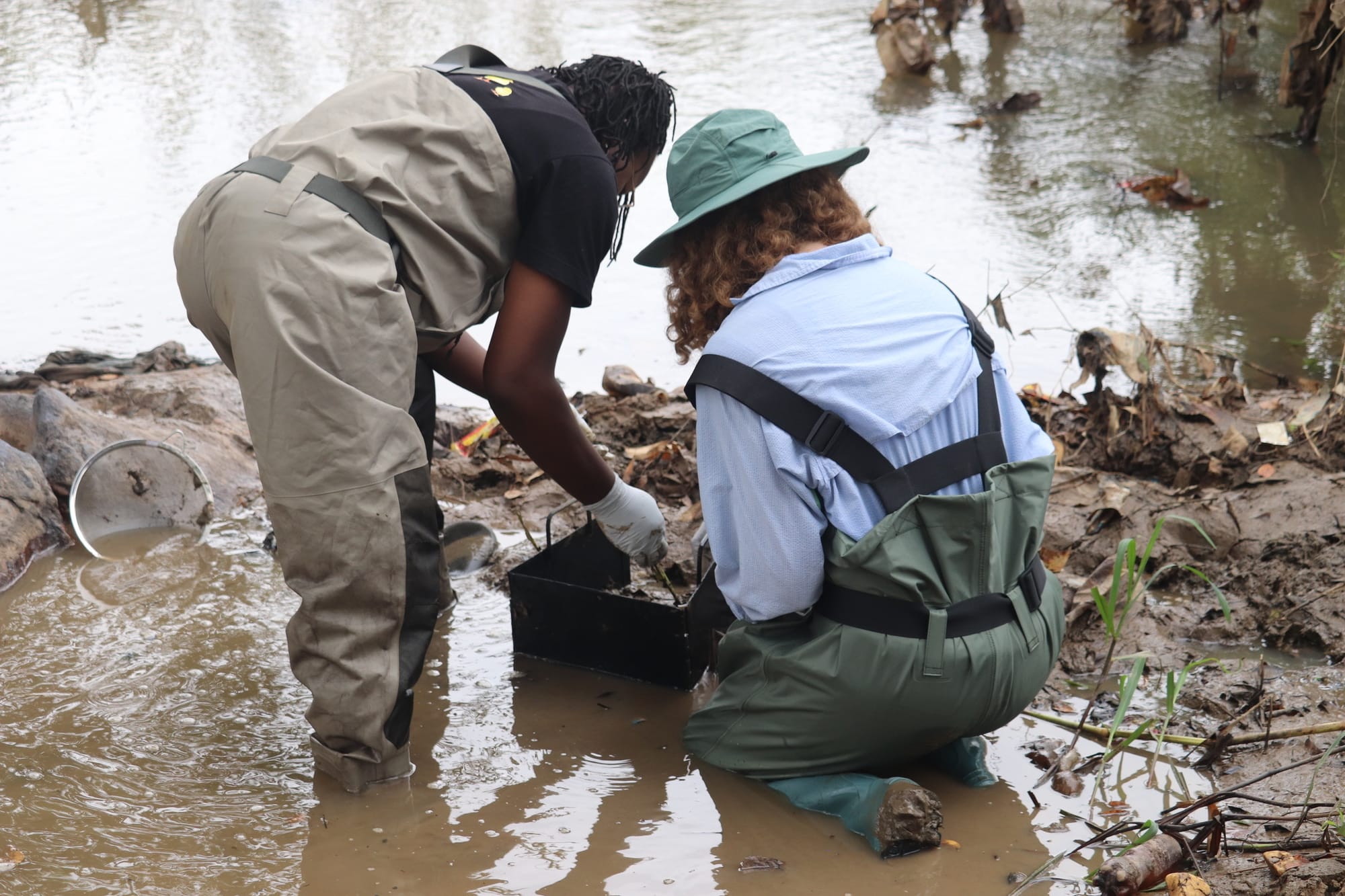
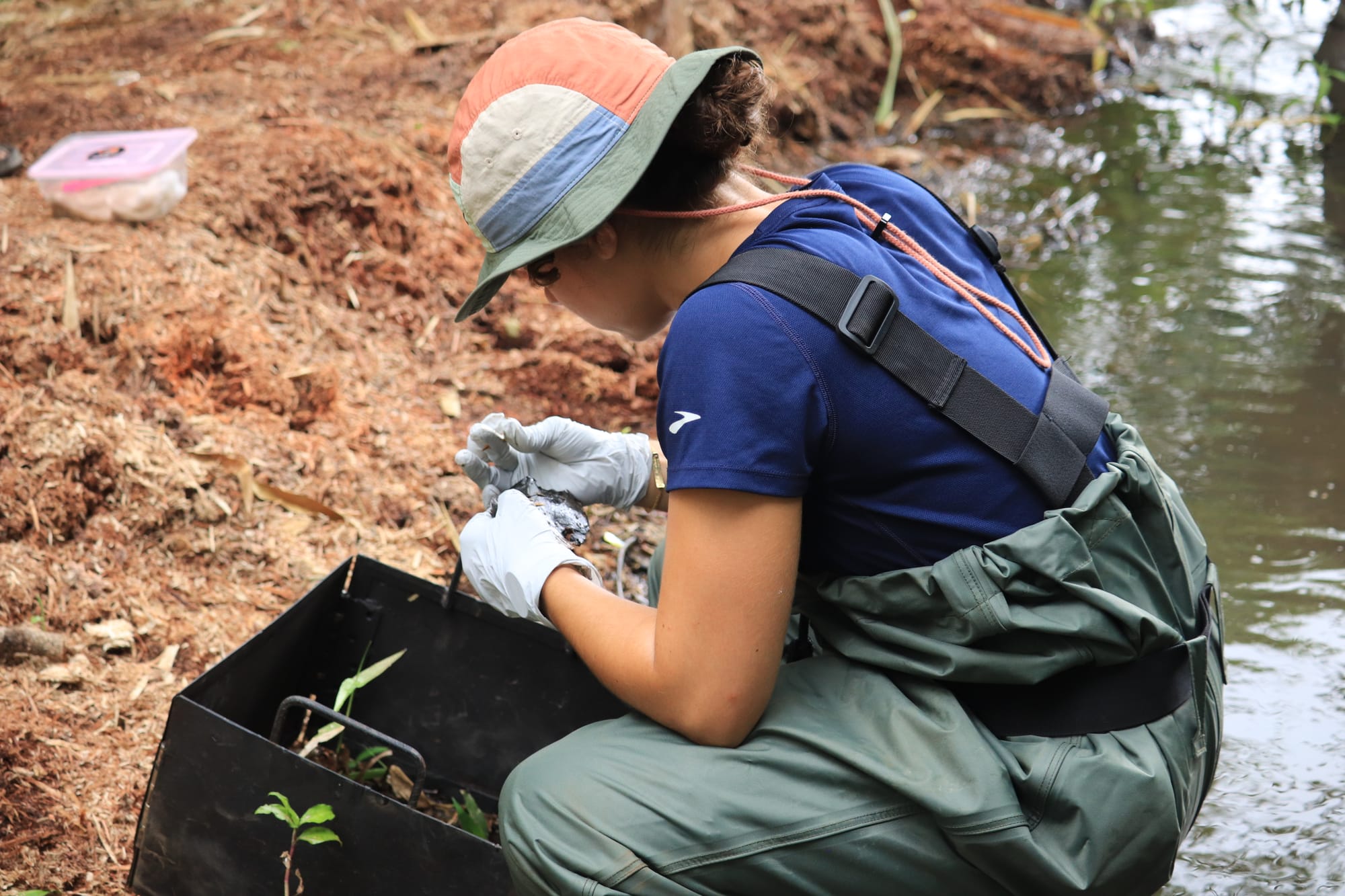
Then came the search. Guided by Dr. Chelsea Wood’s work, and by the literature on what it takes to make claims about snail quantity, we did an exhaustive search of every quadrat rather than searching for a set amount of time. Why? A timed search sounds fair, but some habitats are much quicker to search than others. Five minutes in open, sandy shallows covers a lot more ground than five minutes untangling a dense mat of submerged plants, so a fixed time would undercount snails in exactly the complex habitats we cared about most. In each quadrat, we searched through everything inside the frame — plants, mud, debris, and trash — with gloved hands, kitchen-sieve scoops, and determination.
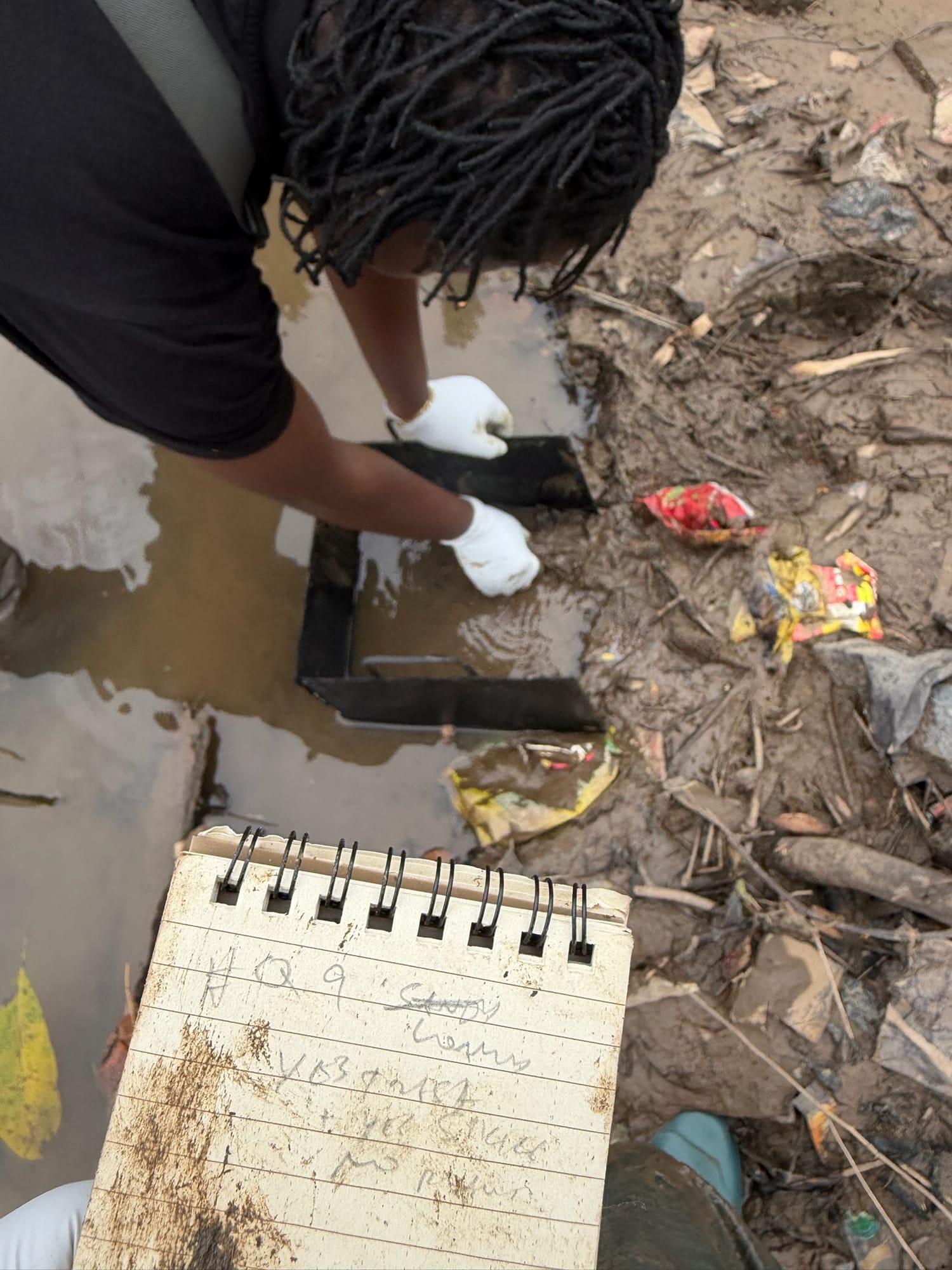
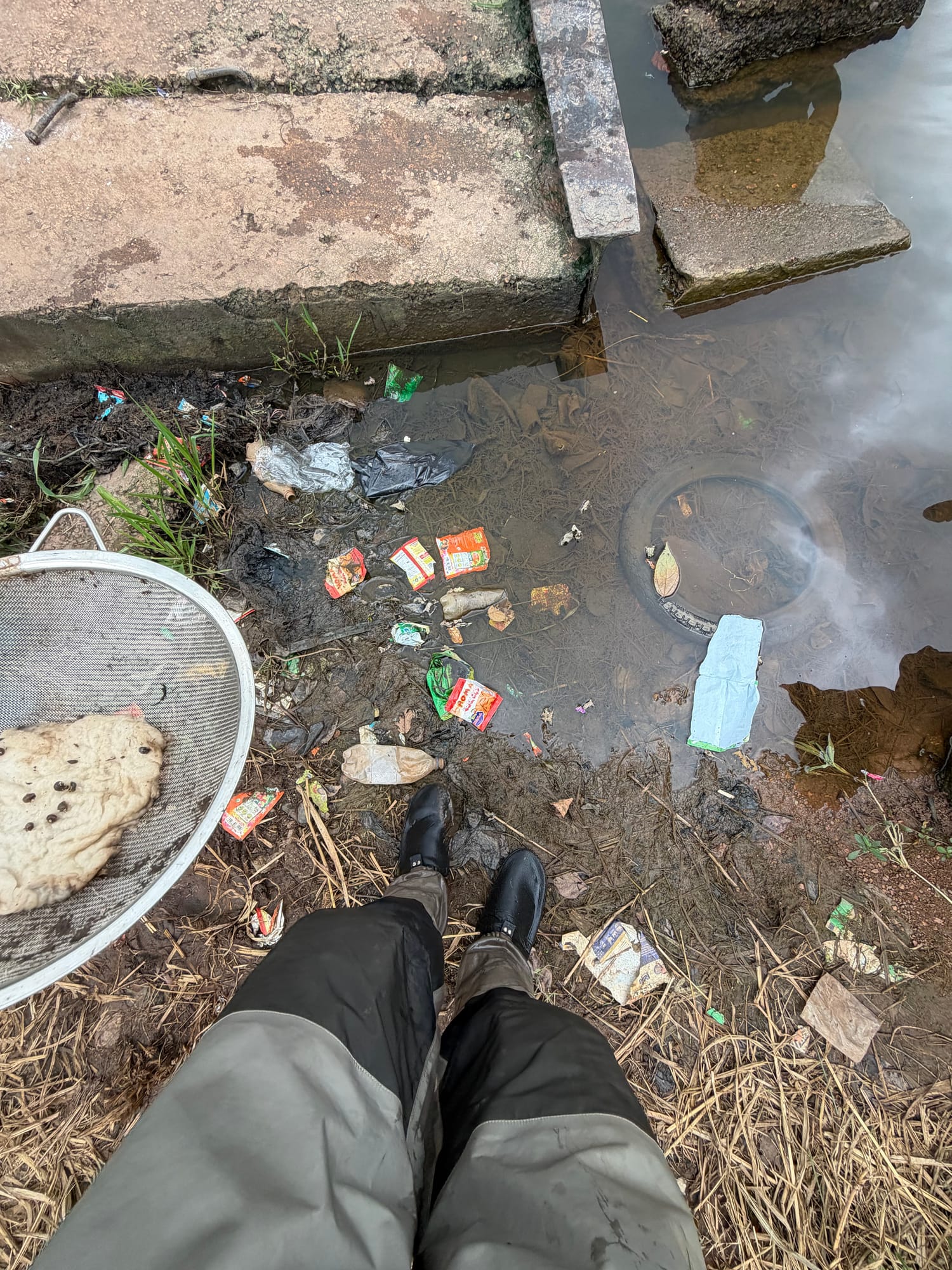
At every quadrat, we logged
Location
GPS coordinates, with the Pindrop app at first, then Survey123.
Water
Movement: still or moving.
Substrate
Sandy, muddy, or rocky.
Vegetation
Type, and which plants were present.
Human use
How people use the site: bathing, washing, fishing, farming, livestock.
Trash
A description of anything present, with field notes and a photo of every quadrat.
Random sampling: no cherry-picking snails. It’s tempting to drop your quadrat wherever snails look most likely to be. We didn’t let ourselves do that. Well — we forced each other not to (thank you, Cristina!).
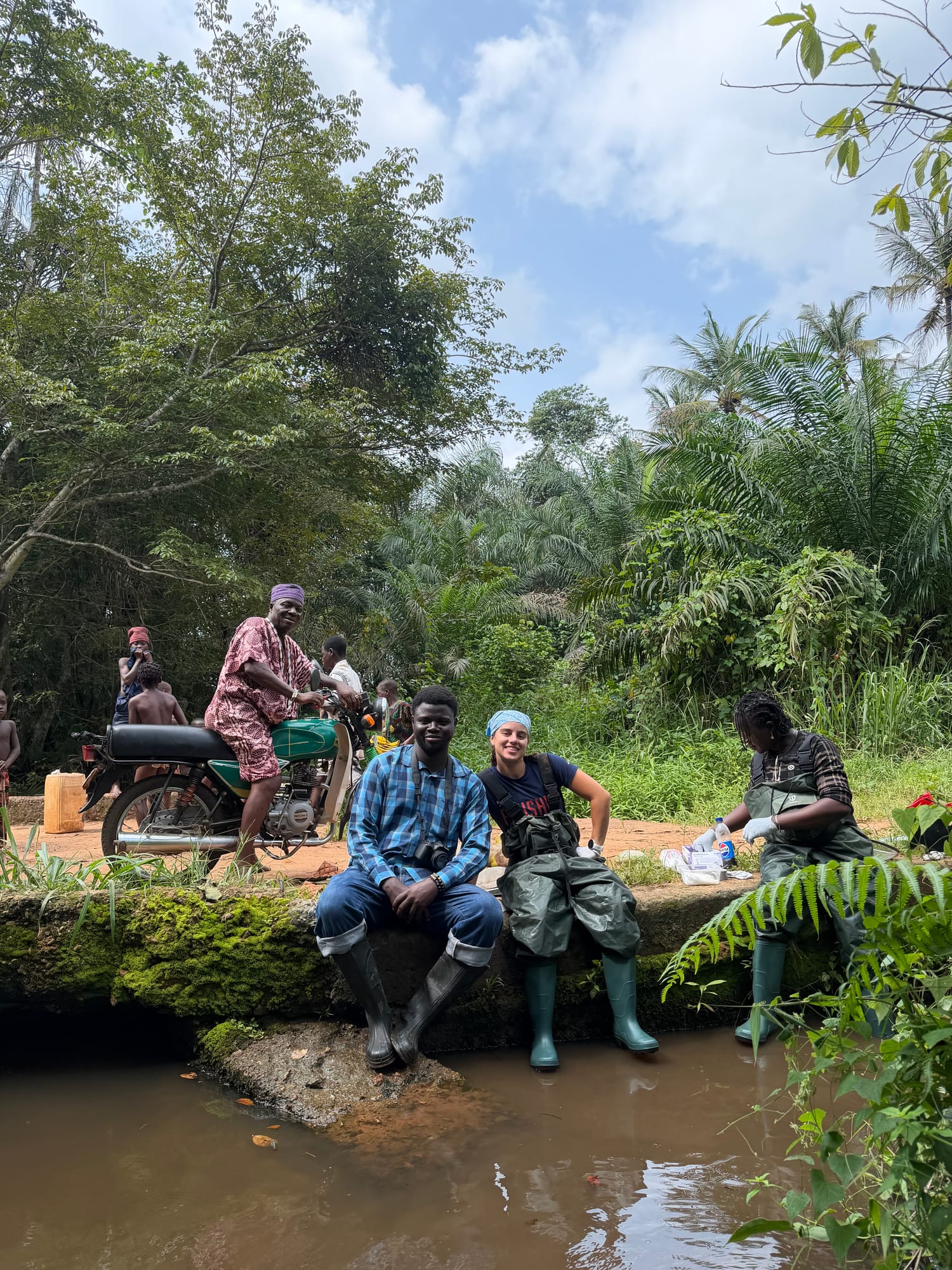
At each site, we first mapped the habitat types present and estimated how much of the site each one covered, following Wood and colleagues, who randomly placed nearly 2,000 quadrats across 32 water-contact sites in Senegal, and found that habitat measures predicted human reinfection better than snail counts themselves (so cool, and so useful to know). Quadrats were then allocated in proportion: if emergent vegetation made up half a site, it got about half of that site’s quadrats. Haggerty and colleagues used a similar habitat-based design, collecting snails at 15 random points stratified across three habitat types at each site.
Within each habitat, quadrat placement came down to randomly generated strides, a low-cost idea from Simon Birk. Our access to the river let us walk about 70 meters left or right of each access point. So we generated a list of 16 random numbers from −70 to 70 (negative for left, positive for right), then randomly assigned A, B, or C for 0, 1, or 2 strides out from the shore. Wherever the strides landed, the quadrat went down — snaily-looking or not.
The survey, so far
Counting trash
I want to document some preliminary findings, along with definitions of the measures we’re using, and we warmly invite feedback if you see ways we could do this better. More in-depth analyses of the aerial imagery are in the works, thanks to our friends at Harvard GAMI. And now that the drone lives locally with the Nigerian researchers on our team, we can keep measuring and monitoring across seasons and communities, which will make our findings more generalizable.
To be clear, the measure I’m reporting here is simply yes or no: is there trash in this quadrat? A quadrat counted as “trash present” if we found any inorganic waste inside the frame: plastic, nylon, bottles, clothing. One bottle cap and a whole pile of jumbled waste count the same, because our first question was whether trash is there, not how much. Each community then gets a trash rate: the share of its quadrats with trash. In Ilewo Orile, 13 of 18 quadrats had trash, a trash rate of 72%.
At first glance, trash and snails go together. Quadrats with trash had about three times the odds of having snails, and about twice as many snails.
Trash and snails: the numbers so far
| Comparison | Test | Result |
|---|---|---|
| Snail-positive rate, no trash vs. trash | Fisher’s exact | 17.8% vs. 41.3%; OR 3.25, p = 0.002 |
| Snail count, no trash vs. trash | Negative binomial regression | IRR 2.15 (95% CI 1.07–4.30), p = 0.031 |
| Snail count, no trash vs. trash (rank-based) | Mann–Whitney U | p = 0.002 |
| Snail-positive rate, adjusted for community clustering | Mixed-effects logistic (community random intercept) | OR 2.76, p < 0.001 |
| Snail-positive rate, fully adjusted for habitat (n = 117 quadrats) | Mixed-effects logistic | OR 1.19 (95% CI 0.47–3.00), p = 0.72 |
At the community level, too: communities with higher trash rates had more snail-positive quadrats (r = 0.74, p = 0.009, 11 communities). Preliminary. Analysis ongoing.
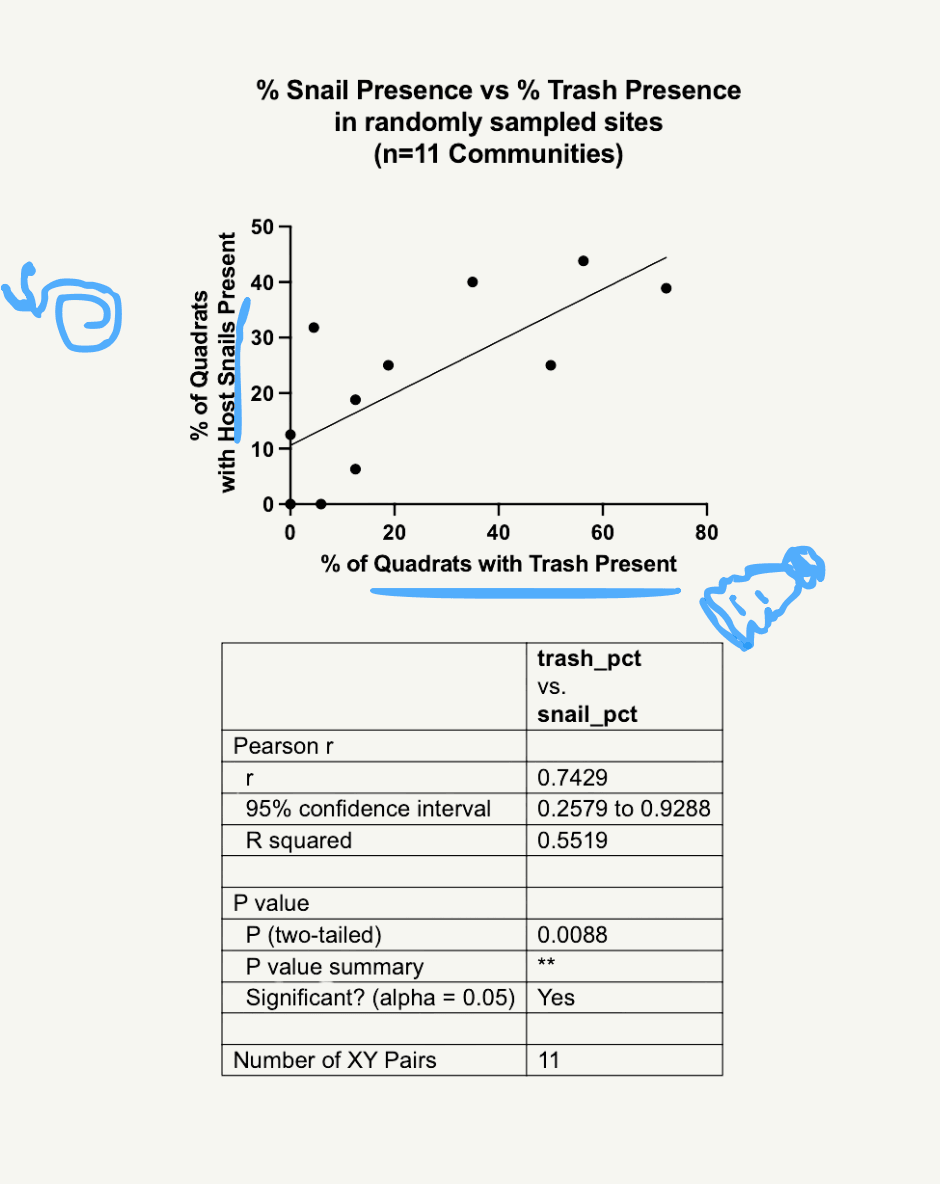
But what about the water? Trash doesn’t land just anywhere. It piles up in calm water, among plants, and at the spots where people wash, fish, farm, and bathe. Those are exactly the places snails love, too. Once we accounted for water movement, substrate, and human use in one model, trash’s effect mostly disappeared (the last row of the table). The factors that held up on their own were:
What held up on its own
Still water
About four times the odds of snails (OR 3.83), consistent with earlier ecology; in Cameroon, for example, higher water flow was linked to fewer Bulinus.
People using the site
About four and a half times the odds (OR 4.47).
Imoto is a nice example: lots of snails (31.8% of quadrats) but almost no trash (4.5%). Its snails are explained by its water and habitat, not by garbage.
For now, trash looks like a marker — it flags the places where snails thrive.
Our data can’t show that trash itself causes more snails. But for us, the bottom line is removal: if the end goal is finding things we can remove to shrink snail populations, trash is still on the table. And we may be able to ask sharper questions with more time in the dataset. We’ll be exploring other variables and relationships, with more nuanced analyses alongside our public-health and environmental-health mentors.
Plastic for cash
Ogun State’s capital, Abeokuta, just launched funded plastic-for-cash programs to incentivize recycling and clear plastic from the waterways and streets, backed by the Ministry of Environment and state leadership.
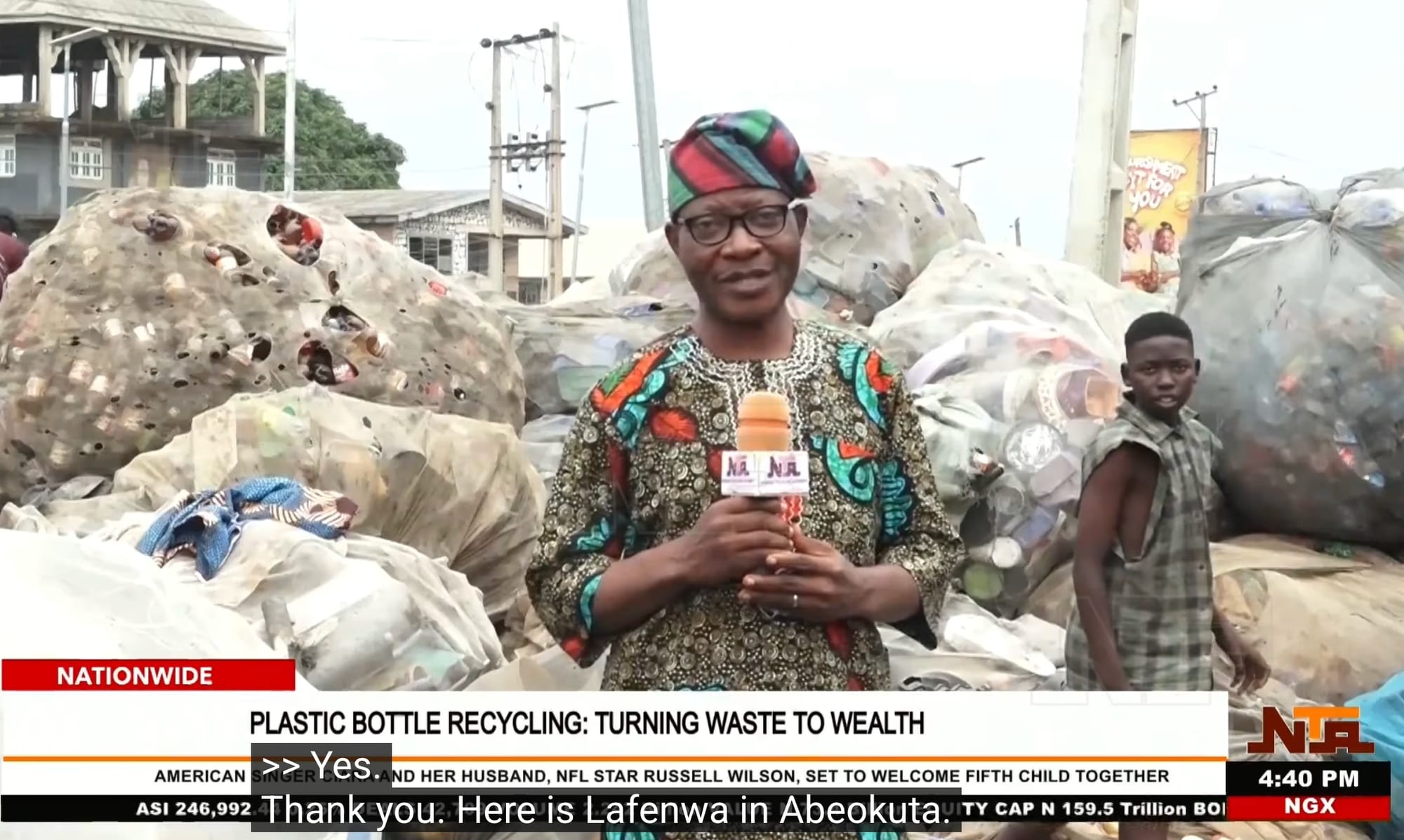
And in Ilewo Orile, the community already organizes its own river clean-ups. Can you see where I’m going with this?
From “whether” to “how much”
The Stanford work pointed us somewhere new: it may not just be whether trash is in the river, but how much submerged plastic is coated in biofilm. So next, we’ll record how much submerged plastic is present and whether it’s biofouled, track changes across seasons, and see whether clean-ups change snail numbers at the same sites. All of this runs alongside continued test-and-treat and education in six communities.
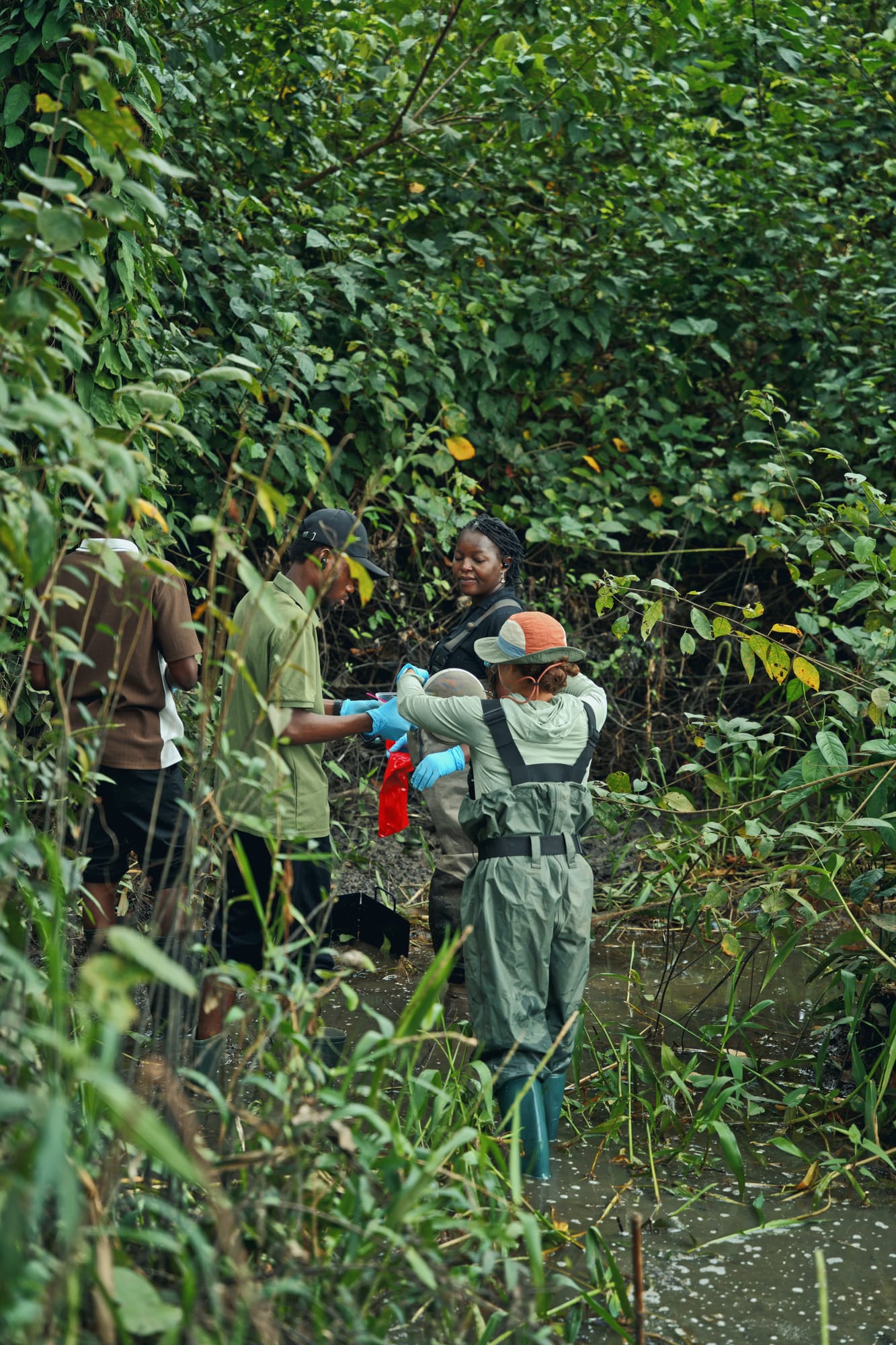
Thank you to Dr. Kaitlyn Mitchell, Ao Yu, Dr. Giulio De Leo, and Dr. Chelsea Wood for their guidance on our protocol iterations; to Dr. Morgan Sekou for getting us set up on Survey123; to Simon for the random-stride method; to Harvard GAMI for the aerial-imagery analysis to come; to Dr. Olubukola Adelakun and Cristina for long days in rubber boots; to every FUNAAB graduate student who helped us learn methods and collect data; to the volunteers; to every community member who helped us get oriented to the most important water-use sites; and to Daniel Amao for these wonderful photos.
References
- McCarthy W, Adelakun O, Salas C, Kathiresan R, Copeland T, Soneye I, Amao D, Ekpo UF. Drone mapping: a bird’s-eye view of a neglected tropical disease in Nigeria. Think Global Health, July 15, 2026. thinkglobalhealth.org ↗
- Klumpp RK, Chu KY. Importance of the aquatic weed Ceratophyllum to transmission of Schistosoma haematobium in the Volta Lake, Ghana. Bull World Health Organ. 1980;58(5):791–798.
- Haggerty CJE, et al. Aquatic macrophytes and macroinvertebrate predators affect densities of snail hosts and local production of schistosome cercariae that cause human schistosomiasis. PLoS Negl Trop Dis. 2020;14(7):e0008417. doi.org ↗
- Krystosik A, et al. Solid wastes provide breeding sites, burrows, and food for biological disease vectors, and urban zoonotic reservoirs: a call to action for solutions-based research. Front Public Health. 2020;7:405. doi.org ↗
- Maquart PO, Froehlich Y, Boyer S. Plastic pollution and infectious diseases. Lancet Planet Health. 2022;6(10):e842–e845. doi.org ↗
- Halstead NT, et al. Agrochemicals increase risk of human schistosomiasis by supporting higher densities of intermediate hosts. Nat Commun. 2018;9:837. doi.org ↗
- World Health Organization. Field Use of Molluscicides in Schistosomiasis Control Programmes: An Operational Manual for Programme Managers. Geneva: WHO.
- Schistosomiasis Resource Center, Biomedical Research Institute. Standard operating procedures for the maintenance of Biomphalaria glabrata and Bulinus truncatus.
- Yu A, Mitchell KR, Vannatta JT, De Leo G. Plastic pollution reshapes snail intermediate host life history: implications for schistosomiasis transmission. Research Square [preprint]. April 30, 2026. researchsquare.com ↗
- A domesticated photoautotrophic microbial community as a biofilm model system for analyzing the influence of plastic surfaces on invertebrate grazers in limnic environments. Front Microbiol. 2023;14:1238913. doi.org ↗
- Environmental conditions affect the food quality of plastic-associated biofilms for the benthic grazer Physa fontinalis. Sci Total Environ.
- Wood CL, Sokolow SH, Jones IJ, et al. Precision mapping of snail habitat provides a powerful indicator of human schistosomiasis transmission. PNAS. 2019;116(46):23182–23191. doi.org ↗
- Wepnje GB, et al. Seasonal and environmental dynamics of intra-urban freshwater habitats and their influence on the abundance of Bulinus snail host of Schistosoma haematobium in the Tiko endemic focus, Mount Cameroon region. PLoS One. 2023;18(10):e0292943. doi.org ↗
Snail control is a real possibility
Controlling the snails is a WHO-endorsed strategy in moderately endemic areas like these, but it takes mapping the habitat and bringing implementation plans to the communities affected. Your support keeps the fieldwork going.