Health in Your Hands
HomeSCOPEField notesCollaboratorsLeadership Donate
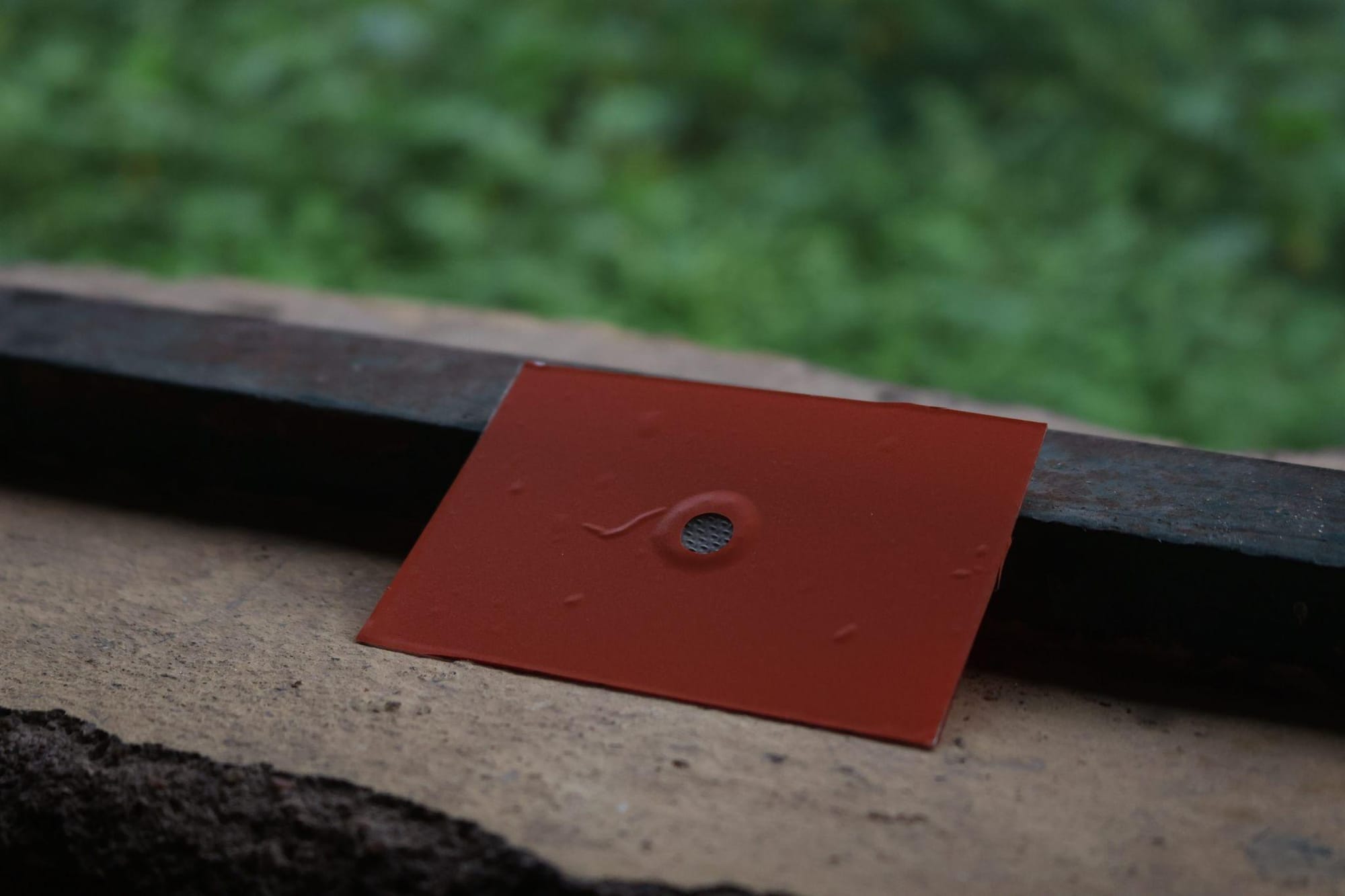
An orange SchistoFilter card with a small stainless-steel mesh window leans against a weathered wooden ledge, green foliage behind
← All field notes
SCOPE Field note · Diagnostics

The SchistoFilter card: from napkin sketch to field-ready

September 3, 2025 · 6 min read
The SchistoFilter, field-ready

For months we tried to trap schistosome eggs in microfluidic channels, wedges, and staircases. Then we asked a simpler question: what about just filtering them?

Trapping designs kept running into the same walls: seals that leaked, thick parts that didn’t fit the Foldscope’s short focal length, and glass slides as a consumable. So we sketched it the other way around. Push urine through a screen, load the screen into a Foldscope, and look at what it caught. Could the filter itself be reusable? What are the advantages of filtering and viewing, as opposed to trapping and viewing?
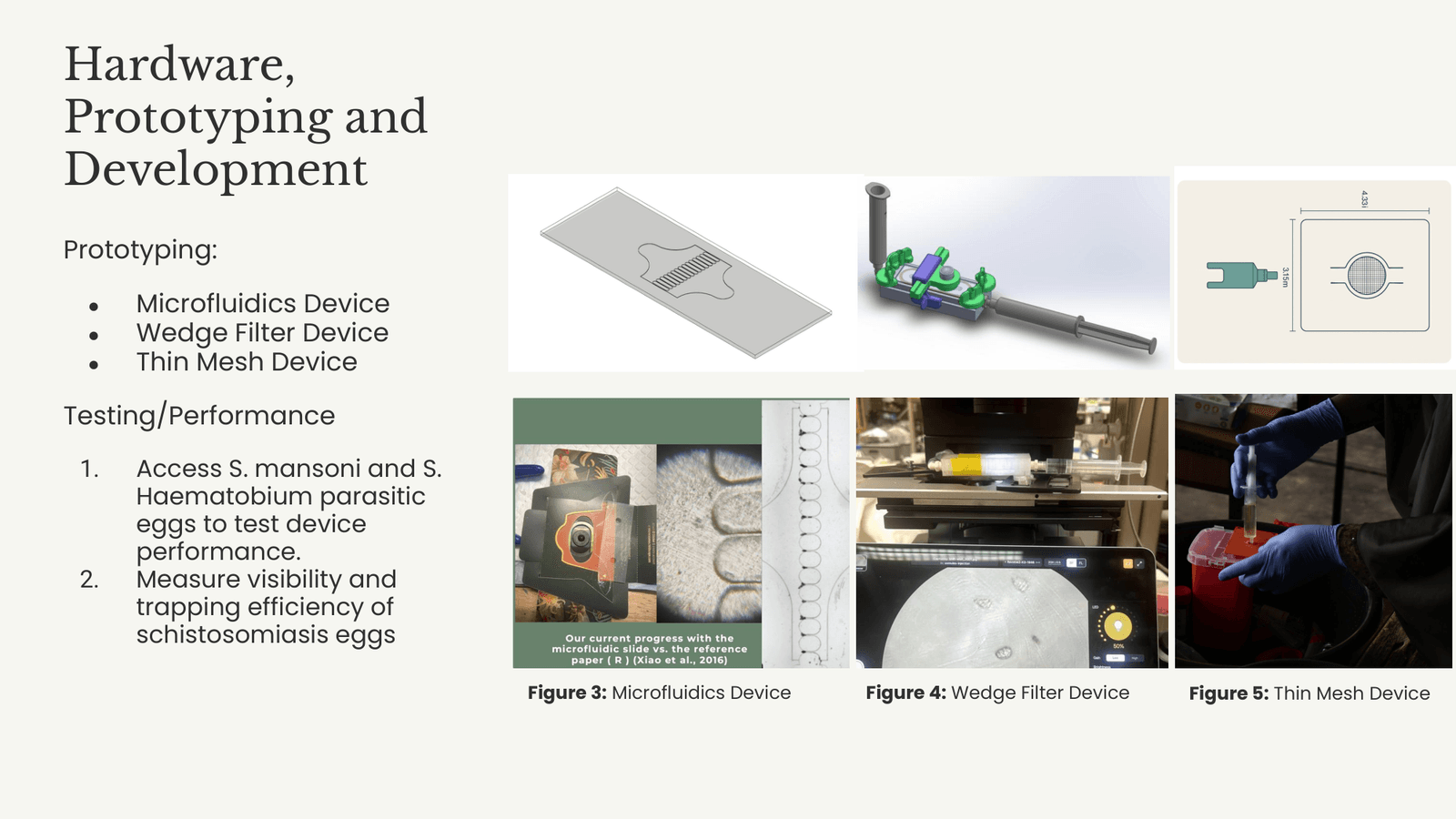
Slide titled Hardware, Prototyping and Development showing three prototypes: a microfluidics device, a wedge filter device, and a thin mesh device
Three routes we prototyped: a microfluidics device, a wedge filter, and a thin mesh.
The material

First, nylon

Our first mesh was 20-micron nylon, borrowed from a trick Dr. Lee’s lab uses to filter cercariae (the full story is in A simpler schisto filter). It was easy to cut, but hard to combine with a layered 3D print. And a mesh with multiple layers gives eggs more places to get caught out of view.
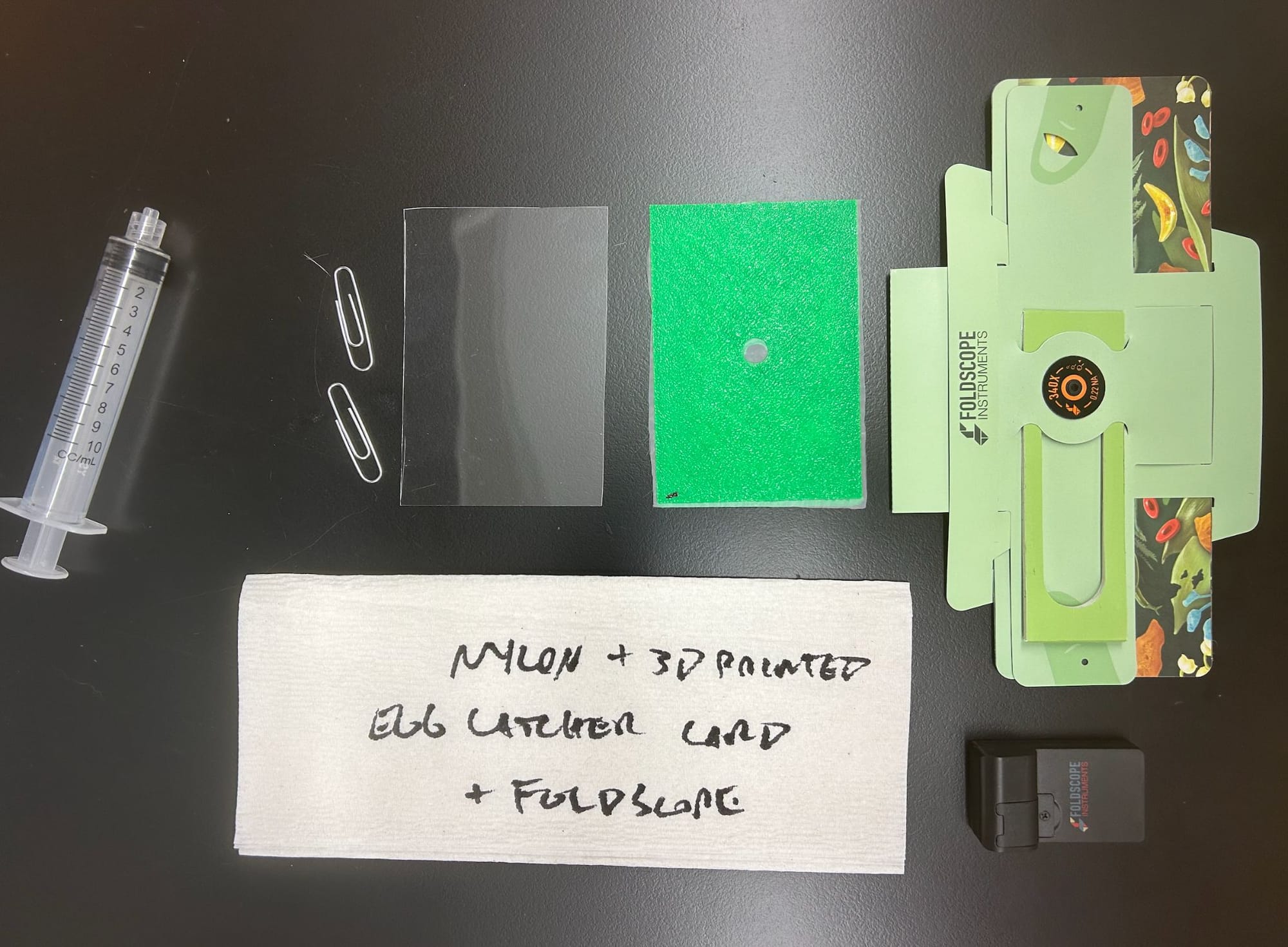
A flat lay of a syringe, paperclips, an acrylic cover, a green nylon egg-catcher card, a Foldscope, and a napkin labeled nylon plus 3D printed egg catcher card plus Foldscope
Nylon + a 3D-printed egg-catcher card + a Foldscope.
At the makerspace

Stainless steel, and a pizza oven

In late June, a group of us spent a day at TXRX Labs, a Houston makerspace, brainstorming a durable filter that would work with the origami microscope. The idea: insert a thin card with an embedded disc filter into a flow-through device that receives a Luer syringe and seals with an O-ring. First, we needed a thin, small stainless-steel disc.
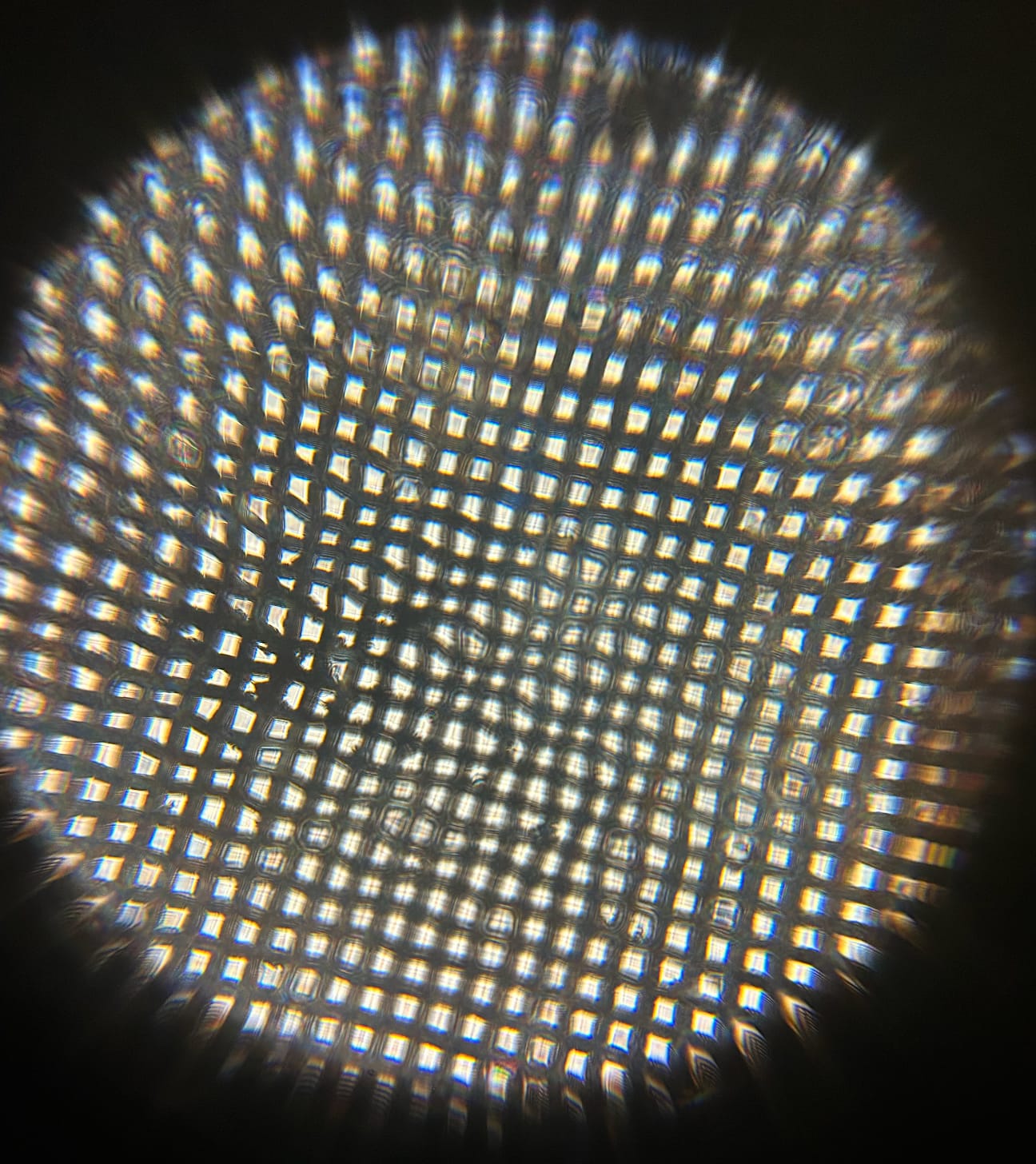
Seen through a Foldscope, a stainless-steel mesh appears as a glowing grid of square pores
A 550-mesh, 20-micron stainless-steel screen, seen through the Foldscope.
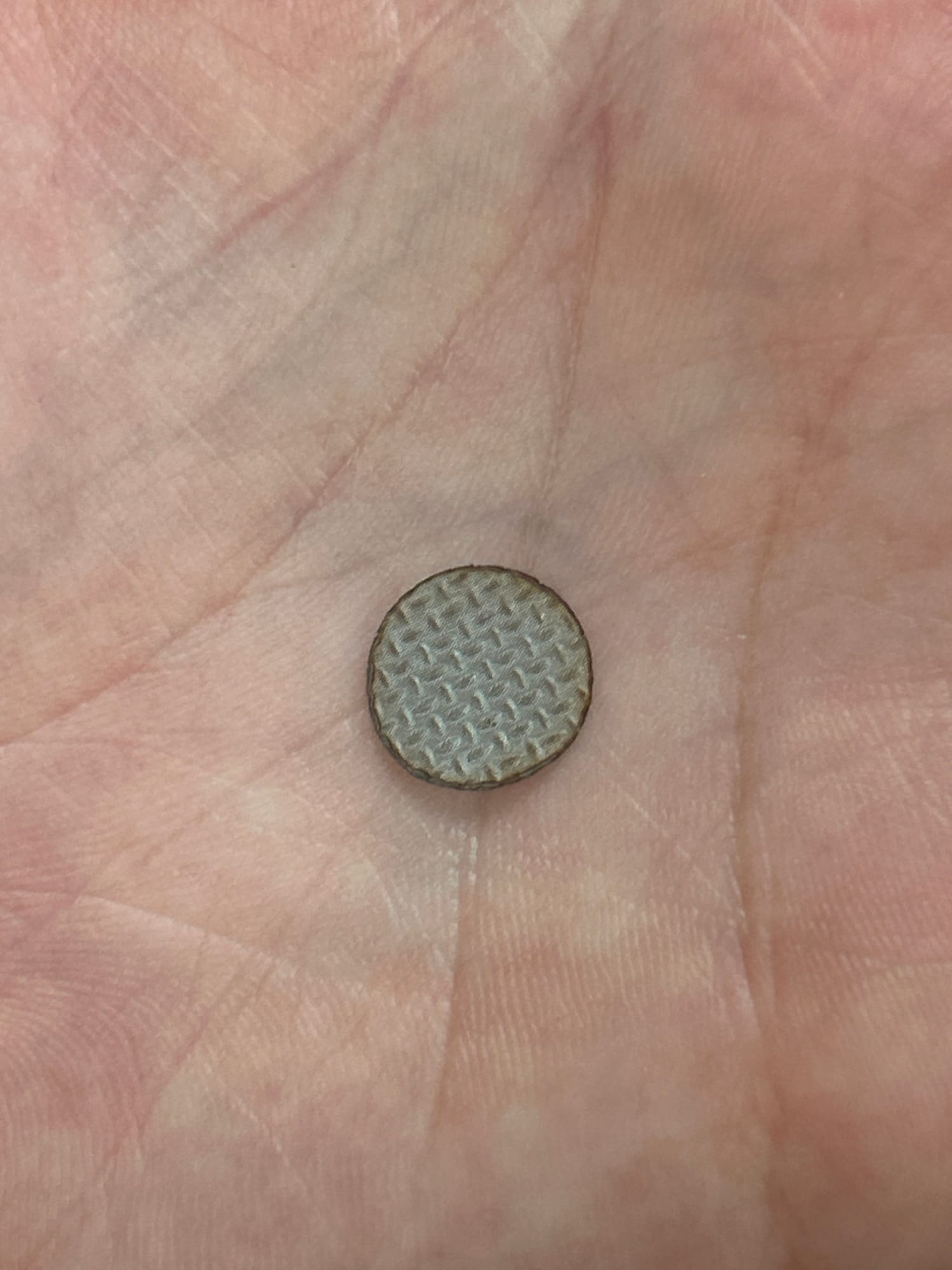
A tiny round stainless-steel mesh disc resting on a palm
A durable filter of stainless steel.
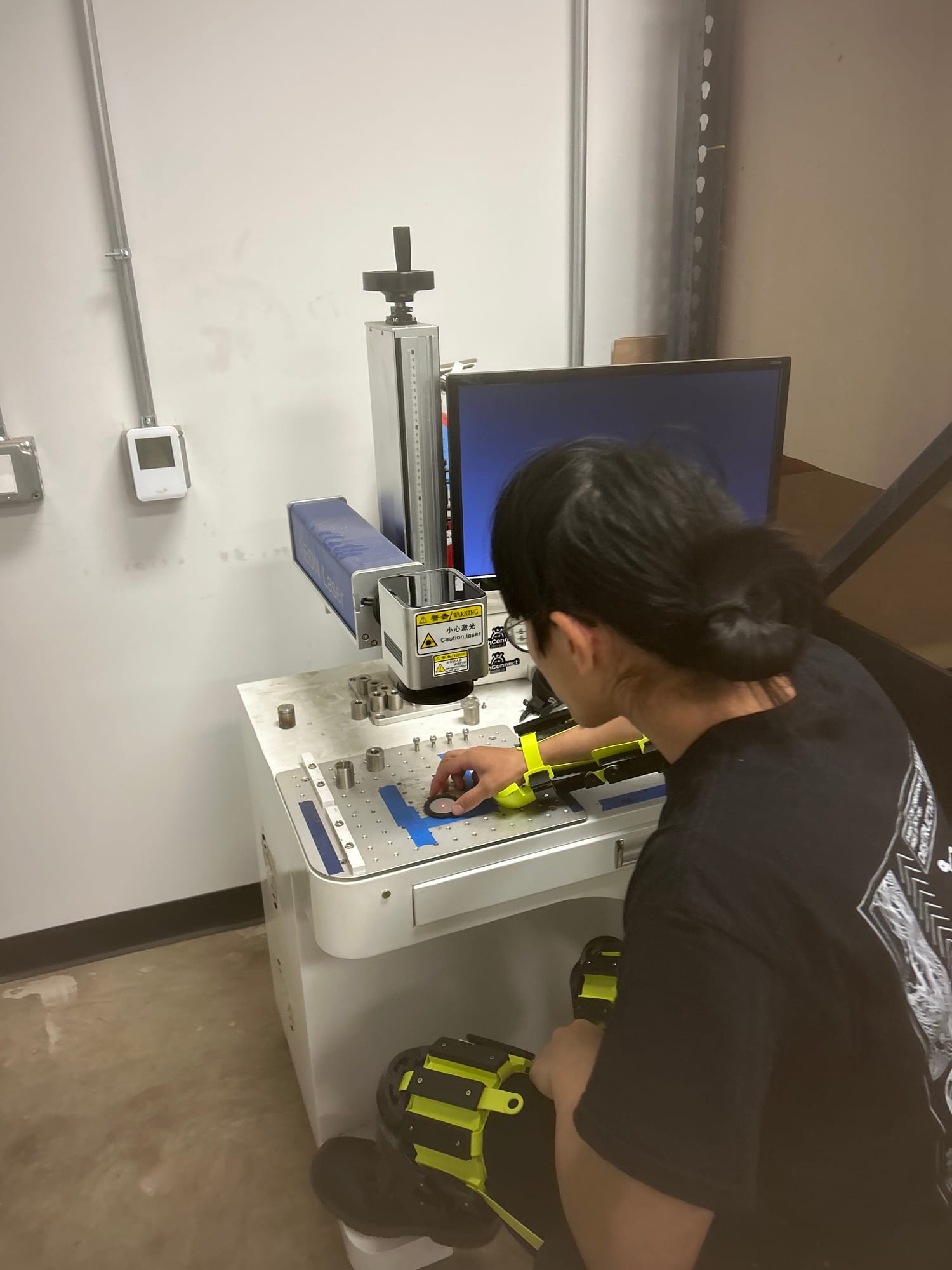
A makerspace member operates a laser cutter at a workstation
Justin laser-cutting the discs.
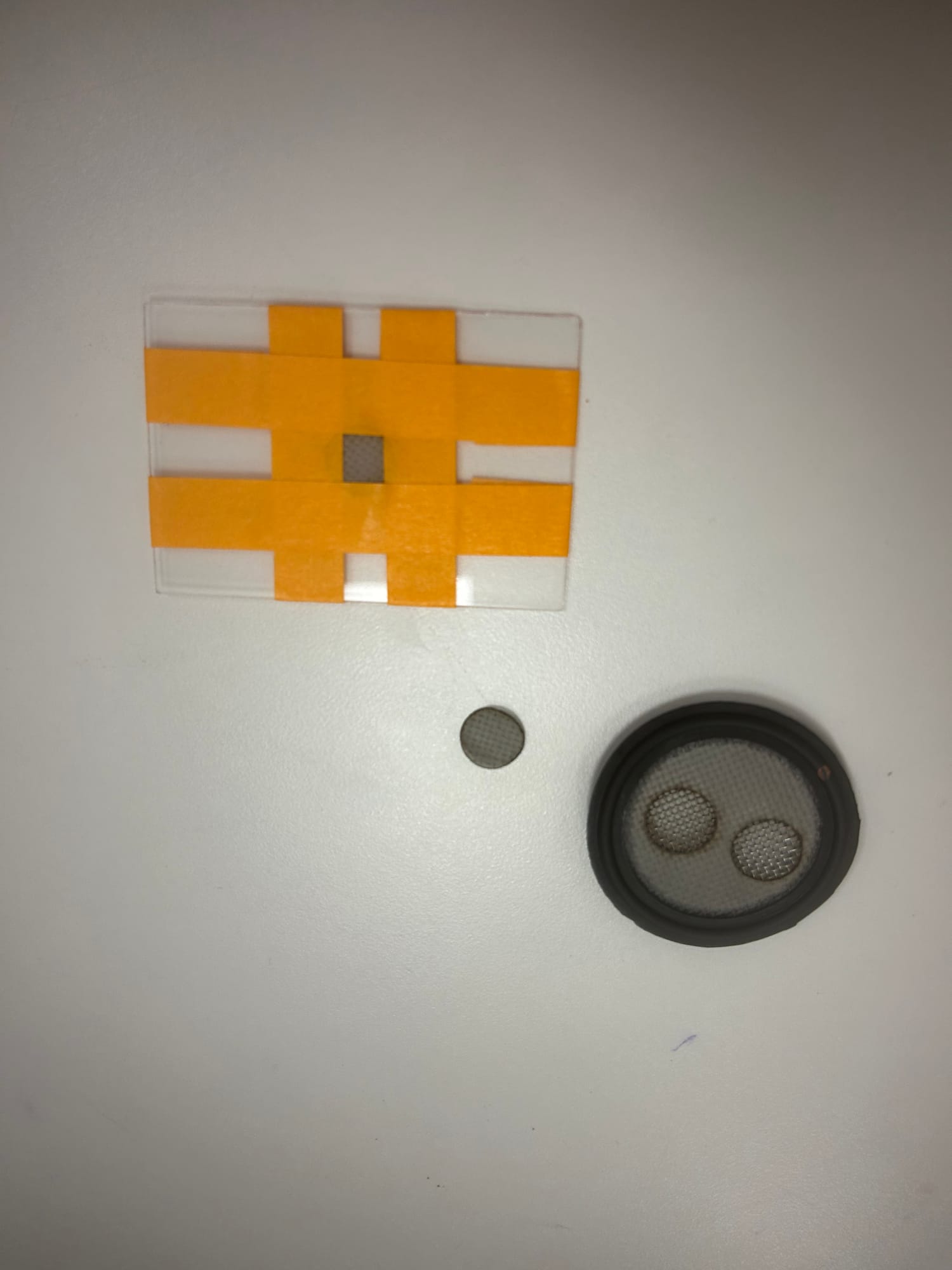
A square of mesh taped into a clear plastic card with orange tape, beside a rubber gasket and a cut disc
Fresh mesh, and an early taped card.

Back to the drawing board — literally — as we tried to stay true to our key constraints: the Foldscope’s back focal length of about 0.6 mm; a total thickness of roughly 1 to 1.5 mm; durable; few leaks.

A team member sketches a device on a large whiteboard covered in diagrams
Rene at the drawing board: the “pizza oven” design, which could even take multiple inserts.
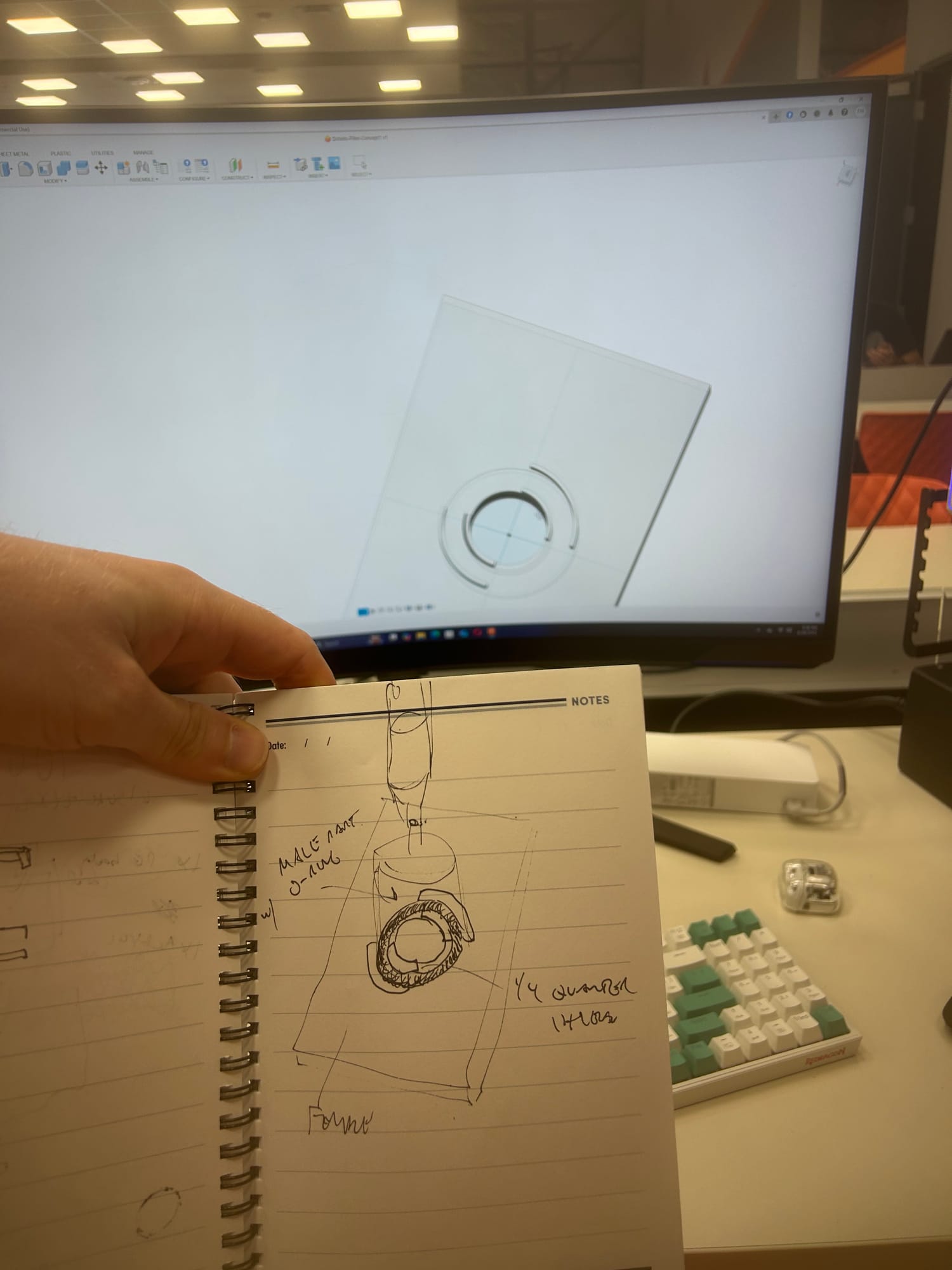
A notebook sketch of a threaded fitting held up in front of a CAD model on a monitor
Francisco brought the quarter-thread idea to life, to pair with a syringe.
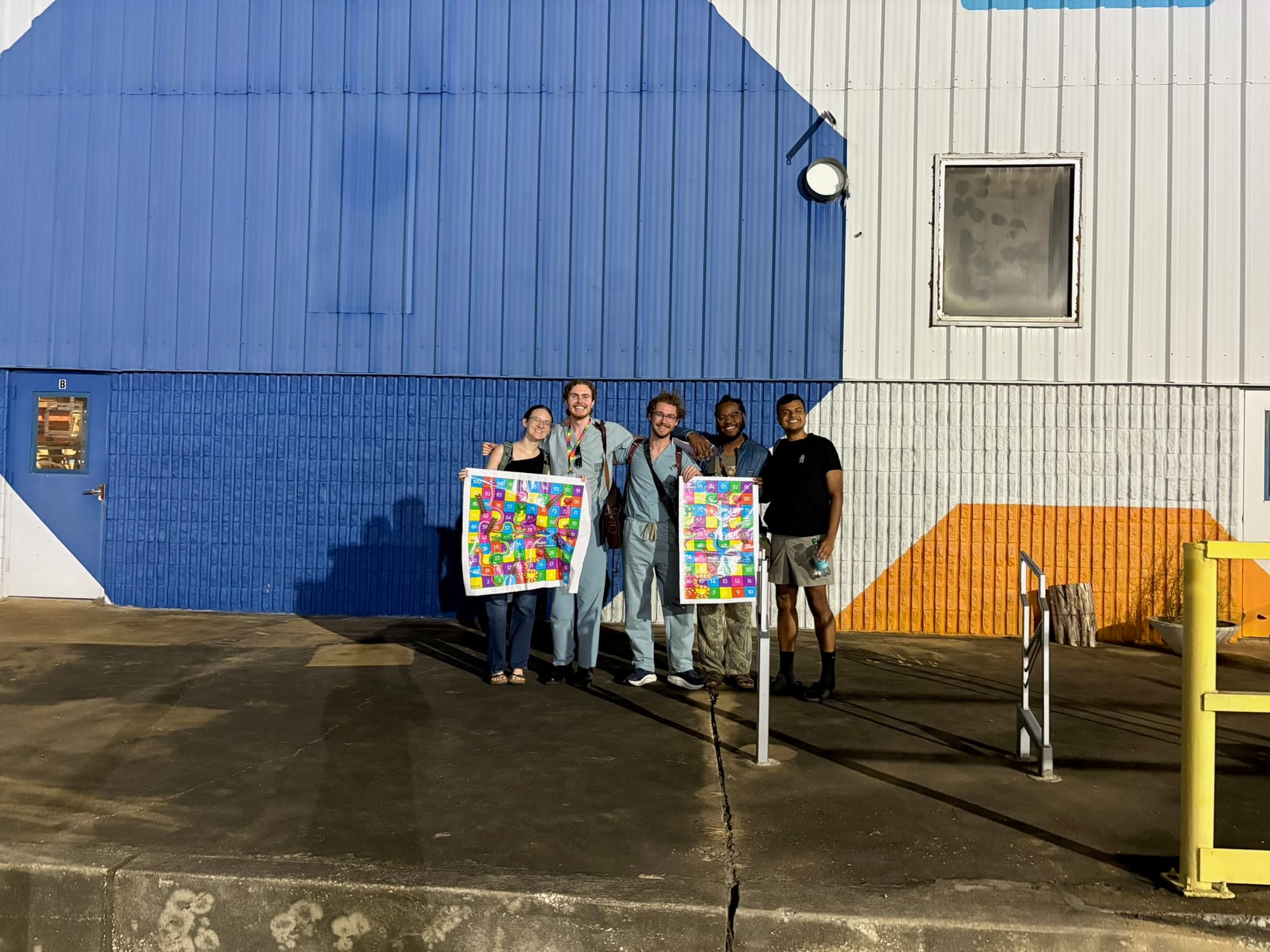
Five team members stand outside a blue-and-white makerspace building holding colorful posters
The TXRX crew. Thank you to our friends at TXRX and Ion, Houston’s makerspaces.
The card

Push, load, look

The simplest version won. The SchistoFilter became a card: push urine through a small stainless-steel screen with a syringe, cover it, slide it into the Foldscope, and look for eggs. The goal was reusable parts that are easy to assemble and use.
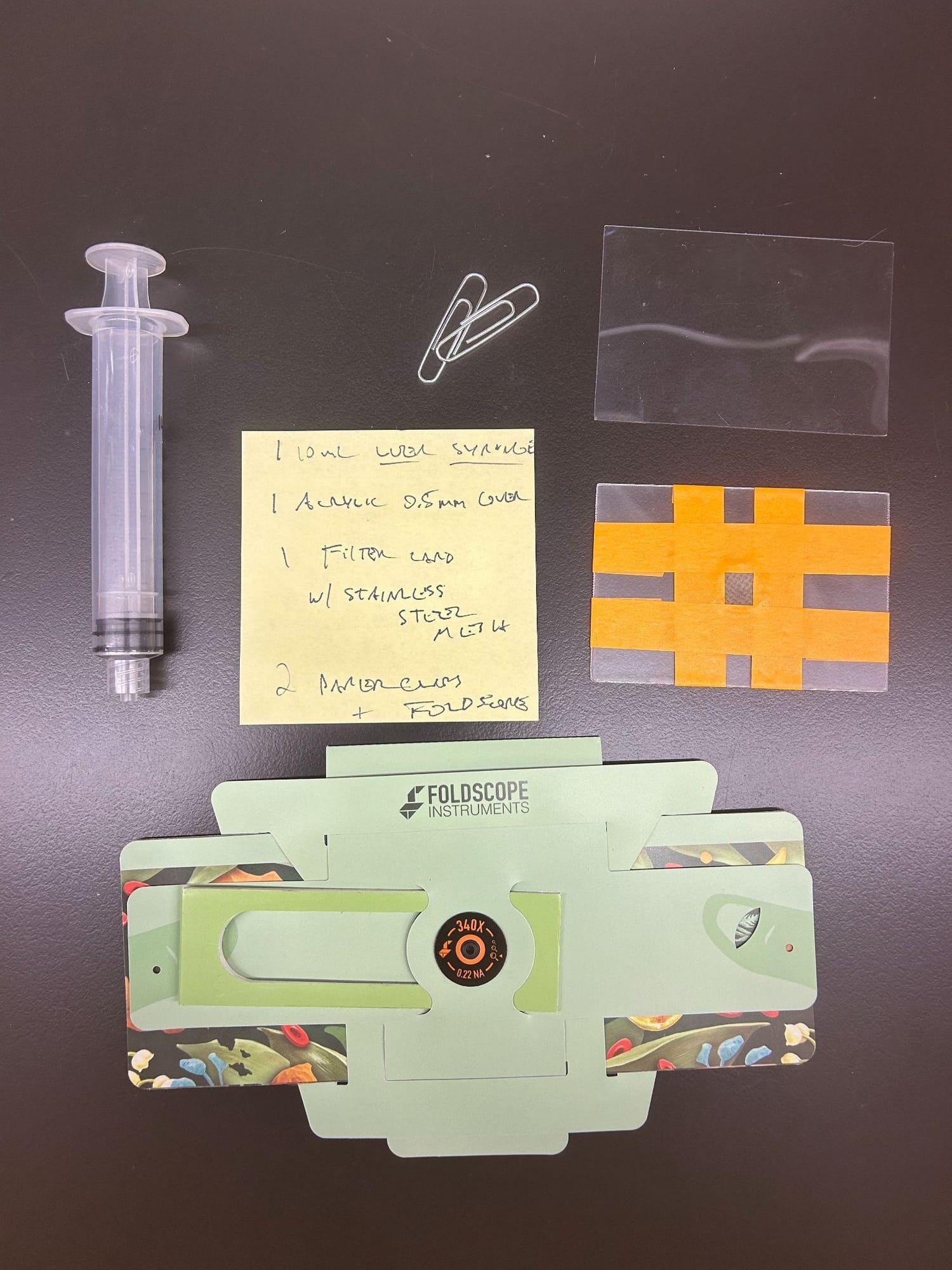
Flat lay of a syringe, paperclips, an acrylic cover, a taped filter card, and a Foldscope, with a sticky note listing the parts
Version 1: filter taped on. Fluid ran through fine and eggs were caught just fine, but it was flimsy.
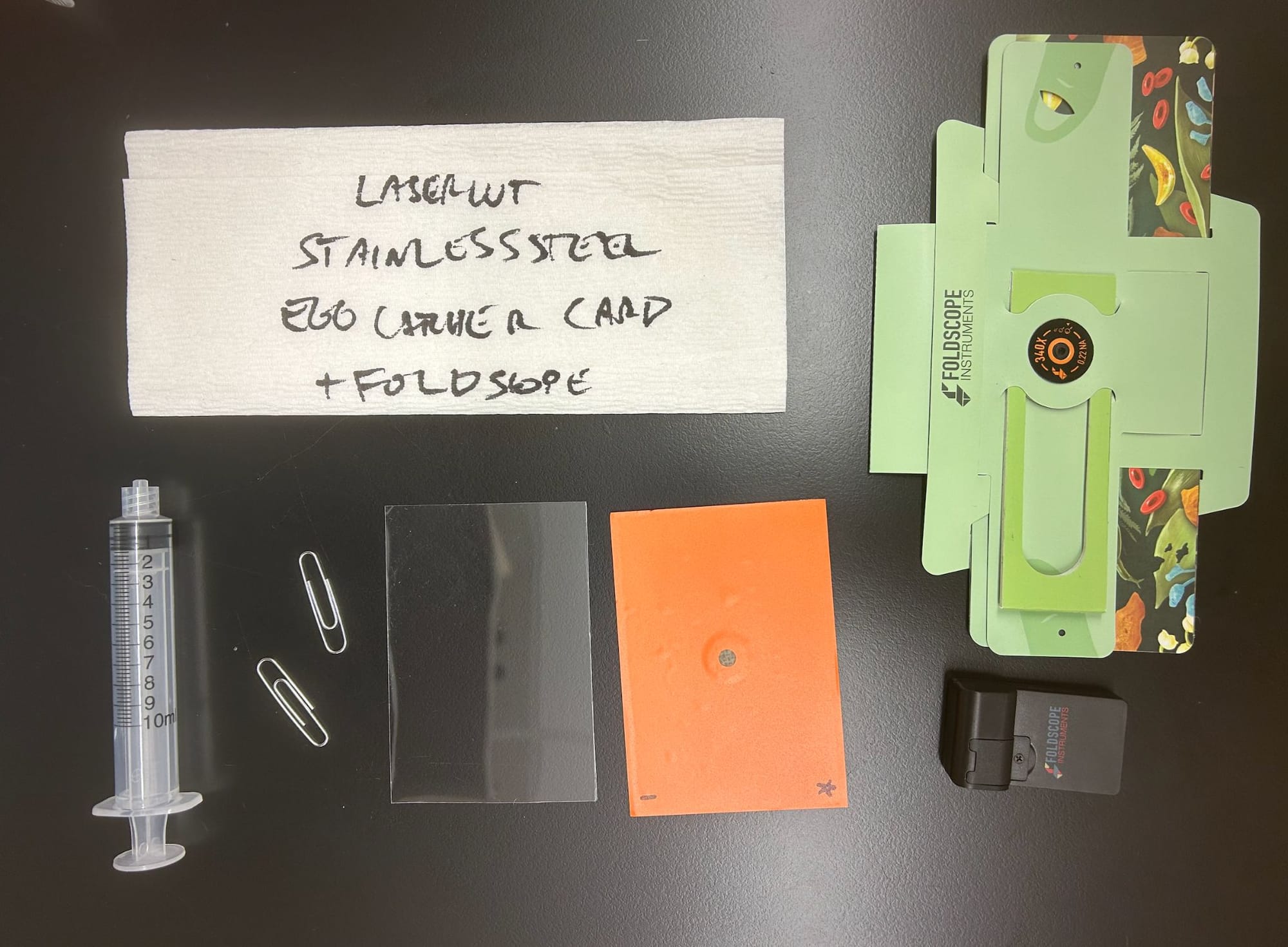
Flat lay of a syringe, paperclips, an acrylic cover, an orange laser-cut filter card, a Foldscope, and a napkin labeled lasercut stainless steel egg catcher card plus Foldscope
Version 2: stainless-steel mesh, laser-cut parts, sealed with Seal-All. Fluid through, eggs caught, cleanable — field-ready.

The whole kit

•

One 10 mL Luer syringe

To push the urine sample through the screen.

•

One filter card

Laser-cut, with a stainless-steel mesh window.

•

One 0.5 mm acrylic cover

A flexible, shatterproof stand-in for a glass coverslip.

•

Two paperclips

To hold the cover in place.

•

A Foldscope

And any phone with a camera.

In the field

Two CHEWs, two conditions

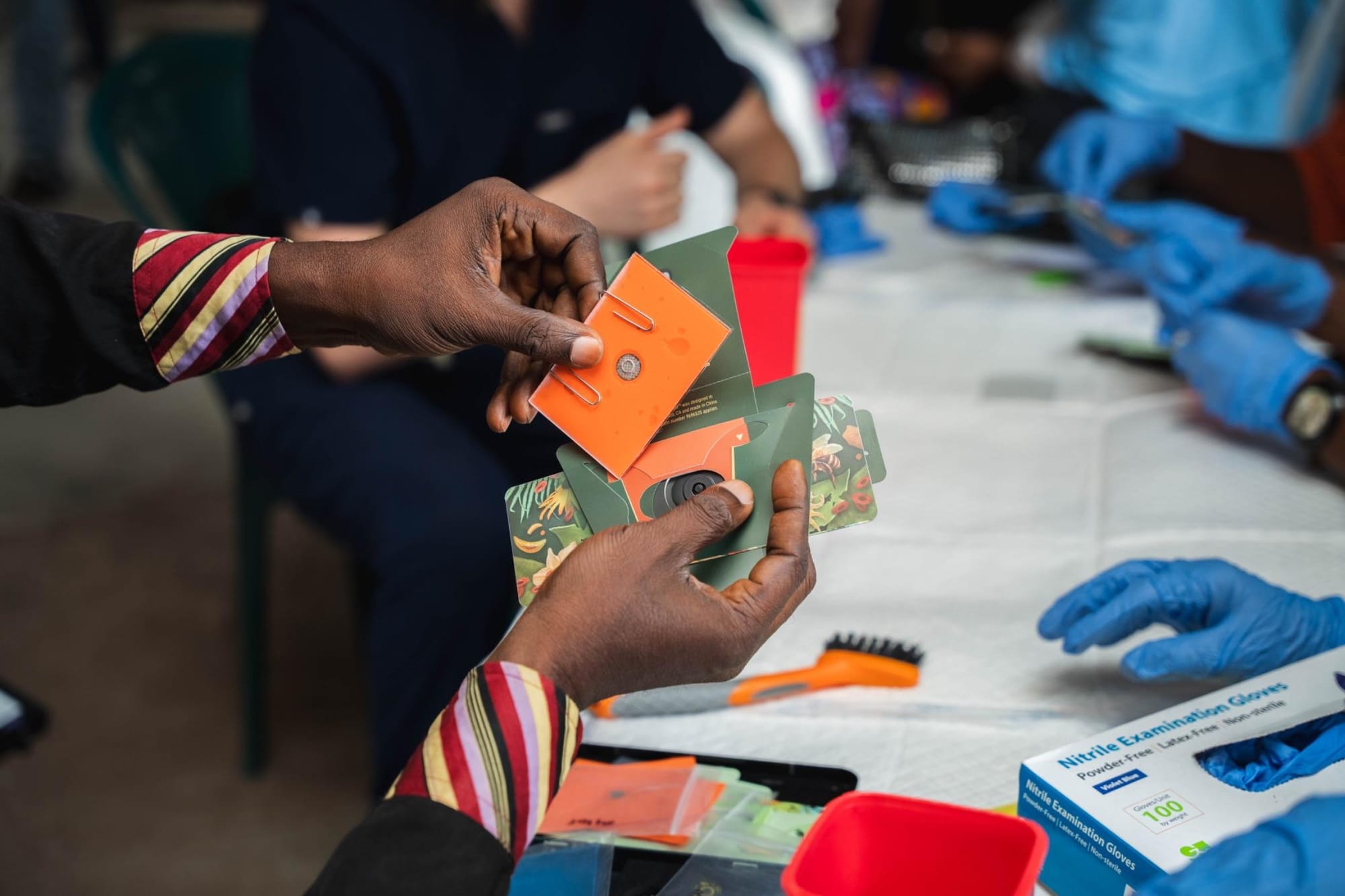
This is the version we carried to Nigeria in July. At each screening table, two community health extension workers read every sample under two conditions (the reusable SchistoFilter, and the Foldscope assessment), while the gold-standard sample was collected first, so every result could be checked against it.
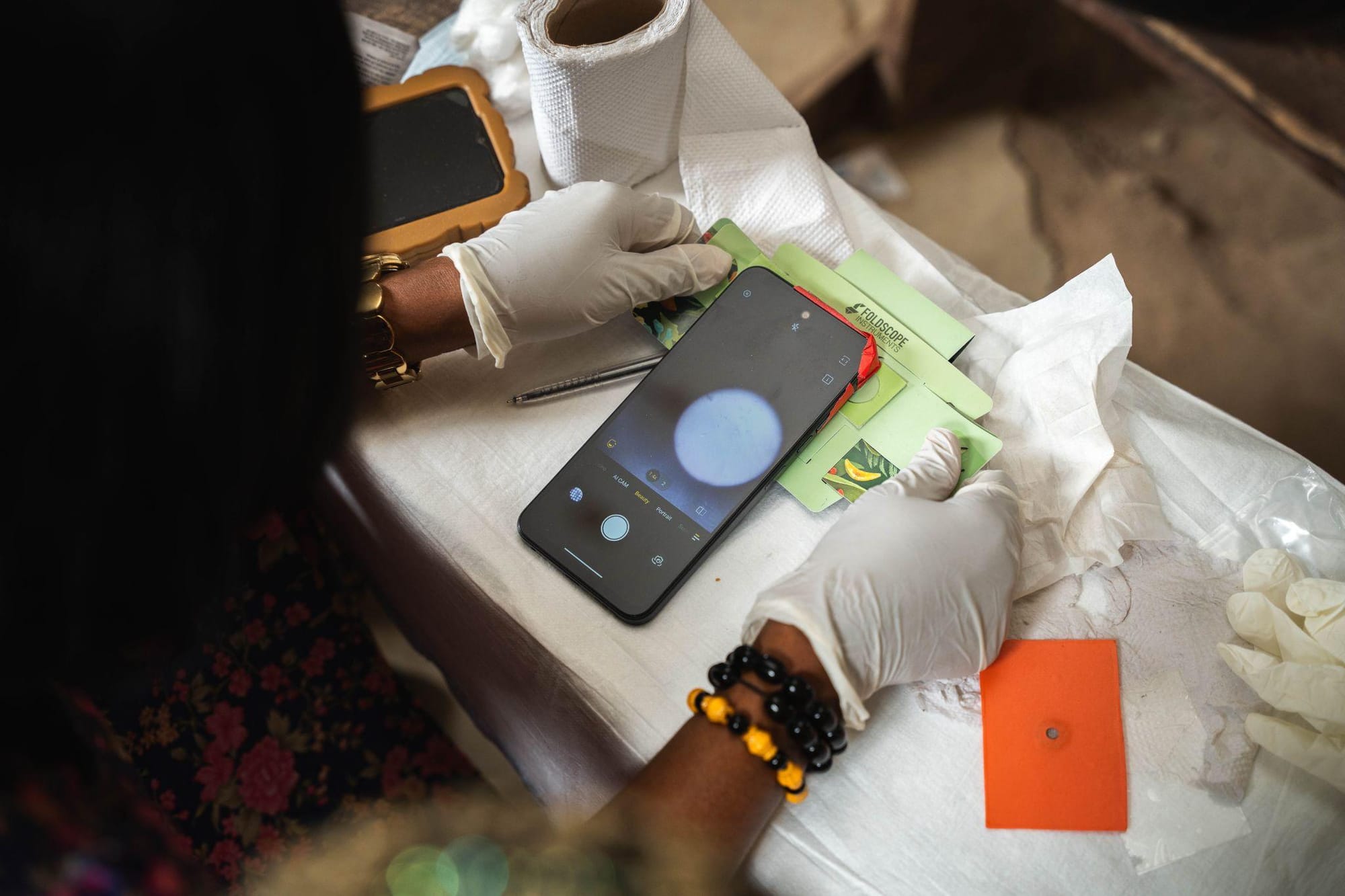
Hands in striped sleeves hold orange SchistoFilter cards and a Foldscope over a table crowded with gloved hands, cups, and supplies
SchistoFilter cards at the screening table.
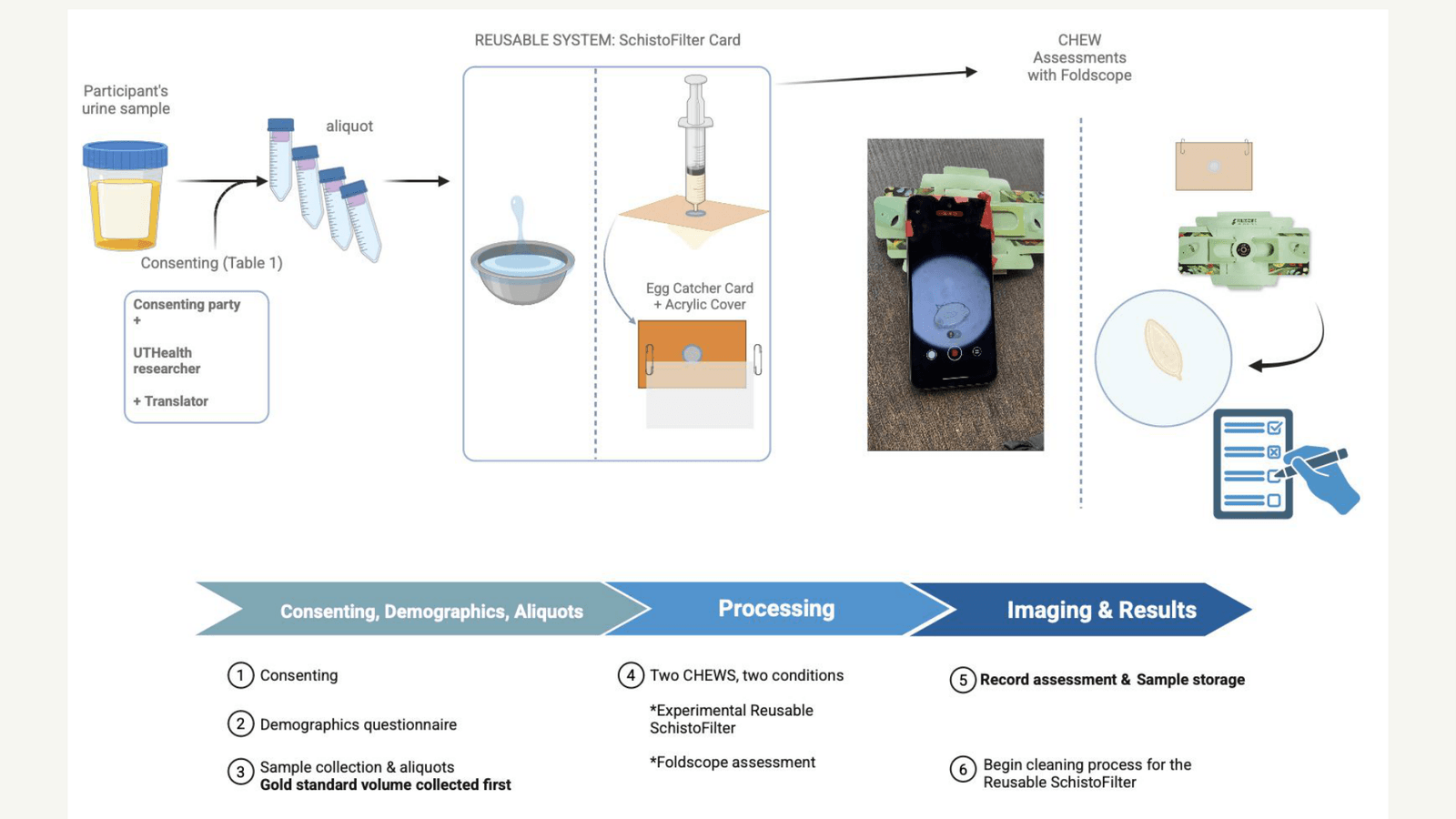
Workflow diagram: consent and aliquots, processing with the reusable SchistoFilter card, then CHEW assessment with the Foldscope and recording results
The study workflow: (1) consent, (2) demographics, (3) sample collection and aliquots, gold-standard volume first; (4) two CHEWs, two conditions; (5) record the assessment and store the sample; (6) clean the SchistoFilter for its next use.

How did it do? You can read the field results here, and a year later, version 2.0 passed its first formal lab validation.

Filed under SCOPE
Focus Diagnostics R&D · Place Houston · Ogun State
From the bench

Frugal science runs on simple ideas

Months of clever trapping designs collapsed into a card, a screen, and two paperclips. Thank you for funding the messy middle that got us there.